
Green Curry Chicken (Kaeng Khiao Wan Gai) – Authentic Thai Recipe
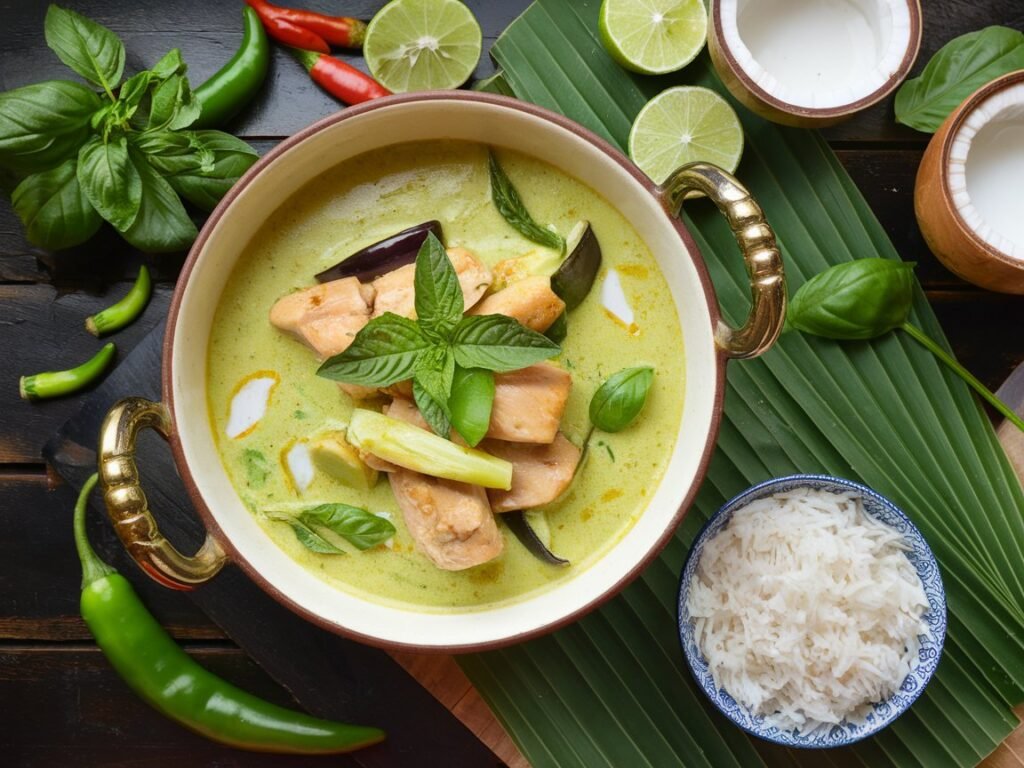
Few dishes capture the heart of Thai cuisine quite like a perfectly made Green Curry Chicken. This isn’t just another curry recipe – it’s a journey into the soul of Thailand’s culinary artistry, where every spoonful delivers layers of complex flavors that somehow work in perfect harmony. The vibrant green color, the intoxicating aroma of fresh herbs, and that perfect balance of creamy coconut milk with fiery chilies create an experience that’s both comforting and exhilarating.
What makes Kaeng Khiao Wan Gai truly special is how it manages to be both approachable for home cooks and authentically Thai in its flavor profile. Unlike many curry recipes that rely heavily on dried spices, green curry celebrates fresh ingredients – green chilies, Thai basil, galangal, and lemongrass all contribute to its distinctive character. The result is a curry that’s aromatic, creamy, and packed with fresh, bright flavors that dance on your palate.
The beauty of this recipe lies in its customizability and the way it brings restaurant-quality Thai flavors to your home kitchen. Whether you’re a curry novice or someone who’s been chasing that perfect green curry taste for years, this recipe will teach you the techniques and ingredient combinations that create authentic Thai flavors. In about 30 minutes, you’ll have a curry that rivals anything you’ve had at your favorite Thai restaurant, complete with tender chicken, vibrant vegetables, and that signature green curry sauce that’s become beloved worldwide.
Ingredients Breakdown
For the Curry Base:
- 2-3 tablespoons green curry paste – This is the heart of your curry. Look for authentic Thai brands like Mae Ploy or Thai Kitchen for the most traditional flavor. The paste should be fragrant and vibrant green in color.
- 2 cans (14 oz each) coconut milk – Use full-fat coconut milk for the richest texture. Don’t shake the cans – you’ll want to separate the thick cream from the liquid for proper technique.
- 1 cup chicken broth – This helps create the perfect consistency and adds depth to the curry base. Low-sodium broth gives you more control over the final saltiness.
For the Protein:
- 2 pounds boneless chicken thighs – Thighs remain tender and juicy during cooking, unlike breasts which can become dry. Cut into bite-sized pieces for even cooking and easy eating.
- Alternative protein options – Chicken breast, pork shoulder, beef sirloin, or firm tofu all work well. Adjust cooking times accordingly based on your protein choice.
For Traditional Vegetables:
- 1 Asian eggplant – Cut into chunks. These small, purple eggplants have fewer seeds and a creamier texture than regular eggplant. If unavailable, use Japanese eggplant.
- 1 cup bamboo shoots – Canned bamboo shoots work perfectly. Drain and rinse them before adding. They provide a lovely crunch and authentic flavor.
- 1 red bell pepper – Sliced into strips. This adds sweetness, color, and crunch to balance the curry’s richness.
- 4-5 baby corn – Halved lengthwise. These add sweetness and visual appeal, though they’re optional if you can’t find them.
For Authentic Flavoring:
- 3 tablespoons fish sauce – Essential for authentic umami depth. Start with less and add more to taste. This is what gives Thai curries their distinctive savory character.
- 2 tablespoons palm sugar – Brown sugar works as a substitute. This balances the heat and saltiness while adding a subtle caramel note.
- 6-8 fresh kaffir lime leaves – Tear them slightly to release oils. These provide an unmistakable citrusy fragrance that defines Thai cuisine.
- 2-3 Thai bird’s eye chilies – Optional, for those who want extra heat. Slice them for more spice or leave whole for milder heat.
For Garnish and Finishing:
- 1 cup fresh Thai basil – This is different from regular basil, with a more anise-like flavor. If unavailable, regular basil works but the flavor will be different.
- 2-3 red chilies – Sliced thinly for garnish and extra heat
- Lime wedges – For serving, allowing diners to adjust acidity to their preference
Ingredient Substitutions: Can’t find Asian eggplant? Regular eggplant works – just salt it first and let it drain to remove bitterness. No Thai basil? Regular sweet basil is fine, though the flavor differs. For vegetarians, replace chicken with firm tofu, mushrooms, or mixed vegetables, and use vegetable broth instead of chicken broth.
Step-by-Step Instructions
Step 1: Prepare All Ingredients Start by preparing all your ingredients since this curry comes together quickly once you begin cooking. Cut the chicken into uniform, bite-sized pieces for even cooking. Slice the eggplant into chunks, cut the bell pepper into strips, and have all your aromatics ready. Open your coconut milk cans but don’t shake them – you want to separate the thick cream from the thinner liquid.
Step 2: Create the Curry Base In a large wok or heavy-bottomed pot, scoop out about 1/2 cup of the thick coconut cream from the top of one can. Heat this over medium-high heat until it starts to sizzle and separate, about 2-3 minutes. Add the green curry paste and fry it in the coconut cream, stirring constantly for 1-2 minutes until fragrant and the oil begins to separate. This step is crucial for developing deep flavor.
Step 3: Add Coconut Milk and Build Flavor Gradually add the remaining coconut milk, stirring constantly to prevent curdling. Add the chicken broth, fish sauce, and palm sugar. Stir well and bring the mixture to a gentle simmer. The curry base should be aromatic and have a beautiful green color. Taste and adjust the fish sauce and sugar balance – it should be savory with a hint of sweetness.
Step 4: Cook the Chicken Add the chicken pieces to the simmering curry, stirring gently to coat with the sauce. Let the chicken cook for about 8-10 minutes, stirring occasionally. The chicken should be nearly cooked through but still tender. Don’t let the curry boil vigorously as this can make the chicken tough and cause the coconut milk to separate.
Step 5: Add Vegetables in Stages Add the eggplant chunks first, as they need the most cooking time. Simmer for 5 minutes, then add the bamboo shoots and baby corn. Cook for another 3-4 minutes. Finally, add the bell pepper strips and cook for just 2-3 minutes until tender-crisp. The vegetables should retain some texture and not become mushy.
Step 6: Final Seasoning and Aromatics Add the torn kaffir lime leaves and Thai chilies if using. Taste the curry and adjust seasonings – you might need more fish sauce for saltiness, palm sugar for balance, or lime juice for brightness. The curry should be rich, aromatic, and well-balanced between sweet, salty, and spicy elements.
Step 7: Finish and Serve Remove from heat and stir in most of the Thai basil leaves, reserving some for garnish. The residual heat will wilt the basil perfectly. Serve immediately in bowls, garnished with remaining basil leaves, sliced chilies, and lime wedges on the side. The curry should be creamy, fragrant, and beautifully green.
Tips and Variations
Expert Tips for Perfect Green Curry:
- Fry the curry paste in coconut cream first – this step develops complex flavors that make the difference between good and great curry
- Don’t boil the curry vigorously once coconut milk is added – gentle simmering prevents separation and keeps the chicken tender
- Add vegetables in stages based on cooking times to maintain proper textures
- Taste and adjust seasonings throughout cooking – balance is key in Thai cuisine
- Use the freshest ingredients possible, especially the herbs and aromatics
Delicious Variations: Green Curry with Seafood: Replace chicken with a mix of shrimp, scallops, and fish fillets. Add seafood in the last 3-4 minutes of cooking to prevent overcooking.
Vegetarian Green Curry: Use firm tofu, mixed vegetables, and vegetable broth. Add hearty vegetables like butternut squash, sweet potatoes, or cauliflower for substance.
Green Curry with Beef: Use tender cuts like sirloin or ribeye, cut into thin strips. Cook slightly longer than chicken to ensure tenderness.
Pork Green Curry: Pork shoulder or tenderloin works well. If using shoulder, cut into small pieces and cook a bit longer for tenderness.
Thai Green Curry Noodles: Serve over rice noodles instead of rice for a different presentation. Cook the noodles separately and add to bowls before ladling curry over top.
Mild Version: Reduce the curry paste by half and omit the additional chilies. The curry will still be flavorful but much milder.
Serving Suggestions
Green Curry Chicken shines when served as the centerpiece of a Thai meal. The traditional accompaniment is steamed jasmine rice, which helps balance the curry’s richness and provides a neutral base that soaks up the delicious sauce. The fragrant rice complements the aromatic curry perfectly.
Perfect Side Dishes:
- Steamed jasmine rice or coconut rice for the most traditional pairing
- Thai cucumber salad for a refreshing, cooling contrast
- Fresh spring rolls with peanut dipping sauce
- Pad Thai or other stir-fried noodles for a larger meal
- Thai-style green salad with lime dressing
Presentation Ideas: Serve in deep bowls that showcase the beautiful green color of the curry. Arrange the garnishes attractively on top – the fresh basil leaves and sliced chilies create beautiful color contrast. Provide small dishes for the lime wedges and extra chilies for those who want to customize their heat level.
Drink Pairings: Thai iced tea provides a sweet, cooling contrast to the curry’s heat and richness. Light beers like Singha or Chang complement the flavors without competing. For wine lovers, try off-dry Riesling or Gewürztraminer – their slight sweetness balances the spice beautifully. Coconut water or limeade work well for non-alcoholic options.
Special Occasion Serving: For dinner parties, serve alongside other Thai curries like red curry or massaman curry to create a curry tasting experience. Include plenty of fresh herbs, lime wedges, and different types of rice for a beautiful, interactive spread.
Storage and Reheating Instructions
Refrigerator Storage: Store leftover Green Curry Chicken in airtight containers in the refrigerator for up to 3-4 days. The flavors actually improve and deepen overnight as the spices have more time to meld. The coconut milk may separate slightly during storage, but this is completely normal and will recombine when gently reheated.
Freezer Storage: Green curry freezes well for up to 3 months. Freeze in portion-sized containers for easy reheating. The vegetables may soften slightly after freezing, but the overall flavor remains excellent. Allow to thaw completely in the refrigerator before reheating.
Reheating Instructions: Stovetop (Best Method): Transfer to a saucepan and reheat gently over medium-low heat, stirring occasionally. Don’t let it boil as this can cause the coconut milk to separate. Heat until warmed through, about 5-6 minutes.
Microwave: Heat in 1-minute intervals at medium power, stirring between intervals. This usually takes 2-3 minutes total, depending on portion size.
Flavor Refresh: When reheating, you may want to add a splash of coconut milk if the curry seems thick, or a squeeze of fresh lime juice to brighten the flavors. Fresh basil added just before serving can also restore that just-made freshness.
Recipe Notes
- Curry Paste Quality: Invest in good-quality green curry paste – it makes a significant difference in the final flavor. Homemade paste is ideal, but authentic Thai brands are excellent.
- Coconut Milk Tips: Don’t refrigerate coconut milk before using, as cold coconut milk is harder to work with. Room temperature cans work best.
- Make-Ahead Option: You can prepare the curry base and even add the chicken a day ahead. Add vegetables just before serving for the best texture.
- Equipment: A wok or large, heavy-bottomed pot works best for even heat distribution and preventing scorching.
- Serving Size: This recipe serves 6 generously as a main course with rice, or 8 as part of a larger Thai meal.
- Heat Level: Start with less curry paste if you’re heat-sensitive – you can always add more, but you can’t take it back.
Nutrition Information (Per Serving)
| Nutrient | Amount |
|---|---|
| Calories | 385 |
| Total Fat | 28g |
| Saturated Fat | 20g |
| Cholesterol | 125mg |
| Sodium | 890mg |
| Total Carbohydrates | 12g |
| Dietary Fiber | 3g |
| Sugars | 8g |
| Protein | 32g |
| Calcium | 95mg |
| Iron | 5mg |
| Vitamin C | 45mg |
| Potassium | 580mg |
Nutrition information is an estimate and may vary based on specific ingredients used.
Recipe Card Summary
Course: Main Dish Cuisine: Thai Servings: 6 Prep Time: 15 minutes Cook Time: 25 minutes Total Time: 40 minutes
Ingredients:
- 2-3 tablespoons green curry paste
- 2 cans (14 oz each) coconut milk
- 1 cup chicken broth
- 2 pounds boneless chicken thighs, cubed
- 1 Asian eggplant, chunked
- 1 cup bamboo shoots, drained
- 1 red bell pepper, sliced
- 4-5 baby corn, halved
- 3 tablespoons fish sauce
- 2 tablespoons palm sugar
- 6-8 kaffir lime leaves, torn
- 2-3 Thai chilies (optional)
- 1 cup fresh Thai basil
- Sliced chilies and lime wedges for garnish
Instructions:
- Prepare all ingredients and cut chicken into uniform pieces
- Fry curry paste in coconut cream until fragrant, 1-2 minutes
- Add remaining coconut milk, broth, fish sauce, and palm sugar
- Add chicken and cook 8-10 minutes until nearly done
- Add eggplant first, then bamboo shoots and corn, finally bell pepper
- Add lime leaves and chilies, adjust seasonings
- Finish with basil leaves and serve with garnishes
Notes:
- Fry curry paste in coconut cream first for best flavor
- Add vegetables in stages to maintain proper textures
- Don’t boil vigorously to prevent coconut milk separation
- Adjust seasonings to taste throughout cooking
Diet Tags
Dietary Classifications:
- Gluten-Free
- Dairy-Free
- Keto-Friendly (without added sugar)
- Paleo-Friendly
- Low-Carb
- High-Protein
- Whole30 Compatible (with modifications)
Health Benefits
Nutritional Powerhouse: Green Curry Chicken offers impressive nutritional benefits while delivering incredible flavor. The coconut milk provides healthy medium-chain fatty acids that are easily metabolized for energy and may support heart health. These healthy fats also help with the absorption of fat-soluble vitamins from the vegetables.
The fresh herbs and aromatics like galangal, lemongrass, and Thai basil are rich in antioxidants and anti-inflammatory compounds. These ingredients have been used in traditional Thai medicine for centuries and may support digestive health and immune function.
The chicken provides high-quality, complete protein essential for muscle health and satiety. The variety of vegetables adds fiber, vitamins, and minerals while keeping the carb count relatively low. The spices in green curry paste, particularly the chilies, contain capsaicin, which may boost metabolism and provide natural pain relief.
The dish is naturally gluten-free and can easily fit into low-carb or ketogenic diets, making it suitable for various dietary approaches while providing satisfying, nutrient-dense nutrition.
Frequently Asked Questions
1. Can I make my own green curry paste? Yes, homemade green curry paste is wonderful, though time-consuming. You’ll need green chilies, garlic, shallots, galangal, lemongrass, cilantro roots, kaffir lime zest, and shrimp paste. Blend everything into a smooth paste. Store-bought authentic Thai brands are excellent alternatives that save significant time.
2. Why does my coconut milk separate and how do I prevent it? Coconut milk separates when heated too quickly or boiled too vigorously. To prevent this, heat gently and avoid rapid boiling once coconut milk is added. If separation occurs, simply stir gently and continue cooking – the curry will still taste great.
3. Can I use light coconut milk to reduce calories? You can use light coconut milk, but the curry won’t be as rich and creamy. For best results, use one can of full-fat and one can of light coconut milk to maintain some richness while reducing calories. You may need to adjust the consistency with a bit more broth.
4. How spicy is green curry supposed to be? Authentic green curry should have noticeable heat but not be overwhelmingly spicy. The heat should be balanced with sweetness and richness from coconut milk. Start with less curry paste if you’re heat-sensitive and gradually increase to find your perfect level.
5. What can I substitute for fish sauce? For vegetarian versions, use soy sauce or vegetarian fish sauce alternatives, though the flavor will be different. You can also try a mixture of soy sauce with a bit of seaweed or anchovy paste. Start with less and adjust to taste, as these substitutes can be quite salty.
Final Thoughts
Green Curry Chicken represents everything I love about Thai cuisine – the perfect balance of flavors, the celebration of fresh ingredients, and the way complex tastes can come together in harmony. This curry has the remarkable ability to be both comforting and exciting, familiar yet exotic, making it a perfect introduction to Thai cooking for beginners while remaining satisfying for experienced cooks.
What makes this recipe particularly special is how it demystifies the process of making authentic Thai curry at home. While the ingredient list might seem extensive, the technique is straightforward, and the results are consistently restaurant-quality. The key is understanding the importance of each step, from properly frying the curry paste to adding vegetables at the right time.
The versatility of green curry makes it a valuable addition to any home cook’s repertoire. It adapts beautifully to different proteins and vegetables, making it perfect for using up whatever you have on hand. The make-ahead friendly nature means you can enjoy homemade Thai curry even on busy weeknights.
This curry also has the wonderful ability to bring people together. There’s something about the aromatic steam rising from a pot of green curry that draws everyone to the kitchen. The interactive nature of adjusting lime juice and adding fresh herbs makes dining feel like a shared experience rather than just a meal.
Whether you’re cooking for family, entertaining friends, or simply treating yourself to something special, this Green Curry Chicken delivers on every level. The combination of creamy coconut milk, aromatic herbs, tender chicken, and vibrant vegetables creates a dish that’s both nourishing and soul-satisfying.
Give this recipe a try and let me know how it turns out for you in the comments below. I love hearing about your personal variations and the ways you make this recipe your own. Thai cooking is all about balancing flavors to suit your palate, so don’t hesitate to adjust the seasonings until it tastes perfect to you.