
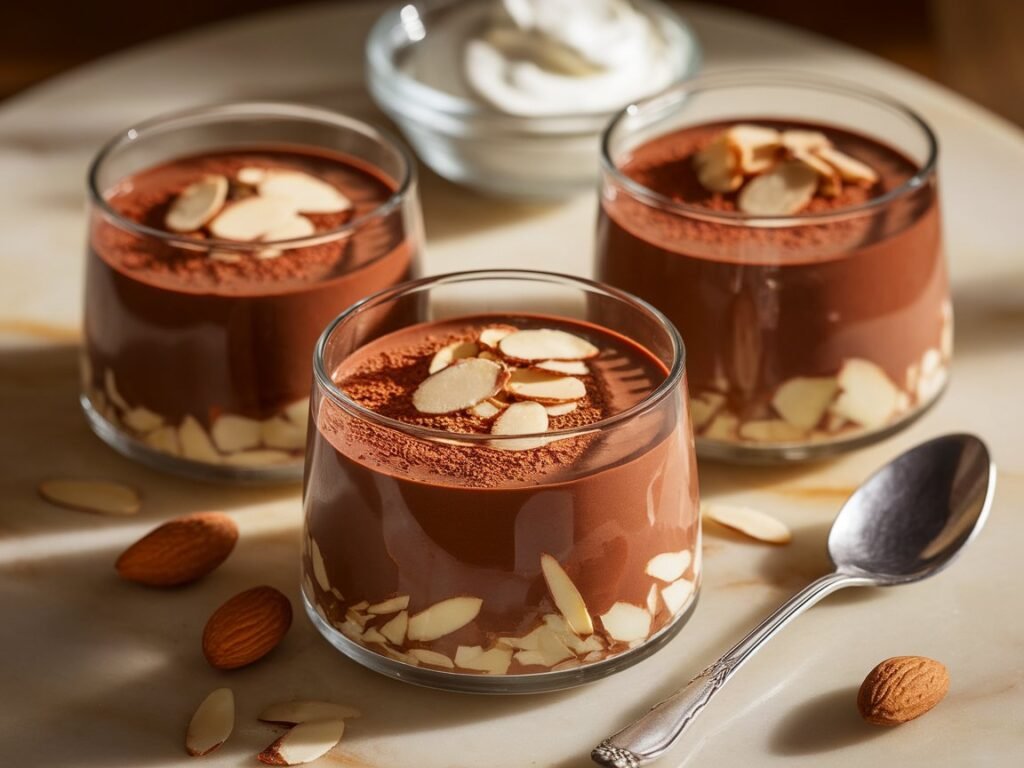
There’s something undeniably luxurious about a perfectly crafted chocolate pudding that melts on your tongue, especially when it’s enhanced with the delicate crunch and nutty sweetness of almonds. This chocolate and almond pudding represents comfort food at its finest – rich enough to satisfy the most intense chocolate cravings, yet sophisticated enough to serve at dinner parties or special occasions.
What sets this pudding apart from store-bought versions is the incredible depth of flavor achieved through careful technique and quality ingredients. The silky texture comes from proper tempering and patient stirring, while the almond component adds both flavor complexity and textural interest that elevates this dessert from simple to sublime.
This recipe delivers restaurant-quality results with surprisingly simple techniques that any home cook can master. You’ll learn the secrets behind achieving that perfect consistency – smooth and creamy without being too thick or thin. The beauty of homemade pudding lies in your control over sweetness, richness, and flavor intensity, allowing you to create exactly the dessert you’re craving.
Whether you’re looking to impress guests, treat your family to something special, or simply indulge in a moment of pure chocolate bliss, this pudding delivers on every level. Plus, it can be made entirely ahead of time, making it perfect for entertaining or meal prep. The combination of dark chocolate and almonds creates a sophisticated flavor profile that appeals to both adults and children, though the rich, complex taste will particularly delight more mature palates.
Ingredients Breakdown
Understanding each ingredient’s role helps ensure your pudding turns out perfectly every time. Quality ingredients make a noticeable difference in the final result, so choose the best you can find.
Whole Milk (2 1/2 cups): Forms the creamy base of your pudding. Whole milk provides the richness needed for proper texture – don’t substitute with lower-fat milk, as it won’t create the same luxurious mouthfeel. The milk should be fresh and cold when you start, as you’ll be heating it gradually to prevent scorching.
Heavy Cream (1/2 cup): Adds extra richness and helps create that silky, restaurant-quality texture. This small amount makes a significant difference in the final product’s luxuriousness. For a lighter version, you can reduce this to 1/4 cup, though the pudding won’t be quite as rich.
Granulated Sugar (1/2 cup): Sweetens the pudding while helping to stabilize the texture. The sugar dissolves completely during cooking, contributing to the smooth consistency. You can adjust this amount slightly based on your sweetness preference and the chocolate you’re using.
Cornstarch (1/4 cup): The thickening agent that gives pudding its characteristic consistency. Cornstarch creates a smoother texture than flour and doesn’t leave any starchy taste when cooked properly. Measure carefully – too little won’t thicken properly, while too much creates a gummy texture.
Unsweetened Cocoa Powder (1/4 cup): Provides deep chocolate flavor without additional sweetness. Use high-quality cocoa powder for the best results – Dutch-processed cocoa creates a smoother, more mellow flavor, while natural cocoa provides more intensity. Sift the cocoa powder to eliminate lumps.
Dark Chocolate (4 ounces, chopped): The star ingredient that creates rich, complex flavor. Choose chocolate with 60-70% cacao for the best balance of sweetness and depth. Chop it finely so it melts smoothly into the hot pudding base. Higher-quality chocolate makes a noticeable difference in taste.
Large Egg Yolks (3): Add richness and help create the custard-like texture that makes this pudding special. Room temperature yolks incorporate more easily and reduce the risk of curdling. The yolks also contribute to the pudding’s beautiful golden-brown color.
Vanilla Extract (2 teaspoons): Enhances the chocolate flavor without overpowering it. Pure vanilla extract provides better flavor than imitation vanilla. Add this at the end of cooking to preserve its delicate flavor.
Almond Extract (1/2 teaspoon): Provides the distinctive almond flavor that sets this pudding apart. A little goes a long way with almond extract – too much can be overwhelming. This ingredient creates the perfect bridge between the chocolate and actual almond pieces.
Sliced Almonds (1/2 cup, toasted): Adds textural contrast and nutty flavor throughout the pudding. Toast them in a dry skillet for 3-4 minutes until golden and fragrant – this step significantly enhances their flavor. Reserve some for garnish to add visual appeal.
Salt (1/4 teaspoon): Enhances the chocolate flavor and balances the sweetness. Don’t skip this ingredient – it makes all the other flavors more pronounced without making the pudding taste salty.
Butter (2 tablespoons): Added at the end for extra richness and glossy appearance. The butter should be cold when stirred in, as this helps create the silky finish that makes homemade pudding so appealing.
Step-by-Step Instructions
Step 1: Toast the Almonds and Prepare Your Setup Heat a dry skillet over medium heat and add the sliced almonds. Toast them for 3-4 minutes, stirring frequently, until they’re golden brown and fragrant. Set aside to cool, reserving about 2 tablespoons for garnish. Prepare all your other ingredients and have them ready – pudding requires attention once you start cooking, so organization is key.
Step 2: Create the Base Mixture In a heavy-bottomed saucepan, whisk together the sugar, cornstarch, cocoa powder, and salt until no lumps remain. This dry mixture prevents the cornstarch from clumping when you add the liquids. Gradually whisk in the milk and cream, ensuring the mixture is completely smooth. The gradual addition prevents lumps and creates a uniform base.
Step 3: Heat and Thicken Place the saucepan over medium heat and cook, whisking constantly, for 8-10 minutes until the mixture thickens and begins to bubble. The constant whisking prevents scorching and ensures even thickening. The mixture should coat the back of a spoon and hold soft peaks when you lift the whisk. Don’t rush this process – steady, medium heat prevents curdling.
Step 4: Temper the Eggs In a small bowl, whisk the egg yolks until smooth. Take about 1/2 cup of the hot chocolate mixture and slowly drizzle it into the yolks while whisking constantly. This tempering process prevents the eggs from scrambling. Once combined, gradually whisk this mixture back into the saucepan, continuing to cook for 2-3 minutes until thickened further.
Step 5: Add Chocolate and Flavorings Remove the saucepan from heat and immediately add the chopped dark chocolate, whisking until completely melted and smooth. The residual heat will melt the chocolate perfectly. Stir in the vanilla extract, almond extract, and cold butter pieces until the butter is completely incorporated and the pudding has a glossy sheen.
Step 6: Incorporate the Almonds Fold in most of the toasted almonds, reserving some for garnish. The almonds should be distributed evenly throughout the pudding, providing delightful textural surprises in every spoonful. The contrast between the smooth pudding and crunchy almonds is part of what makes this dessert so special.
Step 7: Chill and Set Divide the warm pudding among serving dishes or transfer to a large bowl. Press plastic wrap directly onto the surface of the pudding to prevent a skin from forming. Refrigerate for at least 3 hours or until completely set. The pudding will continue to thicken as it cools, reaching the perfect consistency for serving.
Tips and Variations
Expert Techniques for Perfect Results: Temperature control is crucial for smooth pudding. Use medium heat throughout the cooking process to prevent scorching, and never stop whisking while the mixture is on the stove. If you notice any lumps forming, immediately remove from heat and whisk vigorously, or strain the mixture through a fine-mesh sieve.
The key to silky texture lies in proper tempering of the eggs. Take your time with this step – rushing can result in curdled pudding. If you do end up with small curdles, strain the finished pudding through a fine-mesh sieve while it’s still warm.
Flavor Variations: Create an amaretto version by adding 2 tablespoons of amaretto liqueur along with the extracts. For coffee lovers, add 2 tablespoons of strong espresso to create a mocha-almond combination. Orange zest pairs beautifully with chocolate and almonds – add 1 teaspoon of finely grated orange zest for a sophisticated twist.
Texture Modifications: For an even richer pudding, replace 1/2 cup of milk with additional heavy cream. For a lighter version, use 2% milk instead of whole milk, though the texture won’t be quite as rich. Adding an extra egg yolk creates an even more custard-like consistency.
Dietary Adaptations: For dairy-free versions, substitute the milk with full-fat coconut milk and use dairy-free chocolate. The coconut flavor pairs surprisingly well with chocolate and almonds. For reduced sugar, use 1/3 cup sugar and add a small amount of stevia or monk fruit sweetener to taste.
Replace regular almonds with other nuts for different flavor profiles – toasted hazelnuts create a Nutella-like taste, while pistachios add an elegant, sophisticated flavor and beautiful color contrast.
Serving Suggestions
This elegant pudding deserves presentation that matches its sophisticated flavor profile. The rich chocolate and nutty almond combination pairs beautifully with various accompaniments and works well for different occasions.
Classic Presentations: Serve in individual ramekins or small glass bowls to showcase the pudding’s beautiful color and texture. Top each serving with the reserved toasted almonds and a light dusting of cocoa powder or powdered sugar. A small dollop of lightly sweetened whipped cream adds visual appeal and provides a nice textural contrast to the rich pudding.
Elegant Garnishes: Fresh berries, particularly raspberries or strawberries, provide a bright, tart contrast that cuts through the richness beautifully. A few fresh mint leaves add color and a subtle aromatic note. For special occasions, consider adding a delicate cookie or wafer on the side.
Beverage Pairings: Strong coffee or espresso enhances the chocolate flavors while providing a pleasant bitter contrast to the sweet pudding. For wine enthusiasts, try pairing with a rich port, sweet sherry, or even a bold red wine. The classic milk and cookies combination works wonderfully here too – the milk cleanses the palate between rich, chocolatey bites.
Seasonal Variations: During holidays, garnish with crushed peppermint candies or a sprinkle of cinnamon for seasonal appeal. Summer calls for fresh berry compotes or a light fruit sauce drizzled over the top. The pudding is rich enough to stand alone but flexible enough to accommodate seasonal touches.
Storage and Reheating Instructions
Proper storage maintains the pudding’s perfect texture and prevents unwanted flavors from developing. This dessert actually improves slightly after the first day, as the flavors continue to meld and develop.
Refrigerator Storage: Store covered pudding in the refrigerator for up to 4 days. Keep plastic wrap pressed directly against the surface to prevent a skin from forming, then cover the entire container with a lid or additional plastic wrap. Individual portions can be covered with plastic wrap or stored in containers with tight-fitting lids.
Freezer Storage: While not ideal, this pudding can be frozen for up to 2 months. Freeze in individual portions for easier thawing. The texture may become slightly grainy after freezing, but it’s still quite enjoyable. Thaw overnight in the refrigerator and stir gently before serving to restore smoothness.
Serving from Storage: Remove from refrigerator about 10-15 minutes before serving to allow the pudding to lose its chill slightly, which enhances the flavor. Cold pudding mutes some of the chocolate and almond notes, so slightly cool rather than ice-cold is ideal. Stir gently if separation has occurred during storage.
Quality Indicators: Fresh pudding should have a glossy surface and smooth texture. If you notice any separation, mold, or off odors, discard the pudding. The surface may develop a thin skin if not properly covered, but this can be stirred back in or removed if preferred.
Recipe Notes
Make-Ahead Instructions: This pudding is perfect for advance preparation and actually benefits from overnight chilling. The flavors develop and intensify, while the texture becomes perfectly set. You can make it up to 2 days ahead of serving, making it ideal for dinner parties or special occasions where you want to minimize last-minute preparation.
Equipment Recommendations: A heavy-bottomed saucepan prevents hot spots that can cause scorching. A good whisk is essential for achieving smooth texture – silicone-coated whisks won’t scratch non-stick surfaces if that’s what you’re using. Fine-mesh strainers can save the day if lumps develop during cooking.
Ingredient Quality Tips: Invest in good chocolate – the difference in flavor is significant and worth the extra cost. Fresh eggs make a difference too; check that your eggs are within their expiration date and stored properly. Toast your own almonds rather than buying pre-toasted for the best flavor and texture.
Troubleshooting Common Issues: If your pudding is too thin, return it to low heat and cook for a few more minutes while whisking constantly. If it’s too thick, whisk in additional milk one tablespoon at a time until you reach the desired consistency. Lumpy pudding can often be saved by straining through a fine-mesh sieve while still warm.
Nutrition Information (Per Serving)
Based on 6 servings
| Nutrient | Amount |
|---|---|
| Calories | 285 |
| Total Fat | 16g |
| Saturated Fat | 8g |
| Cholesterol | 105mg |
| Sodium | 125mg |
| Total Carbohydrates | 32g |
| Dietary Fiber | 3g |
| Total Sugars | 27g |
| Protein | 8g |
| Calcium | 195mg |
| Iron | 2.1mg |
Nutrition information is an estimate and may vary based on specific ingredients used.
Recipe Card Summary
Course: Dessert
Cuisine: European/American
Servings: 6
Prep Time: 15 minutes
Cook Time: 15 minutes
Chill Time: 3 hours
Total Time: 3 hours 30 minutes
Ingredients:
- 2 1/2 cups whole milk
- 1/2 cup heavy cream
- 1/2 cup granulated sugar
- 1/4 cup cornstarch
- 1/4 cup unsweetened cocoa powder
- 4 ounces dark chocolate, chopped
- 3 large egg yolks
- 2 teaspoons vanilla extract
- 1/2 teaspoon almond extract
- 1/2 cup sliced almonds, toasted
- 1/4 teaspoon salt
- 2 tablespoons cold butter
Instructions:
- Toast sliced almonds in dry skillet until golden; set aside
- Whisk together sugar, cornstarch, cocoa powder, and salt; gradually add milk and cream
- Cook over medium heat, whisking constantly, until thickened and bubbling
- Temper egg yolks with hot mixture, then return to pan and cook 2-3 minutes more
- Remove from heat; whisk in chocolate until melted, then add extracts and butter
- Fold in most of the toasted almonds; divide among serving dishes
- Cover with plastic wrap touching surface; chill at least 3 hours before serving
Notes:
- Use high-quality chocolate for best flavor
- Don’t rush the cooking process to prevent curdling
- Can be made 2 days ahead
- Toast almonds for enhanced flavor
Diet Tags
Diet Tags: Vegetarian, Gluten-Free, Nut-Containing, Make-Ahead Friendly, Refined Sugar, Contains Dairy, Contains Eggs
Health Benefits
Health Benefits:
- Antioxidant Rich: Dark chocolate and cocoa provide flavonoids and antioxidants that support heart health
- Healthy Fats: Almonds contribute monounsaturated fats and vitamin E for cardiovascular health
- Calcium Source: Milk and cream provide calcium essential for bone health
- Protein Content: Eggs and dairy contribute complete proteins for muscle maintenance
- Magnesium: Both chocolate and almonds provide magnesium, important for nerve and muscle function
- Mood Enhancement: Chocolate contains compounds that may help improve mood and reduce stress
- Vitamin E: Almonds are an excellent source of vitamin E, a powerful antioxidant
Frequently Asked Questions
1. Why did my pudding turn out lumpy or grainy? Lumpy pudding usually results from cooking over too high heat or not whisking constantly while heating. The cornstarch can clump if the temperature rises too quickly. To fix lumpy pudding, strain it through a fine-mesh sieve while it’s still warm. For future batches, use medium heat and never stop whisking during the cooking process.
2. Can I make this pudding without eggs? While eggs contribute to the rich, custard-like texture, you can omit them if necessary. Increase the cornstarch to 1/3 cup and add an extra tablespoon of butter for richness. The texture will be slightly different but still delicious. The pudding may not be quite as rich or have the same depth of flavor.
3. What’s the best way to prevent a skin from forming on top? Press plastic wrap directly onto the surface of the pudding while it’s still warm. This prevents air exposure, which causes the skin to form. Some people prefer to stir the pudding every 30 minutes during the first few hours of cooling, but the plastic wrap method is more reliable and requires less attention.
4. Can I use milk chocolate instead of dark chocolate? You can substitute milk chocolate, but reduce the sugar in the recipe to 1/3 cup since milk chocolate is much sweeter than dark chocolate. The flavor will be milder and sweeter, which some people prefer. Dark chocolate provides more complex flavor and balances better with the almond component.
5. How do I know when the pudding is thick enough? The pudding should coat the back of a spoon and hold soft peaks when you lift the whisk. It should be thick enough to mound slightly but still pour easily. Remember that it will continue to thicken as it cools, so don’t overcook it on the stove. If you can draw a line through the pudding on the spoon with your finger and it holds, it’s ready.
Final Thoughts
Creating homemade chocolate and almond pudding is one of those deeply satisfying culinary experiences that reminds you why cooking from scratch makes such a difference. The rich, velvety texture combined with the delightful crunch of toasted almonds creates a dessert that’s both comforting and elegant – something that simply can’t be replicated with store-bought alternatives.
What makes this recipe particularly rewarding is how the simple act of careful stirring and attention to temperature transforms basic ingredients into something truly special. The patience required for proper pudding-making is meditative in its own way, and the spectacular results make every moment of careful whisking worthwhile.
This dessert has become a reliable favorite in my kitchen because it strikes the perfect balance between impressive presentation and achievable technique. Whether you’re looking to end a dinner party on a high note or simply want to treat yourself to something luxurious, this chocolate and almond pudding delivers sophisticated flavors without requiring professional pastry skills.
The beauty of mastering this recipe lies in its versatility – once you understand the basic technique, you can experiment with different flavor combinations and create your own signature variations. The fundamental skills you’ll develop while making this pudding will serve you well in many other dessert preparations.
Whether you’re serving it to impressed dinner guests or enjoying a quiet moment of indulgence with a good book, this chocolate and almond pudding is sure to become a treasured recipe in your collection. I’d love to hear how your pudding turns out and any creative variations you discover along the way – share your experiences in the comments below and let’s celebrate the joy of homemade desserts together.
