
Grilled Shrimp and Veggie Kabobs Recipe | Healthy Summer BBQ
Introduction
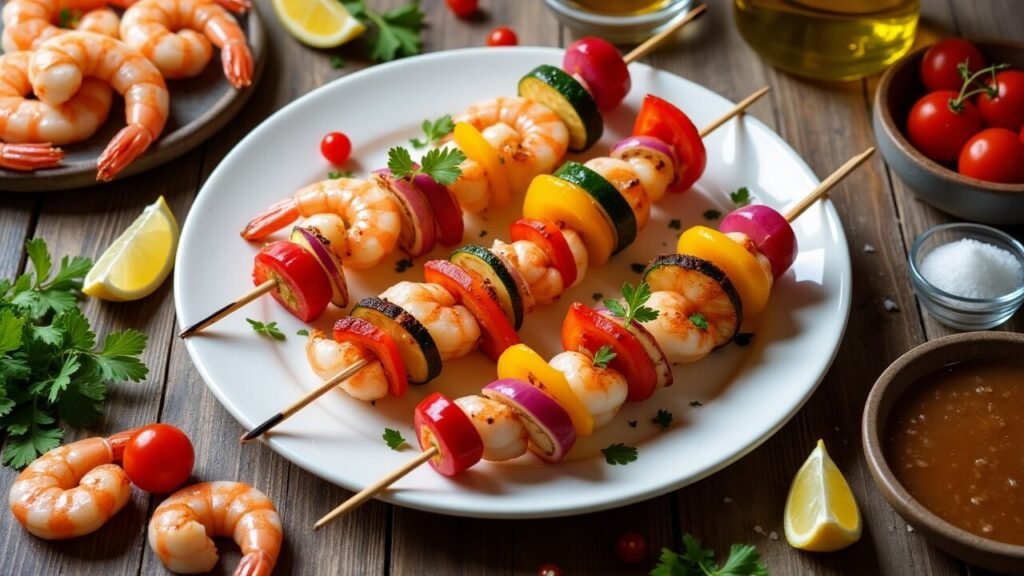
When you want a meal that’s both impressive and incredibly healthy, grilled shrimp and vegetable kabobs deliver everything you’re looking for in one colorful, flavorful package. These vibrant skewers combine succulent, perfectly seasoned shrimp with an array of crisp, charred vegetables, creating a meal that’s as beautiful as it is delicious. Each bite offers the perfect balance of smoky grilled flavors, tender seafood, and fresh vegetable crunch that makes summer grilling so appealing.
What makes shrimp and veggie kabobs so brilliantly satisfying? They transform simple, healthy ingredients into something that feels special and restaurant-worthy through the magic of grilling. The high heat caramelizes the vegetables’ natural sugars while giving the shrimp a beautiful char, creating layers of flavor that would be impossible to achieve through other cooking methods. Plus, the presentation is naturally Instagram-worthy – these colorful skewers make any meal feel like a celebration.
The beauty of these kabobs lies in their incredible versatility and foolproof nature. Whether you’re hosting a backyard barbecue, preparing a light summer dinner, meal-prepping for healthy lunches, or looking for something impressive enough for entertaining, these skewers adapt beautifully to any occasion. They’re naturally gluten-free, low-carb, and packed with protein and vegetables, making them perfect for virtually any dietary approach.
This recipe works equally well for casual weeknight dinners when you want something quick and healthy, special occasion gatherings where presentation matters, or meal prep sessions when you’re planning ahead for busy weeks. It’s proof that healthy eating doesn’t have to be bland or boring – sometimes the most nutritious meals are also the most delicious.
In this comprehensive guide, you’ll discover the secrets to perfectly grilled shrimp that’s never rubbery, achieving ideal vegetable doneness with beautiful char marks, creating marinades that infuse maximum flavor, and assembling kabobs that cook evenly and look professionally crafted.
Ingredients Breakdown
For the Shrimp:
Large shrimp (2 pounds, peeled and deveined): Choose 16-20 count shrimp for the best balance of size and cooking time. Larger shrimp are easier to skewer and less likely to overcook, while smaller ones cook too quickly. Fresh shrimp is ideal, but high-quality frozen shrimp (thawed) works perfectly. Look for shrimp that smell like the ocean, not fishy.
For the Vegetables:
Bell peppers (2 large, mixed colors): Red, yellow, and orange peppers provide the most vibrant colors and natural sweetness. Cut into 1-inch squares so they cook evenly and fit nicely on skewers. Green peppers work too but are slightly more bitter.
Zucchini (2 medium): Cut into thick rounds (about 3/4-inch) so they don’t fall apart during grilling. Choose firm zucchini without soft spots. The skin adds color and helps hold the pieces together on the skewer.
Cherry tomatoes (1 pint): Use firm, ripe tomatoes that won’t burst easily during grilling. Choose ones that are similar in size for even cooking. If your tomatoes are very ripe, thread them carefully to avoid splitting.
Red onion (1 large): Cut into 1-inch chunks, keeping layers together. Red onions are preferred for their mild flavor and beautiful color when grilled. The natural sugars caramelize beautifully over high heat.
Mushrooms (8 ounces baby bella or button mushrooms): Choose mushrooms of similar size. If using large mushrooms, cut them in half. Clean with a damp paper towel rather than washing to prevent water absorption.
For the Marinade:
Extra virgin olive oil (1/4 cup): High-quality olive oil provides flavor and prevents sticking. The oil also helps seasonings adhere to the shrimp and vegetables.
Fresh lemon juice (3 tablespoons): Provides brightness and helps tenderize the shrimp. Always use fresh lemon juice – bottled lacks the zingy freshness that makes this marinade special.
Garlic (4 cloves, minced): Fresh garlic is essential for the best flavor. Mince finely so it distributes evenly and doesn’t burn during grilling.
Fresh herbs (2 tablespoons each of parsley and cilantro, chopped): Fresh herbs add color and bright flavor. You can substitute with basil, oregano, or thyme based on your preferences.
Paprika (1 teaspoon): Adds color and mild smoky flavor. Sweet paprika works best, though smoked paprika adds interesting depth.
Salt (1 teaspoon): Enhances all flavors and helps season the shrimp properly. Use kosher salt for even distribution.
Black pepper (1/2 teaspoon, freshly ground): Freshly ground pepper provides better flavor than pre-ground. Adjust to taste.
Red pepper flakes (1/4 teaspoon, optional): Adds gentle heat without overwhelming the delicate shrimp flavor.
Optional Flavor Enhancers:
- Lemon zest (1 tablespoon) for extra citrus brightness
- Fresh oregano or thyme for Mediterranean flavors
- Balsamic vinegar (1 tablespoon) for subtle sweetness
- Honey (1 teaspoon) for caramelization
- Cumin (1/2 teaspoon) for earthy warmth
Equipment Needed:
- Metal or wooden skewers (if using wooden, soak for 30 minutes)
- Grill or grill pan
- Large mixing bowls
- Basting brush (optional)
Dietary Substitutions:
- Dairy-free: Recipe is naturally dairy-free
- Gluten-free: Naturally gluten-free
- Low-carb: Perfect as written
- Paleo-friendly: Compliant with paleo guidelines
- Keto-compatible: Very low in carbs, high in protein
- Shellfish-free: Substitute firm fish like halibut or chicken breast
Step-by-Step Instructions
Prepare the Ingredients:
1. Prepare the Shrimp If using frozen shrimp, thaw completely and pat dry with paper towels. Remove shells and devein if not already done. Large shrimp should be butterflied slightly (cut halfway through the back) to help them cook evenly and stay flat on the skewers.
2. Cut the Vegetables Cut all vegetables into uniform, bite-sized pieces that will cook at similar rates. Bell peppers into 1-inch squares, zucchini into 3/4-inch rounds, onions into 1-inch chunks keeping layers intact, and leave cherry tomatoes and small mushrooms whole.
3. Make the Marinade In a large bowl, whisk together olive oil, lemon juice, minced garlic, chopped herbs, paprika, salt, pepper, and red pepper flakes if using. The mixture should be well combined and aromatic.
Marinate and Prepare:
4. Marinate the Shrimp Add shrimp to half of the marinade in a separate bowl and toss to coat evenly. Let marinate for 15-20 minutes at room temperature. Don’t marinate longer than 30 minutes, as the acid will start to “cook” the shrimp.
5. Prepare Skewers If using wooden skewers, soak them in water for at least 30 minutes to prevent burning. Metal skewers don’t require soaking and conduct heat to help cook food from the inside.
6. Toss Vegetables Add prepared vegetables to the remaining marinade and toss gently to coat. Let sit while you prepare the grill. The vegetables can marinate longer than the shrimp without adverse effects.
Assembly and Grilling:
7. Preheat the Grill Preheat grill to medium-high heat (about 400-450°F). Clean and oil the grates well to prevent sticking. A clean, well-oiled grill is essential for easy flipping and attractive grill marks.
8. Thread the Skewers Thread shrimp and vegetables alternately onto skewers, leaving small spaces between pieces for even cooking. A good pattern is: pepper, shrimp, zucchini, onion, tomato, mushroom, then repeat. This ensures even cooking and attractive presentation.
9. Grill the First Side Place kabobs on the grill and cook for 2-3 minutes on the first side without moving them. This allows proper searing and prevents sticking. Look for nice grill marks before flipping.
10. Flip and Finish Carefully flip kabobs using tongs and grill for another 2-3 minutes until shrimp are pink and opaque and vegetables are tender with nice char marks. Total cooking time should be 4-6 minutes depending on size.
11. Rest and Serve Remove from grill and let rest for 2-3 minutes. Garnish with fresh herbs, lemon wedges, and serve immediately while hot. The brief rest allows juices to settle without overcooking.
Tips and Variations
Expert Tips for Perfect Kabobs:
- Size consistency: Cut all ingredients to similar sizes for even cooking
- Don’t overcrowd: Leave small gaps between pieces for proper air circulation
- Preheat properly: A hot grill is essential for good searing without sticking
- Flip once: Resist the urge to move kabobs constantly – let them develop good grill marks
- Watch the shrimp: They cook quickly and become rubbery if overdone
Shrimp Preparation Secrets:
Size matters: 16-20 count shrimp are ideal – large enough not to overcook but not so large they dominate
Butterflying technique: Score the back of each shrimp halfway through to prevent curling and ensure even cooking
Dry thoroughly: Pat shrimp completely dry before marinating for better seasoning adherence
Timing is crucial: Marinate only 15-20 minutes – longer will make them mushy
Color cues: Perfectly cooked shrimp are pink and opaque with no translucent areas
Vegetable Variations:
Mediterranean Mix: Add eggplant, artichoke hearts, and kalamata olives
Tropical Style: Include pineapple chunks and mango for sweet contrast
Garden Fresh: Use whatever vegetables are in season – asparagus, corn, squash
Hearty Version: Add small potatoes (pre-cooked) and thick carrot rounds
Color Rainbow: Focus on using vegetables of different colors for visual appeal
Marinade Variations:
Asian-Inspired: Soy sauce, sesame oil, ginger, and rice vinegar
Mediterranean: Lemon, oregano, garlic, and olive oil with a touch of balsamic
Cajun Spiced: Paprika, cayenne, garlic powder, and thyme
Herb Garden: Fresh basil, rosemary, sage, and lemon
Tropical: Lime juice, coconut oil, cilantro, and a touch of honey
Serving Suggestions
Shrimp and veggie kabobs are wonderfully versatile and work beautifully for various occasions and presentations.
Classic Summer Presentations:
- Serve over fluffy rice pilaf or coconut rice for a complete meal
- Arrange on large platters with lemon wedges and fresh herb garnishes
- Offer with grilled pita bread and tzatziki sauce for Mediterranean flair
- Include corn on the cob and watermelon for the perfect summer barbecue spread
Light and Healthy Options:
- Salad toppers: Serve over mixed greens with vinaigrette dressing
- Grain bowls: Arrange over quinoa or farro with avocado and cucumber
- Zucchini noodles: Serve over spiralized zucchini for low-carb option
- Cauliflower rice: Perfect pairing for keto and paleo diets
Party and Entertainment Ideas:
- Appetizer style: Make smaller kabobs for cocktail party finger food
- Buffet presentation: Keep warm on grill or in chafing dishes
- Beach picnic: Pack in insulated containers for outdoor dining
- Pool party: Light, refreshing option that won’t weigh guests down
International Inspirations:
- Greek style: Serve with lemon rice, cucumber yogurt sauce, and pita
- Mexican inspired: Offer with cilantro lime rice and avocado crema
- Asian fusion: Pair with jasmine rice and peanut dipping sauce
- Italian influenced: Serve with risotto and basil pesto drizzle
Beverage Pairings:
- Wine: Sauvignon Blanc, Pinot Grigio, or light rosé
- Beer: Light lagers, wheat beers, or citrus IPAs
- Non-alcoholic: Sparkling water with lime, iced tea, or lemonade
- Cocktails: Mojitos, margaritas, or wine spritzers
Storage and Reheating Instructions
Refrigerator Storage: Store cooked kabobs in airtight containers in the refrigerator for up to 3 days. Remove from skewers before storing to save space and make reheating easier. The flavors actually improve slightly as they have time to meld together.
Freezer Storage: Cooked shrimp and vegetable kabobs can be frozen for up to 2 months, though the texture of the vegetables will be softer after thawing. Freeze in single layers on baking sheets, then transfer to freezer bags. Label with date and contents.
Raw Preparation Storage: Assembled raw kabobs can be prepared up to 4 hours ahead and refrigerated until ready to grill. Cover tightly with plastic wrap and marinate the shrimp separately until just before cooking to prevent over-marinating.
Reheating Instructions:
- Oven: Reheat at 350°F for 5-7 minutes until heated through
- Microwave: Heat in 30-second intervals at 50% power to prevent overcooking shrimp
- Grill: Quickly reheat on medium heat for 1-2 minutes per side
- Stovetop: Sauté in a large skillet with a little oil for 2-3 minutes
Meal Prep Strategies:
- Component prep: Cut vegetables and marinate up to 2 days ahead
- Batch grilling: Make extra kabobs and use throughout the week
- Lunch boxes: Remove from skewers and pack with rice or salad
- Freezer meals: Assemble raw kabobs and freeze for future grilling
Food Safety Notes:
- Don’t leave cooked kabobs at room temperature for more than 2 hours
- Thaw frozen cooked kabobs in refrigerator overnight
- Always reheat to proper temperature (145°F for seafood)
- Use separate cutting boards for raw shrimp and vegetables
Recipe Notes
Shrimp Selection and Quality: Fresh shrimp should smell like the ocean, not fishy or ammonia-like. If buying frozen, look for shrimp that are individually quick frozen (IQF) without added sodium solutions. Wild-caught shrimp generally have better flavor than farm-raised, though both work fine for this recipe.
Skewer Strategy: Flat metal skewers are ideal because they prevent food from spinning when you flip them. If using round skewers, consider using two parallel skewers for stability. When threading, pierce shrimp through both the head and tail ends to keep them flat.
Vegetable Selection Tips: Choose vegetables that are similar in cooking time. Harder vegetables like carrots or potatoes should be pre-cooked slightly before skewering. Softer vegetables like tomatoes and mushrooms should be added to balance cooking times.
Grill Temperature and Timing: Medium-high heat is ideal for kabobs – hot enough to sear and create char marks but not so hot that exteriors burn before interiors cook. If your grill runs hot, lower the temperature and cook slightly longer.
Troubleshooting Common Issues:
- Shrimp overcooked: Reduce cooking time and watch for color change
- Vegetables undercooked: Cut smaller pieces or pre-cook harder vegetables
- Food sticking: Ensure grill is clean, well-oiled, and properly preheated
- Uneven cooking: Cut ingredients more uniformly and don’t overcrowd skewers
- Bland flavor: Increase marinade time for vegetables, add more acid or salt
Nutrition Information (Per Serving)
Based on 6 servings (2 kabobs each)
| Nutrient | Amount |
|---|---|
| Calories | 195 |
| Total Fat | 8g |
| Saturated Fat | 1g |
| Carbohydrates | 12g |
| Sugar | 8g |
| Dietary Fiber | 3g |
| Protein | 25g |
| Sodium | 485mg |
| Cholesterol | 185mg |
| Calcium | 75mg |
| Iron | 1.8mg |
| Potassium | 485mg |
| Vitamin A | 2,850 IU |
| Vitamin C | 95mg |
| Vitamin E | 2.5mg |
| Folate | 45mcg |
| Selenium | 38mcg |
| Phosphorus | 285mg |
Nutrition information is an estimate and may vary based on specific ingredients and portion sizes used.
Recipe Card Summary
Course: Main Dish
Cuisine: American, Mediterranean-inspired
Servings: 6 (12 kabobs)
Prep Time: 20 minutes
Marinating Time: 15 minutes
Cook Time: 6 minutes
Total Time: 41 minutes
Ingredients:
- 2 lbs large shrimp, peeled and deveined
- 2 mixed bell peppers, cut in 1-inch squares
- 2 medium zucchini, cut in 3/4-inch rounds
- 1 pint cherry tomatoes
- 1 large red onion, cut in chunks
- 8 oz mushrooms
- 1/4 cup olive oil
- 3 tbsp fresh lemon juice
- 4 cloves garlic, minced
- 2 tbsp each fresh parsley and cilantro
- 1 tsp paprika
- 1 tsp salt
- 1/2 tsp black pepper
- 1/4 tsp red pepper flakes (optional)
Instructions:
- Prepare shrimp and cut vegetables uniformly
- Mix marinade with oil, lemon juice, garlic, herbs, and seasonings
- Marinate shrimp 15-20 minutes, vegetables longer if desired
- Thread onto skewers alternating shrimp and vegetables
- Preheat grill to medium-high heat
- Grill 2-3 minutes per side until shrimp are pink and vegetables are charred
- Rest 2-3 minutes and serve with lemon wedges
Notes: Don’t over-marinate shrimp. Cut ingredients uniformly for even cooking. Soak wooden skewers 30 minutes before use. Watch carefully to avoid overcooking.
Nutrition: See detailed nutrition table above
Diet Tags
- High-Protein
- Low-Carb
- Gluten-Free
- Dairy-Free
- Paleo-Friendly
- Keto-Compatible
- Heart-Healthy
- Summer BBQ Perfect
- Quick & Easy
- Meal Prep Friendly
Health Benefits
Lean Protein Powerhouse: Shrimp provides over 25 grams of complete protein per serving while remaining very low in calories and saturated fat.
Antioxidant-Rich Vegetables: Colorful bell peppers, tomatoes, and zucchini provide vitamins A and C, plus antioxidants that support immune function.
Heart-Healthy Fats: Olive oil provides monounsaturated fats that support cardiovascular health and help absorb fat-soluble vitamins.
Low-Calorie Satisfaction: At under 200 calories per serving, these kabobs provide substantial nutrition and satisfaction without excess calories.
Selenium Source: Shrimp provides selenium, an important antioxidant mineral that supports thyroid function and immune health.
Vitamin C Boost: Bell peppers and tomatoes provide significant vitamin C for collagen production and immune support.
Fiber Content: Vegetables contribute fiber for digestive health and blood sugar regulation.
Anti-Inflammatory: The combination of omega-3 fatty acids from shrimp and antioxidants from vegetables may help reduce inflammation.
FAQs
1. How do I prevent my shrimp from becoming rubbery and overcooked? The key is timing and temperature. Shrimp cook very quickly – usually 2-3 minutes per side on medium-high heat. They’re done when they turn pink and opaque. Don’t marinate them longer than 20-30 minutes, as the acid will start to “cook” them. Also, remove them from heat as soon as they’re done, as carryover cooking can make them tough.
2. Can I make these kabobs ahead of time? You can prep all components up to 4 hours ahead. Cut vegetables and store in the refrigerator, but don’t marinate the shrimp until 15-20 minutes before cooking. Assembled raw kabobs can be refrigerated for a few hours, but cook them the same day for best quality and food safety.
3. What vegetables work best for grilling on kabobs? Choose vegetables with similar cooking times and that hold together well on skewers. Bell peppers, zucchini, mushrooms, cherry tomatoes, and onions are ideal. Harder vegetables like carrots or potatoes should be partially pre-cooked. Very soft vegetables like regular tomatoes may fall apart, so stick to cherry varieties.
4. How do I know when the kabobs are perfectly cooked? Shrimp should be pink and opaque with no translucent areas. Vegetables should be tender when pierced with a fork but still have some bite – not mushy. Look for nice char marks on all ingredients. Total cooking time is usually 4-6 minutes, flipping once.
5. Can I use frozen shrimp for this recipe? Yes, but make sure to thaw them completely first and pat them very dry with paper towels. Frozen shrimp often contain more water, so proper drying is crucial for good searing and marinade adherence. The quality should be comparable to fresh shrimp once properly thawed and prepared.
Final Thoughts
Shrimp and veggie kabobs represent the perfect intersection of healthy eating and delicious, satisfying meals. These colorful skewers prove that nutritious food can be visually stunning, incredibly flavorful, and fun to eat all at the same time. They’re the kind of dish that makes healthy eating feel like a celebration rather than a compromise.
What makes these kabobs truly special is how they transform simple, wholesome ingredients into something that looks and tastes restaurant-worthy through the magic of grilling. The combination of perfectly cooked shrimp with charred, caramelized vegetables creates layers of flavor and texture that would be impossible to achieve through other cooking methods.
From a practical standpoint, mastering kabobs opens up endless possibilities for creative, healthy meals. Once you understand the basic principles – proper marinating, uniform cutting, temperature control, and timing – you can adapt this technique to whatever ingredients you have on hand or whatever dietary needs you’re trying to meet.
The beauty of shrimp and veggie kabobs lies in their incredible versatility and universal appeal. They work equally well for intimate family dinners and large outdoor gatherings, for meal prep sessions and special occasion entertaining. They’re naturally aligned with virtually every healthy eating approach while being delicious enough to satisfy even the most discerning palates.
So fire up that grill, gather your freshest vegetables, and prepare to discover how these simple skewers can become one of your most reliable, impressive, and satisfying meal solutions. The techniques you learn and the confidence you gain will serve you well in countless future grilling adventures, proving that some of the best meals are those that celebrate the natural flavors of high-quality, fresh ingredients!
