
Garlic Butter Steak Recipe – Perfect Restaurant Quality
Introduction
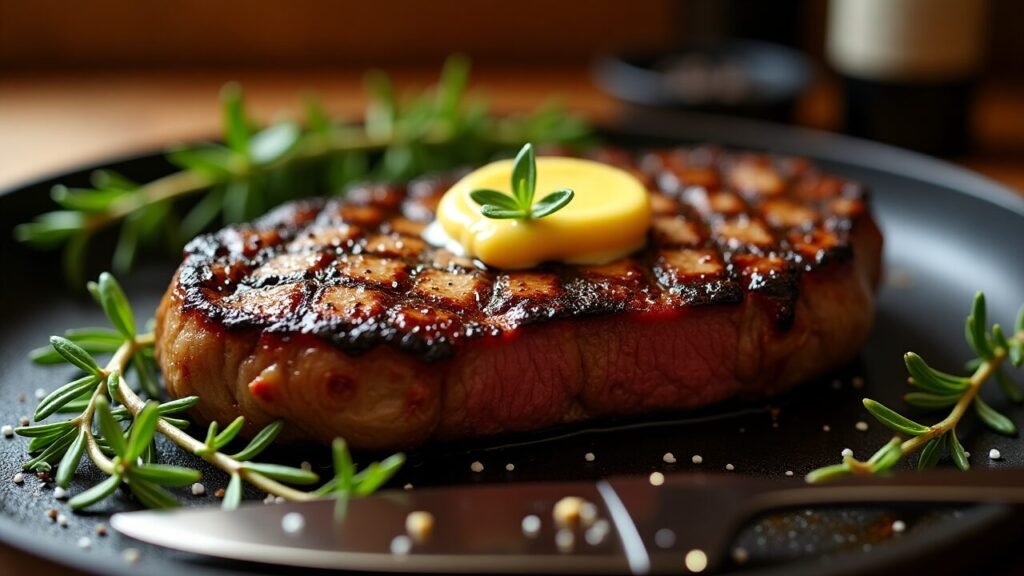
There’s nothing quite like the moment when you cut into a perfectly seared steak and watch that gorgeous pink center reveal itself, especially when it’s crowned with a pat of herb-infused garlic butter slowly melting into every crevice. This garlic butter steak represents the pinnacle of simple yet sophisticated cooking – taking a premium cut of beef and elevating it with technique and flavor that rivals any high-end steakhouse.
What makes this dish absolutely extraordinary is the combination of proper searing technique that creates that coveted golden-brown crust while keeping the interior perfectly tender and juicy, paired with compound garlic butter that melts into the hot steak, creating layers of rich, aromatic flavor in every single bite. The contrast between the caramelized exterior and the herb-butter richness creates a dining experience that’s both rustic and refined.
This recipe succeeds because it focuses on mastering fundamental techniques that transform a simple piece of meat into something spectacular. The key is understanding how heat, timing, and resting work together to achieve that perfect doneness, while the compound butter adds a restaurant-quality finish that makes every bite feel like a special occasion.
Whether you’re celebrating an anniversary, impressing dinner guests, or simply treating yourself to the kind of meal that makes ordinary evenings feel extraordinary, this garlic butter steak delivers steakhouse-quality results that will have everyone asking for your secret.
Ingredients Breakdown
For the Steaks:
- 4 ribeye steaks (8-10 oz each), 1-1.5 inches thick – Ribeye is ideal for its marbling and flavor, but NY strip, filet mignon, or porterhouse work beautifully too. Thickness is crucial for proper searing without overcooking.
- 2 tablespoons high-heat cooking oil – Use avocado oil, grapeseed oil, or canola oil. Avoid olive oil which has a lower smoke point and can burn during high-heat searing.
- 2 teaspoons coarse kosher salt – Coarse salt adheres better and doesn’t dissolve as quickly as fine salt. Sea salt or kosher salt both work excellently.
- 1 teaspoon freshly cracked black pepper – Freshly cracked pepper provides superior flavor and the right texture. Pre-ground pepper lacks the punch needed for steak.
- 2 tablespoons fresh thyme leaves – Adds aromatic, earthy notes that complement the beef beautifully. Fresh is essential – dried thyme doesn’t provide the same impact.
- 3 sprigs fresh rosemary – Provides pine-like aromatics that enhance the meat’s natural flavors. Strip the leaves from the stems before using.
For the Garlic Herb Butter:
- 8 tablespoons (1 stick) unsalted butter, softened – Must be at room temperature for easy mixing. Unsalted gives you control over the final seasoning.
- 4 large cloves garlic, minced – Fresh garlic is non-negotiable for authentic flavor. The amount can be adjusted to taste preference.
- 2 tablespoons fresh parsley, finely chopped – Adds color, freshness, and herbal brightness that cuts through the richness.
- 1 tablespoon fresh chives, finely chopped – Provides mild onion flavor and beautiful green flecks throughout the butter.
- 1 teaspoon fresh thyme leaves – Echoes the thyme used on the steak for cohesive flavor.
- 1/2 teaspoon salt – Enhances all the flavors and helps preserve the compound butter.
- 1/4 teaspoon black pepper – Adds gentle heat and depth.
- 1 teaspoon fresh lemon juice – Brightens the butter and prevents the garlic from becoming overwhelming.
Optional Enhancements:
- 2 tablespoons shallots, minced – For extra aromatic depth in the compound butter.
- 1 teaspoon Dijon mustard – Adds subtle tang and complexity to the butter.
- 1/4 teaspoon smoked paprika – For subtle smokiness that enhances the seared flavors.
- Flaky sea salt – For finishing the cooked steaks with textural contrast.
Steak Selection Tips: Choose steaks that are well-marbled with fat running throughout – this marbling melts during cooking and keeps the meat juicy and flavorful. The steaks should be bright red with no gray or brown areas, and should smell fresh, not fishy or sour.
For even cooking, select steaks that are uniform in thickness. If they vary significantly, you can pound the thicker areas gently to even them out, though this isn’t ideal for premium cuts.
Quality Matters: Invest in good quality beef from a reputable butcher or high-end grocery store. Prime or Choice grades will give you the best results. The difference in flavor and texture between premium beef and standard grocery store cuts is dramatic.
Step-by-Step Instructions
Step 1: Prepare the Compound Butter (15 minutes) Remove the butter from the refrigerator 30-60 minutes before starting so it reaches room temperature and becomes easily mixable. In a medium bowl, combine the softened butter, minced garlic, chopped parsley, chives, thyme, salt, pepper, and lemon juice. Mix thoroughly with a fork or wooden spoon until all ingredients are evenly distributed and the butter is smooth. Taste and adjust seasoning as needed. Transfer the mixture to a piece of parchment paper, roll into a log shape, and refrigerate for at least 30 minutes to firm up.
Step 2: Bring Steaks to Room Temperature (30-45 minutes) Remove the steaks from refrigeration 30-45 minutes before cooking to allow them to come to room temperature. This ensures more even cooking throughout. Pat the steaks completely dry with paper towels – any surface moisture will prevent proper searing. Moisture creates steam, which inhibits the Maillard reaction that creates that beautiful brown crust.
Step 3: Season Generously (5 minutes) Season both sides of each steak generously with the coarse kosher salt and freshly cracked black pepper, pressing the seasonings gently into the meat. For best results, season 40 minutes before cooking to allow the salt to penetrate and enhance the meat’s natural flavors. The surface should be well-coated but not encrusted.
Step 4: Preheat Pan to Smoking Hot (5-8 minutes) Heat a large cast-iron skillet, heavy-bottomed stainless steel pan, or grill pan over high heat until it’s smoking hot. This typically takes 5-8 minutes. The pan must be extremely hot to create the proper sear – you should see wisps of smoke rising from the pan. A properly heated pan is crucial for developing that coveted golden-brown crust.
Step 5: Sear the Steaks (6-8 minutes total) Add the high-heat oil to the smoking pan, swirling to coat evenly. Carefully place the steaks in the pan, laying them away from you to avoid oil splatter. Don’t move them for 3-4 minutes – resist the urge to check or adjust. You’ll hear vigorous sizzling, which is exactly what you want. The steaks will release easily from the pan when they’re properly seared and ready to flip.
Step 6: Flip and Continue Cooking (3-4 minutes) Using tongs, flip each steak and sear the other side for 3-4 minutes for medium-rare, or adjust timing based on your preferred doneness. For accurate results, use a meat thermometer: 120-125°F for rare, 130-135°F for medium-rare, 135-145°F for medium. The internal temperature will rise 5-10 degrees during resting.
Step 7: Add Aromatics and Baste (2-3 minutes) During the last minute of cooking, add the fresh thyme sprigs and rosemary to the pan around the steaks. If desired, add a tablespoon of butter to the pan and tilt it, using a spoon to baste the steaks with the aromatic herb butter. This step adds incredible flavor and helps create an even more beautiful crust.
Step 8: Rest the Steaks (5-10 minutes) Remove the steaks from the pan and place on a cutting board or warm plates. Top each steak immediately with a generous pat of the prepared garlic herb butter – the heat will begin melting it immediately. Tent loosely with foil and let rest for 5-10 minutes. This crucial step allows the juices to redistribute throughout the meat, ensuring every bite is juicy and tender.
Step 9: Slice and Serve (2 minutes) If desired, slice the steaks against the grain into thick strips to showcase the perfect doneness. Arrange on warmed plates and add any additional pats of garlic butter. Serve immediately while the butter is still melting and the steak is at optimal temperature. The combination of the hot, perfectly cooked steak and the cold, herb-infused butter creates an incredible contrast of temperatures and flavors.
Tips and Variations
Searing Mastery Techniques:
The most common mistake in steak cooking is not getting the pan hot enough or moving the steaks too early. The pan should be smoking before you add the oil, and the oil should shimmer immediately when added. When you place the steaks in the pan, they should sizzle aggressively.
Don’t overcrowd the pan – cook steaks in batches if necessary. Overcrowding lowers the pan temperature and creates steam instead of the dry heat needed for proper searing.
The “flip test” is reliable: when the steak releases easily from the pan without sticking, it’s ready to flip. Trying to move it before this point will tear the crust and result in uneven browning.
Temperature and Doneness Guide:
Invest in a good instant-read thermometer – it’s the most reliable way to achieve consistent results. Insert it horizontally into the thickest part of the steak, avoiding fat pockets that can give false readings.
Remember that carryover cooking continues after you remove the steak from heat. Remove steaks 5-10 degrees before your target temperature to account for this continued cooking during the resting period.
Flavor Variations:
Blue Cheese Compound Butter: Add 2-3 tablespoons of crumbled blue cheese to the butter mixture for bold, tangy flavor that pairs beautifully with beef.
Mediterranean Herb Butter: Use oregano, basil, and sun-dried tomatoes in the compound butter for Italian-inspired flavors.
Spicy Garlic Butter: Add minced jalapeño or chipotle pepper, or a few dashes of hot sauce to the compound butter for heat lovers.
Wine-Enhanced: Deglaze the pan with red wine after cooking the steaks, reducing it to a syrupy consistency for an elegant pan sauce.
Different Cuts: This technique works beautifully with NY strip, filet mignon, porterhouse, or T-bone steaks. Adjust cooking times based on thickness and cut characteristics.
Reverse Sear Method: For very thick steaks, try the reverse sear – cook in a low oven (275°F) until nearly done, then finish with a high-heat sear for perfect edge-to-edge doneness.
Serving Suggestions
This garlic butter steak is substantial enough to be the star of any meal, but the right accompaniments can create a complete dining experience that rivals any high-end steakhouse.
Classic Steakhouse Sides: Loaded baked potatoes or garlic mashed potatoes provide the perfect creamy, starchy complement to the rich steak. The contrast of textures and the way the garlic butter melts into the potatoes creates pure comfort food perfection.
Roasted asparagus, green beans, or Brussels sprouts add color and nutrition while providing a fresh contrast to the rich meat. The slight bitterness of vegetables balances the richness beautifully.
Elegant Accompaniments: Truffle mac and cheese or potato gratin elevates the entire meal to special occasion status. These rich sides complement rather than compete with the steak’s luxurious nature.
A simple arugula salad with lemon vinaigrette provides peppery freshness that cleanses the palate between bites of rich steak.
Wine Pairings: Full-bodied red wines are the classic choice – Cabernet Sauvignon, Malbec, or a robust Bordeaux blend complement the rich flavors perfectly. The tannins in red wine help cleanse the palate and enhance the meat’s flavors.
For special occasions, try pairing with a bold Barolo or aged Brunello di Montalcino for an unforgettable combination.
Bread and Starters: Crusty French bread or garlic bread helps soak up any precious garlic butter that pools on the plate. A classic shrimp cocktail or oysters Rockefeller make elegant starters for a complete steakhouse experience.
Creative Presentations: For entertaining, consider slicing the steaks and arranging them on a large platter family-style, with extra compound butter alongside. This creates a more casual, sharing-style presentation that encourages conversation.
Individual cast-iron serving plates keep steaks hot longer and add rustic elegance to the presentation.
Storage and Reheating Instructions
Proper Storage Methods: While steak is always best enjoyed immediately after cooking, leftovers can be stored successfully with proper technique. Cool cooked steaks completely before refrigerating, and store in airtight containers or wrapped tightly in plastic wrap for up to 3 days.
The compound butter can be made well in advance and stored in the refrigerator for up to one week, or frozen for up to 3 months. Wrap tightly in plastic wrap or store in an airtight container.
Compound Butter Storage: Roll the prepared compound butter in parchment paper or plastic wrap to form a log, then refrigerate until firm. This makes it easy to slice off portions as needed. For longer storage, wrap the log in aluminum foil before freezing.
Individual portions can be formed using ice cube trays or small ramekins, then stored in freezer bags once solid.
Reheating Guidelines: The best method for reheating steak is gently in a low oven (250°F) until just warmed through, about 10-15 minutes depending on thickness. This prevents overcooking while warming the meat evenly.
For quick reheating, slice the steak thinly and warm briefly in a skillet over medium heat, adding a pat of compound butter to refresh the flavors.
Avoid microwave reheating when possible, as it tends to overcook the meat and create tough, chewy texture.
Quality Maintenance: Leftover steak makes excellent additions to salads, sandwiches, or grain bowls. The compound butter can refresh and add flavor to reheated portions.
Consider slicing leftover steak for steak and eggs, fajitas, or steak salad rather than trying to reheat whole pieces, which often results in overcooking.
Recipe Notes
Equipment Essentials: A heavy-bottomed pan is crucial for even heat distribution and proper searing. Cast iron retains and distributes heat beautifully, making it ideal for steaks. Stainless steel pans also work well, but avoid non-stick pans which can’t withstand the high heat needed for proper searing.
An instant-read thermometer takes the guesswork out of achieving perfect doneness and is worth the investment for consistent results.
Long-handled tongs are safer and more effective than forks for flipping steaks, as forks can pierce the meat and allow juices to escape.
Safety Considerations: When working with very hot pans and oil, have a lid nearby to cover the pan if flare-ups occur. Never add water to a grease fire – smother with a lid or salt if necessary.
Keep a fire extinguisher accessible when cooking at high heat, especially if your stove produces significant heat output.
Timing for Success: Plan for about 2 hours total time including bringing steaks to room temperature, making compound butter, and resting time. The active cooking time is only about 10 minutes, but proper preparation is crucial for best results.
Have all components ready before you start searing – once you begin, timing is critical and there’s no time to stop and prepare other elements.
Quality Indicators: A properly seared steak will have a deep golden-brown crust with no gray band beneath it. The interior should be evenly cooked to your preferred doneness with no overcooked edges.
The compound butter should be well-incorporated with no streaks of unmixed ingredients, and should hold its shape when chilled but spread easily when soft.
Nutrition Information (Per Serving)
| Nutrient | Amount |
|---|---|
| Calories | 650 |
| Total Fat | 48g |
| Saturated Fat | 22g |
| Carbohydrates | 2g |
| Sugar | 0g |
| Fiber | 0g |
| Protein | 52g |
| Sodium | 720mg |
| Cholesterol | 165mg |
| Iron | 4.8mg |
| Zinc | 8.2mg |
Nutrition information is an estimate and may vary based on specific ingredients used.
Recipe Card Summary
Course: Main Dish
Cuisine: American, Steakhouse
Servings: 4
Prep Time: 45 minutes
Cook Time: 10 minutes
Total Time: 55 minutes
Ingredients:
For the Steaks:
- 4 ribeye steaks (8-10 oz each), 1-1.5 inches thick
- 2 tablespoons high-heat cooking oil
- 2 teaspoons coarse kosher salt
- 1 teaspoon freshly cracked black pepper
- 2 tablespoons fresh thyme leaves
- 3 sprigs fresh rosemary
For the Garlic Herb Butter:
- 8 tablespoons unsalted butter, softened
- 4 large cloves garlic, minced
- 2 tablespoons fresh parsley, chopped
- 1 tablespoon fresh chives, chopped
- 1 teaspoon fresh thyme leaves
- 1/2 teaspoon salt
- 1/4 teaspoon black pepper
- 1 teaspoon fresh lemon juice
Instructions:
- Make compound butter by mixing all butter ingredients. Roll in parchment, refrigerate 30 minutes.
- Bring steaks to room temperature, 30-45 minutes. Pat dry thoroughly.
- Season generously with salt and pepper 40 minutes before cooking.
- Heat cast-iron pan over high heat until smoking.
- Add oil, then steaks. Sear 3-4 minutes without moving.
- Flip and sear 3-4 minutes more for medium-rare (130-135°F internal temp).
- Add herbs to pan during last minute, baste with butter if desired.
- Remove steaks, top with compound butter, rest 5-10 minutes.
- Slice if desired and serve immediately.
Notes:
- Pan must be smoking hot for proper sear
- Don’t move steaks until ready to flip
- Use meat thermometer for accuracy
- Resting is crucial for juicy results
Nutrition: 650 calories, 52g protein, 2g carbs, 0g fiber per serving
Diet Tags
- High Protein
- Low Carb
- Keto-Friendly
- Gluten-Free
- Grain-Free
- Steakhouse Quality
- Special Occasion
- Date Night
- Luxury Dining
- Restaurant-Style
Health Benefits
This garlic butter steak provides exceptional nutritional value alongside its incredible flavor, making it a surprisingly healthful choice when enjoyed as part of a balanced diet. The high-quality beef is an excellent source of complete protein, providing all essential amino acids necessary for muscle maintenance, growth, and repair. With about 52 grams of protein per serving, this dish is particularly satisfying and helps maintain stable blood sugar levels.
Beef is also one of the best dietary sources of iron, particularly heme iron, which is more easily absorbed by the body than plant-based iron sources. This supports healthy red blood cell formation and prevents anemia. The zinc content supports immune function and wound healing, while B vitamins, particularly B12, support nervous system function and energy metabolism.
The garlic in the compound butter provides allicin, a compound with potential antimicrobial and cardiovascular benefits. Fresh herbs like parsley and thyme contribute antioxidants, vitamin K, and beneficial plant compounds that support overall health.
While this dish is higher in saturated fat, it’s important to note that recent research suggests the relationship between saturated fat and heart disease is more complex than previously understood, especially when consumed as part of whole foods rather than processed products.
The high protein and fat content makes this dish very satisfying, potentially helping with portion control and reducing cravings for less nutritious foods.
Frequently Asked Questions
1. How do I know when my steak is perfectly cooked without cutting into it? Use an instant-read thermometer inserted horizontally into the thickest part of the steak. For medium-rare, aim for 130-135°F, remembering that the temperature will rise 5-10 degrees during resting. You can also use the finger test – medium-rare steak feels like the fleshy area between your thumb and forefinger when you make an “OK” sign.
2. Why is my steak tough even though I cooked it to the right temperature? Toughness usually results from not letting the steak rest after cooking, cooking too quickly at too high heat, or starting with a lower quality cut. Always rest steaks for 5-10 minutes after cooking to allow juices to redistribute. Also, make sure you’re cutting against the grain if slicing.
3. Can I make the compound butter ahead of time? Absolutely! Compound butter can be made up to a week in advance and refrigerated, or frozen for up to 3 months. Make a large batch and freeze in portions – it’s great to have on hand for enhancing vegetables, bread, or other proteins.
4. What if I don’t have a cast-iron pan? A heavy-bottomed stainless steel pan works well, though cast iron retains heat better. Avoid non-stick pans which can’t handle the high heat needed for proper searing. You can also use a grill pan or cook the steaks on an outdoor grill using the same timing and techniques.
5. How thick should my steaks be for this recipe? Aim for 1 to 1.5 inches thick. Thinner steaks cook too quickly and are prone to overcooking, while very thick steaks (over 2 inches) may need the reverse-sear method for even cooking. Consistent thickness across all steaks ensures they’ll all be done at the same time.
Final Thoughts
This garlic butter steak represents the perfect intersection of simplicity and sophistication – proof that the finest meals don’t require complicated techniques or exotic ingredients, just quality components treated with skill and respect. Mastering this recipe means you’ll never again need to settle for mediocre steaks or pay steakhouse prices for restaurant-quality results.
What makes this dish truly special is how it teaches fundamental cooking skills that extend far beyond just steak preparation. You’ll learn proper searing technique, temperature control, the importance of resting, and how to make compound butter – all skills that will elevate countless other dishes in your repertoire.
The compound butter alone is worth mastering, as it transforms not just steaks but vegetables, seafood, and even simple bread into something extraordinary. Once you experience the difference that herb-infused garlic butter makes, you’ll find yourself keeping a log in your freezer for quick meal enhancement.
Remember that great steak cooking is as much about confidence as technique. Trust the process, resist the urge to constantly check and move the meat, and embrace the dramatic sizzling sounds that indicate everything is working perfectly. Each time you make this recipe, you’ll develop a better feel for timing and temperature.
I encourage you to experiment with different herb combinations in your compound butter, try various cuts of steak, and make this recipe uniquely yours. The foundation techniques remain constant, but personalizing the flavors makes it your signature dish.
Please share your garlic butter steak experiences in the comments below. I’d love to hear about your first attempts, any creative compound butter variations you discovered, and whether this recipe helped you achieve that perfect steakhouse-quality sear at home. Here’s to creating memorable meals that turn ordinary evenings into special occasions!