
Galbitang – Korean Short Rib Soup
- Introduction
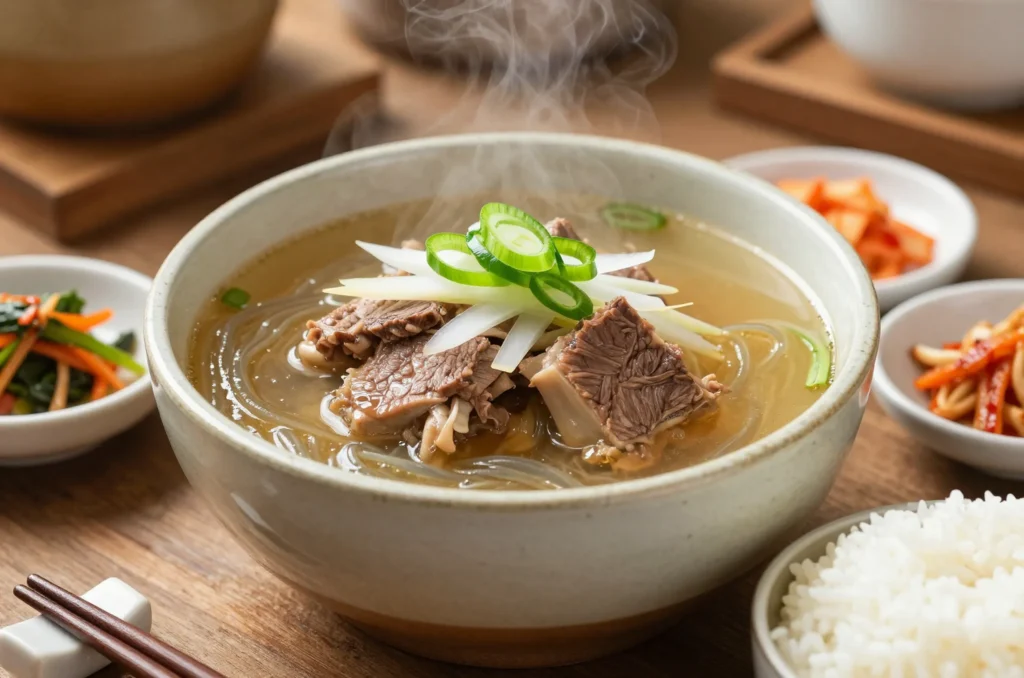
There is something deeply comforting about a bowl of hot, clear soup simmered slowly with tender beef and simple aromatics. Galbitang, a beloved Korean short rib soup, is one of those dishes that feels both nourishing and special at the same time. Traditionally served in Korean homes and restaurants, this soup is known for its crystal-clear broth and melt-in-your-mouth beef ribs.
Galbitang comes from Korea and is considered a classic comfort dish in Korean cuisine. Unlike spicy stews, this soup is light, clean-tasting, and focuses on the natural richness of beef short ribs. The broth is gently simmered for hours, allowing the flavors to develop without becoming heavy.
Why You’ll Love This Galbitang Recipe
- It uses simple ingredients but delivers deep flavor.
- The broth is clear, clean, and soothing.
- It is beginner-friendly with easy, clear steps.
- It can be customized with noodles, extra vegetables, or different seasonings.
- It is perfect for family dinners or special occasions.
In this article, you will learn exactly how to make authentic Galbitang at home, understand each ingredient, avoid common mistakes, and even discover the health benefits of this nourishing soup.
- Ingredients Breakdown
Beef Short Ribs
This is the star of the dish. Use bone-in beef short ribs for the best flavor. The bones release collagen during cooking, giving the broth body and richness. Tip: Soak the ribs in cold water for 1 to 2 hours before cooking to remove excess blood and ensure a clear broth.
Korean Radish (Mu)
Korean radish adds natural sweetness and balances the richness of the beef. If you cannot find Korean radish, regular white daikon works well as a substitute.
Garlic
Whole garlic cloves are simmered in the broth to provide subtle depth. Do not mince them, as whole cloves keep the broth clear.
Ginger
A few slices of fresh ginger help remove any strong beef smell and add warmth to the soup.
Green Onions
These are used both in cooking and as garnish. They add freshness and mild onion flavor.
Glass Noodles (Dangmyeon)
Optional but traditional in some versions. They make the soup more filling. Soak them in warm water before adding to the pot.
Salt and Black Pepper
Galbitang is lightly seasoned. The focus is on the natural flavor of beef. Always season at the end to avoid over-salting.
Sesame Oil (Optional)
A few drops added before serving enhance aroma.
Substitutions and Dietary Options
- For a lower-fat version, trim visible fat from the ribs before cooking.
- For a gluten-free version, ensure noodles are made from sweet potato starch only.
- For a low-sodium diet, reduce salt and serve with herbs for extra flavor.
- Step-by-Step Instructions
Step 1: Soak the Ribs
Place the short ribs in a large bowl and cover with cold water. Let them soak for 1 to 2 hours, changing the water once. This step removes excess blood and keeps the broth clear.
Step 2: Blanch the Ribs
Transfer the ribs to a large pot and cover with fresh water. Bring to a boil for 5 to 10 minutes. You will see foam rising to the top. Drain the ribs and rinse them under cold running water. Clean the pot before continuing.
Step 3: Simmer the Broth
Return the cleaned ribs to the pot. Add about 10 cups of fresh water, garlic cloves, and ginger slices. Bring to a gentle boil, then reduce to low heat. Simmer for 1.5 to 2 hours. Skim off any foam for a clear broth.
Step 4: Add Radish
Add thick slices of Korean radish during the last 30 to 40 minutes of cooking. The radish should become tender but not mushy.
Step 5: Add Noodles (Optional)
If using glass noodles, add soaked noodles in the final 10 minutes. Cook until soft.
Step 6: Season and Garnish
Season with salt and black pepper to taste. Serve hot, garnished with chopped green onions and a few drops of sesame oil if desired.
- Tips and Variations
Expert Tips
- Always blanch and rinse ribs for a clear broth.
- Simmer gently, not rapidly. Strong boiling makes broth cloudy.
- Remove excess fat from the surface before serving.
Variations
- Add jujubes and chestnuts for a slightly sweet traditional touch.
- Add sliced mushrooms for extra umami flavor.
- For kids, keep seasoning mild and skip black pepper.
- For adults, serve with freshly cracked black pepper and spicy chili paste on the side.
- For a richer version, simmer longer to deepen flavor.
- Serving Suggestions
Galbitang is traditionally served with a bowl of steamed white rice and Korean side dishes. It pairs well with simple kimchi, pickled vegetables, and seasoned spinach.
For presentation, serve in a deep bowl with ribs standing upright and green onions sprinkled on top.
Pairing ideas include barley tea or light green tea. For a themed dinner night, serve it alongside other Korean dishes like bulgogi or japchae.
- Storage and Reheating Instructions
Refrigerator
Store leftovers in an airtight container for up to 4 days. The broth may solidify slightly due to collagen, which is normal.
Freezer
Freeze for up to 3 months. Store without noodles for best texture.
Reheating
Microwave: Heat in a microwave-safe bowl for 2 to 3 minutes, stirring halfway.
Stovetop: Reheat gently over medium heat until hot.
Oven is not recommended for soup.
- Recipe Notes
- Can be prepped ahead of time and tastes better the next day.
- Best served with freshly chopped green onions.
- Use a large heavy-bottom pot for even simmering.
- Skim foam carefully for the clearest broth.
- Nutrition Information (Per Serving)
Estimated per serving (based on 4 servings):
| Nutrient | Amount |
|---|---|
| Calories | 420 kcal |
| Fat | 28 g |
| Saturated Fat | 11 g |
| Carbs | 8 g |
| Sugar | 3 g |
| Fiber | 1 g |
| Protein | 34 g |
| Sodium | 780 mg |
| Cholesterol | 95 mg |
| Calcium | 60 mg |
| Iron | 3.5 mg |
Nutrition information is an estimate and may vary based on specific ingredients used.
- Recipe Card Summary
Course: Main Course
Cuisine: Korean
Servings: 4
Prep Time: 20 minutes (plus soaking time)
Cook Time: 2 hours
Total Time: 2 hours 20 minutes
Ingredients
- 2 pounds beef short ribs
- 1 Korean radish, sliced
- 6 garlic cloves
- 4 slices ginger
- 2 green onions
- 2 ounces glass noodles (optional)
- Salt and black pepper to taste
- 1 teaspoon sesame oil (optional)
Instructions
- Soak ribs in cold water for 1 to 2 hours.
- Blanch ribs for 5 to 10 minutes and rinse.
- Simmer ribs with fresh water, garlic, and ginger for 2 hours.
- Add radish during last 40 minutes.
- Add noodles in final 10 minutes.
- Season and garnish before serving.
Notes
Simmer gently for a clear broth. Remove excess fat for lighter soup.
Diet Tags: High-Protein, Dairy-Free, Gluten-Free Option, Traditional Korean Cuisine
- Health Benefits Section
Beef Short Ribs
Rich in protein and iron, supporting muscle growth and healthy blood circulation.
Garlic
Contains antioxidants and may support immune health.
Ginger
Known for anti-inflammatory properties and aiding digestion.
Korean Radish
Low in calories and high in fiber and vitamin C.
Bone Broth
Contains collagen, which supports joint and skin health.
- Suggested Sauce
Galbitang is typically served plain, but you can mix a small dipping sauce with soy sauce, chopped green onions, and a little minced garlic for dipping the meat. Some people enjoy a small spoon of spicy chili paste on the side.
- Avoid These Mistakes
- Skipping the soaking step.
- Boiling too hard instead of simmering gently.
- Over-seasoning early in cooking.
- Not skimming foam for clarity.
- FAQs
- Can I make Galbitang in a pressure cooker?
Yes. Cook for about 40 minutes under pressure, then natural release for best results. - Why is my broth cloudy?
It may have boiled too hard or the ribs were not rinsed properly after blanching. - Can I use boneless ribs?
Bone-in ribs are recommended for flavor, but boneless can work if needed. - Is Galbitang spicy?
No, it is naturally mild. Spice is added separately if desired. - Can I prepare it the day before serving?
Yes, the flavor improves the next day. - What type of pot is best?
A heavy-bottomed stockpot works best for even simmering.
Whether you’re feeding a crowd or just craving comfort food, this Galbitang – Short Rib Soup is sure to hit the spot. Let me know how it turns out for you in the comments below