
Haemul Jjigae (Korean Seafood Stew)
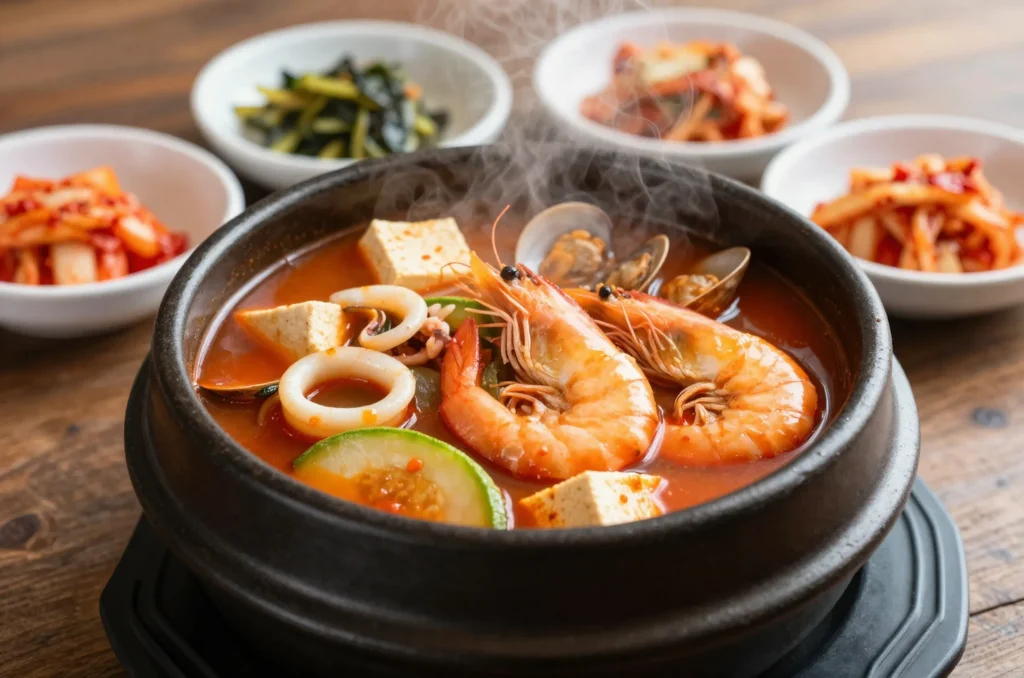
1. Introduction
If you enjoy warm, comforting meals that feel nourishing without being complicated, Haemul Jjigae is a dish you’ll quickly fall in love with. This Korean seafood stew is deeply flavorful, gently spicy, and packed with a mix of seafood and vegetables simmered in a rich broth. It’s the kind of meal that warms you from the inside and feels satisfying without being heavy.
One of the best things about Haemul Jjigae is how approachable it is for beginners. You don’t need advanced cooking skills or special equipment. Everything comes together in one pot, the steps are simple, and the ingredients are flexible. You can adjust the spice level, switch up the seafood, or add more vegetables depending on what you like or what you have on hand.
In this recipe, you’ll learn how to build flavor step by step, how to handle seafood so it stays tender, and how to balance the broth so it tastes bold but not overpowering. Whether you’re cooking for yourself, your family, or a small gathering, this stew is a comforting choice that feels special without being stressful.
Why You’ll Love This Recipe
- One-pot meal that’s easy to manage
- Beginner-friendly steps with clear guidance
- Customizable with different seafood and vegetables
- Comforting, warming, and satisfying
- Ready in under an hour
2. Ingredients Breakdown
Below are the main ingredients used in Haemul Jjigae, along with simple explanations and helpful tips.
Seafood Mix
Seafood is the heart of this stew. A mix of shrimp, squid, and clams is commonly used.
- Shrimp adds sweetness and body to the broth
- Squid provides a slightly chewy texture
- Clams bring natural saltiness and depth
Tip: Use fresh or properly thawed seafood. Avoid overcooking, as seafood cooks quickly.
Substitutions: You can use mussels, fish chunks, or scallops if preferred.
Soft Tofu
Soft tofu absorbs the broth beautifully and adds a gentle, creamy texture.
Tip: Cut tofu into large cubes so it doesn’t break apart while simmering.
Substitution: Medium tofu can work, but soft tofu gives the best texture.
Zucchini
Zucchini adds freshness and balances the richness of the broth.
Tip: Slice into thick half-moons so they hold their shape.
Onion
Onion builds the base flavor of the stew.
Tip: Slice rather than dice for a softer texture in the broth.
Garlic
Garlic adds warmth and aroma.
Tip: Use freshly minced garlic for the best flavor.
Gochujang (Korean Chili Paste)
This provides depth, spice, and a slightly sweet flavor.
Tip: Start with less if you’re sensitive to spice and adjust later.
Substitution: A mix of mild chili paste and soy sauce can work in a pinch.
Gochugaru (Korean Chili Flakes)
Adds color and adjustable heat.
Tip: This controls spiciness more than gochujang.
Anchovy or Seafood Stock
A good broth makes a big difference.
Tip: Homemade or store-bought seafood stock both work well.
Substitution: Vegetable stock can be used if needed.
Soy Sauce
Adds salt and umami.
Tip: Use light soy sauce to avoid overpowering the stew.
Sesame Oil
Used at the end for aroma.
Tip: A small amount goes a long way.
3. Step-by-Step Instructions
Step 1: Prepare the Ingredients
Clean and prep all seafood. Slice vegetables and cut tofu into cubes. Having everything ready makes cooking smooth and stress-free.
Step 2: Sauté the Base
Heat a pot over medium heat. Add a small amount of oil, then sauté onion and garlic until soft and fragrant. This builds the flavor foundation.
Tip: Don’t rush this step. Let the onion soften fully.
Step 3: Add Seasonings
Stir in gochujang and gochugaru. Cook for about one minute to release their flavors.
Tip: Stir constantly to prevent sticking.
Step 4: Add Broth
Pour in the seafood stock and soy sauce. Bring to a gentle boil, then lower to a simmer.
Tip: Taste the broth now and adjust seasoning if needed.
Step 5: Add Vegetables and Tofu
Add zucchini and tofu. Simmer for about 5 minutes until vegetables are just tender.
Step 6: Add Seafood
Add shrimp, squid, and clams. Simmer for another 5–7 minutes until seafood is cooked.
Tip: Avoid overcooking to keep seafood tender.
Step 7: Finish and Serve
Turn off the heat and drizzle in sesame oil. Let the stew rest for a few minutes before serving.
4. Tips and Variations
Expert Tips
- Always add seafood at the end
- Taste and adjust seasoning gradually
- Keep the simmer gentle, not aggressive
Variations
- Add more chili flakes for adults who enjoy spice
- Reduce chili for a milder, kid-friendly version
- Add mushrooms or napa cabbage for extra vegetables
- Use coconut milk for a creamy variation
- Make it gluten-free by using gluten-free soy sauce
5. Serving Suggestions
Haemul Jjigae is best served hot.
Side Dishes
- Steamed white rice
- Simple cucumber salad
- Light pickled vegetables
Garnishes
- Sliced green onions
- Extra tofu cubes
Pairing Ideas
- Serve with barley tea or cold water
- Perfect for a cozy Korean-style dinner night
6. Storage and Reheating Instructions
Storage
Store leftovers in an airtight container in the refrigerator for up to 2 days.
Freezing is not recommended due to seafood texture changes.
Reheating
- Microwave: Heat gently in short intervals, stirring between
- Stove: Reheat over low heat until warmed through
7. Recipe Notes
- Can be prepped ahead by chopping vegetables
- Best enjoyed fresh
- Use a medium-sized pot with a heavy bottom
- Fresh seafood gives the best flavor
8. Nutrition Information (Per Serving)
| Nutrient | Amount |
|---|---|
| Calories | 320 kcal |
| Fat | 9 g |
| Saturated Fat | 2 g |
| Carbs | 18 g |
| Sugar | 5 g |
| Fiber | 3 g |
| Protein | 35 g |
| Sodium | 980 mg |
| Cholesterol | 160 mg |
| Calcium | 180 mg |
| Iron | 3.5 mg |
Nutrition information is an estimate and may vary based on specific ingredients used.
9. Recipe Card Summary
Course: Main
Cuisine: Korean
Servings: 3–4
Prep Time: 15 minutes
Cook Time: 30 minutes
Total Time: 45 minutes
Ingredients
- Shrimp
- Squid
- Clams
- Soft tofu
- Zucchini
- Onion
- Garlic
- Gochujang
- Gochugaru
- Seafood stock
- Soy sauce
- Sesame oil
Instructions
- Prepare all ingredients
- Sauté onion and garlic
- Add chili paste and flakes
- Pour in broth and simmer
- Add vegetables and tofu
- Add seafood and cook
- Finish with sesame oil
Notes
Adjust spice to taste. Serve immediately.
Diet Tags
Seafood, Dairy-Free, High-Protein, Gluten-Free Option
10. Health Benefits Section
- Seafood provides high-quality protein
- Tofu adds plant-based protein and calcium
- Garlic supports immune health
- Zucchini contributes fiber and hydration
11. Suggested Sauce
This stew does not require an extra sauce, but a small dipping mix of soy sauce and sesame oil can be served on the side if desired.
12. Avoid These Mistakes During the Process
- Overcooking the seafood
- Adding all spice at once without tasting
- Boiling aggressively instead of simmering
- Using old or poorly cleaned seafood
13. FAQs
1. Can I make Haemul Jjigae less spicy?
Yes, reduce the chili flakes and gochujang.
2. Can I use frozen seafood?
Yes, thaw completely and drain well.
3. Is this stew good for beginners?
Absolutely. The steps are simple and forgiving.
4. Can I add noodles or rice cakes?
Yes, add them during the simmering stage.
5. Can I prepare this ahead of time?
You can prep ingredients, but cook fresh for best taste.
6. What if I don’t have Korean chili paste?
Use a mild chili paste mixed with soy sauce as a substitute.
Whether you’re feeding a crowd or just craving comfort food, this Haemul Jjigae is sure to hit the spot. Let me know how it turns out for you in the comments below