
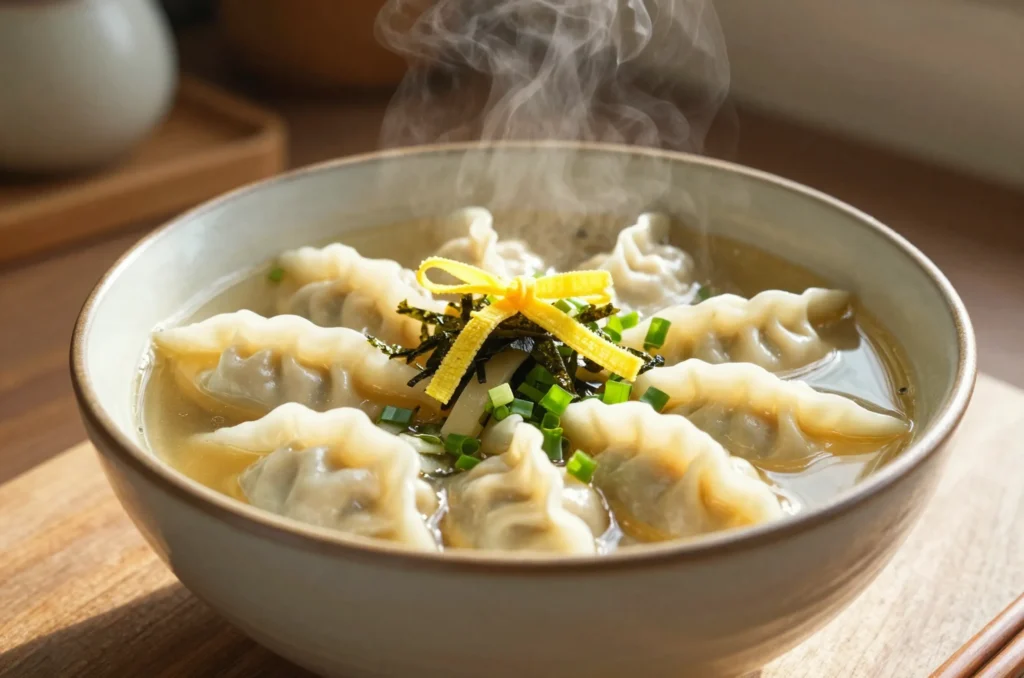
Manduguk – Dumpling Soup (Beginner-Friendly Korean Comfort Food)
1. Introduction
There are days when you just want something warm, soothing, and deeply comforting without spending hours in the kitchen. Manduguk, a traditional Korean dumpling soup, is exactly that kind of dish. It’s gentle, filling, and easy to make, even if you’re still learning your way around the stove.
Manduguk is made with soft dumplings, chewy rice cakes, and a light but flavorful broth. The soup feels hearty without being heavy, making it perfect for lunch, dinner, or even a calming late-night meal. It’s especially popular during colder months and is often enjoyed on special occasions, but the beauty of this dish is how simple it can be for everyday cooking.
What makes this recipe especially beginner-friendly is that it doesn’t require complicated techniques or hard-to-find tools. Everything cooks in one pot, the steps are straightforward, and the ingredients are flexible. You can customize the soup based on what you already have at home or adjust it to suit your taste.
Why You’ll Love This Recipe
- Simple one-pot cooking
- Clear, comforting flavors that are easy to balance
- Flexible ingredients with easy substitutions
- Great introduction to Korean home-style cooking
- Filling without being too rich or heavy
By the end of this guide, you’ll feel confident making Manduguk from scratch and adjusting it to suit your preferences. Whether you’re cooking for yourself or sharing a meal with family, this soup is a reliable comfort dish you’ll want to make again.
2. Ingredients Breakdown
Understanding each ingredient will help you cook with more confidence and make smart substitutions when needed.
Dumplings (Mandu)
These are the heart of the soup. You can use store-bought frozen dumplings, which are perfect for beginners. Pork, chicken, beef, or vegetable dumplings all work well.
Tip: Choose medium-sized dumplings so they cook evenly without breaking.
Rice Cakes (Tteok)
Korean rice cakes add a soft, chewy texture that makes the soup more filling. Sliced oval rice cakes are traditional for Manduguk.
Substitution: If you can’t find rice cakes, you can skip them or add thinly sliced potatoes for a different texture.
Broth
A light beef or anchovy broth is commonly used. Store-bought broth works well and saves time.
Tip: Choose low-sodium broth so you can control the salt level.
Eggs
Eggs are beaten and gently stirred into the soup to create soft ribbons.
Tip: Always add eggs at the end for a smooth texture.
Garlic
Fresh garlic adds depth and warmth to the broth.
Substitution: Garlic paste or powder can work in small amounts.
Soy Sauce
Used for seasoning the broth.
Tip: Use light soy sauce to keep the soup clear.
Sesame Oil
A small amount adds a nutty aroma.
Tip: Add it at the end so the flavor stays fresh.
Green Onions
They add freshness and color.
Garnishes (Optional)
- Toasted seaweed strips
- Black pepper
- Sesame seeds
3. Step-by-Step Instructions
Follow these simple steps to make Manduguk with confidence.
Step 1: Prepare the Broth
In a medium pot, bring the broth to a gentle boil over medium heat. Add minced garlic and stir. Let it simmer for 2–3 minutes to release flavor.
Tip: Avoid high heat to keep the broth clear.
Step 2: Add Rice Cakes
Add the sliced rice cakes to the simmering broth. Cook for about 3–4 minutes until they start to soften.
Tip: Stir gently so they don’t stick together.
Step 3: Add Dumplings
Carefully add the dumplings to the pot. Let them cook according to package instructions, usually 4–6 minutes.
Tip: Do not stir too aggressively, or the dumplings may break.
Step 4: Season the Soup
Add soy sauce and a pinch of salt if needed. Taste and adjust seasoning slowly.
Step 5: Add Eggs
Lower the heat slightly. Slowly pour in beaten eggs while gently stirring in one direction.
Tip: This creates soft egg ribbons instead of clumps.
Step 6: Finish with Sesame Oil
Turn off the heat and drizzle in sesame oil. Stir gently.
Step 7: Garnish and Serve
Ladle the soup into bowls and top with green onions and optional garnishes.
4. Tips and Variations
Expert Tips
- Always simmer, never boil aggressively
- Taste as you go to avoid over-seasoning
- Add eggs last for best texture
Variations
- Meat Swap: Use chicken dumplings for a lighter flavor
- Vegetable Version: Use vegetable broth and veggie dumplings
- Kid-Friendly: Skip garlic-heavy seasoning and reduce soy sauce
- Adult Version: Add black pepper or chili oil
- Gluten-Free: Use gluten-free dumplings and tamari
5. Serving Suggestions
Manduguk is satisfying on its own, but you can serve it with:
- Simple cucumber salad
- Steamed rice
- Light kimchi on the side
For drinks, warm tea or barley tea pairs well. This soup also fits nicely into a Korean-themed dinner night with small side dishes.
6. Storage and Reheating Instructions
Storage
- Store leftovers in an airtight container
- Refrigerate for up to 3 days
Freezing
- Freeze without eggs for best texture
- Keeps well for up to 1 month
Reheating
- Microwave: Heat in short intervals, stirring gently
- Stovetop: Reheat on low heat, add a splash of water if needed
7. Recipe Notes
- Can be prepped ahead of time
- Best with freshly minced garlic
- Frozen dumplings work perfectly
- Use a medium pot for even cooking
- Add eggs only when ready to serve
8. Nutrition Information (Per Serving)
| Nutrient | Amount |
|---|---|
| Calories | 320 kcal |
| Fat | 10 g |
| Saturated Fat | 3 g |
| Carbohydrates | 38 g |
| Sugar | 3 g |
| Fiber | 2 g |
| Protein | 18 g |
| Sodium | 780 mg |
| Cholesterol | 95 mg |
| Calcium | 80 mg |
| Iron | 2.5 mg |
Nutrition information is an estimate and may vary based on specific ingredients used.
9. Recipe Card Summary
Course: Main
Cuisine: Korean
Servings: 2–3
Prep Time: 10 minutes
Cook Time: 15 minutes
Total Time: 25 minutes
Ingredients
- 4 cups broth
- 10–12 dumplings
- 1 cup sliced rice cakes
- 2 eggs, beaten
- 1 teaspoon minced garlic
- 1 tablespoon soy sauce
- 1 teaspoon sesame oil
- Green onions for garnish
Instructions
- Simmer broth with garlic
- Add rice cakes
- Add dumplings
- Season with soy sauce
- Stir in eggs
- Finish with sesame oil
Notes
- Adjust seasoning slowly
- Add garnishes just before serving
🏷️ Diet Tags: Comfort Food, Beginner-Friendly, Dairy-Free
10. Health Benefits Section
- Dumplings provide protein and energy
- Eggs support muscle and overall nutrition
- Garlic supports immune health
- Broth helps with hydration and digestion
11. Sauce Suggestions
Manduguk is usually enjoyed without extra sauce, but a small soy-sesame dipping sauce on the side can be added if you like stronger flavor.
12. Avoid These Mistakes During the Process
- Boiling too hard
- Over-seasoning early
- Stirring dumplings too roughly
- Adding eggs at high heat
- Skipping taste checks
13. FAQs
1. Can I make Manduguk without rice cakes?
Yes, you can skip them or replace them with noodles or potatoes.
2. Are frozen dumplings okay?
Yes, frozen dumplings are ideal and convenient.
3. Can I make this vegetarian?
Use vegetable broth and vegetable dumplings.
4. Why did my soup turn cloudy?
High heat or over-stirring can cloud the broth.
5. Can I prepare this ahead of time?
You can prepare the broth and ingredients ahead, but add eggs just before serving.
6. Is Manduguk filling enough for dinner?
Yes, especially with rice cakes and dumplings.
Whether you’re feeding a crowd or just craving comfort food, this Manduguk – Dumpling Soup is sure to hit the spot. Let me know how it turns out for you in the comments below
