
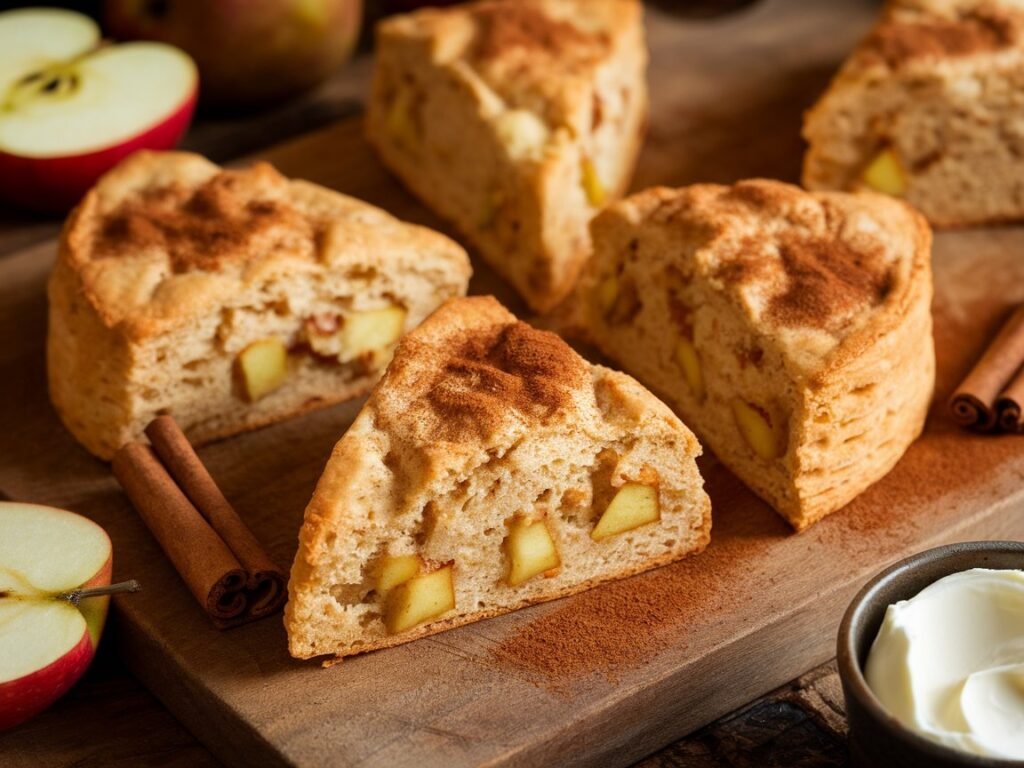
There’s something magical about the aroma of apple cinnamon scones baking in the oven – that perfect combination of sweet apples, warm cinnamon, and buttery pastry that fills your kitchen with the essence of comfort and home. These scones represent the best of both British baking tradition and American flavor preferences, creating a breakfast or teatime treat that’s both elegant and deeply satisfying.
What makes these apple cinnamon scones truly special is their incredible texture – tender and flaky on the inside with a lightly crispy exterior that gives way to pockets of sweet, cinnamon-spiced apples. Unlike heavy, dense scones that can feel more like hockey pucks, this recipe creates light, buttery pastries that practically melt in your mouth while still maintaining that satisfying substance that makes scones so perfect with morning coffee or afternoon tea.
The beauty of this recipe lies in its simplicity and reliability. You don’t need any special equipment or advanced baking skills – just basic ingredients that you probably already have in your kitchen and a few simple techniques that ensure success every time. The process is forgiving enough for beginners yet sophisticated enough to impress even the most discerning palates.
You’ll discover how to achieve that perfect scone texture through proper ingredient handling, learn the secrets behind evenly distributed apple pieces that don’t make the dough soggy, and master the art of creating those beautiful, bakery-worthy shapes that look as good as they taste. These scones are incredibly versatile – perfect for weekend brunches, holiday breakfasts, or simply as a special treat to brighten any ordinary day.
Ingredients Breakdown
Each ingredient in these apple cinnamon scones serves a specific purpose in creating the perfect balance of flavor, texture, and appearance. Understanding their roles helps ensure consistent, excellent results.
All-Purpose Flour (2 cups): Forms the structure of your scones. Measure flour by spooning it into your measuring cup and leveling off – too much flour creates dense, heavy scones. For even more tender results, you can substitute 2 tablespoons of flour with cornstarch, which creates a more delicate crumb.
Granulated Sugar (1/4 cup): Provides sweetness and helps create tender texture by interfering with gluten development. This moderate amount allows the apple and cinnamon flavors to shine without being overpowering. Brown sugar can be substituted for deeper flavor, though it will slightly change the color.
Baking Powder (2 teaspoons): The primary leavening agent that creates the scones’ light, fluffy texture. Make sure your baking powder is fresh – it should fizz when mixed with water. Old baking powder results in flat, dense scones that don’t rise properly.
Salt (1/2 teaspoon): Enhances all other flavors and balances the sweetness. Salt also strengthens the gluten structure slightly, contributing to better texture. Don’t skip this ingredient – it makes a noticeable difference in the final flavor.
Ground Cinnamon (1 1/2 teaspoons): The warm spice that defines these scones’ character. Use fresh cinnamon for the best flavor – old cinnamon loses its potency and can taste dusty. Ceylon cinnamon offers a more delicate, sweet flavor than cassia cinnamon.
Cold Unsalted Butter (6 tablespoons, cubed): Creates the flaky layers that make scones so appealing. The butter must be cold so it doesn’t fully incorporate into the flour, leaving small pieces that create steam during baking and result in flaky texture. Cut butter into small cubes and keep refrigerated until ready to use.
Heavy Cream (1/2 cup): Provides richness and helps bind the dough together. Heavy cream creates more tender scones than milk due to its higher fat content. The cream should be cold to help maintain the butter pieces in the dough.
Large Egg (1): Adds richness and helps bind the ingredients while contributing to browning. The egg should be at room temperature for better incorporation, or place it in warm water for 5 minutes if you forgot to take it out early.
Vanilla Extract (1 teaspoon): Enhances the overall flavor profile and complements both the apple and cinnamon beautifully. Pure vanilla extract provides better flavor than imitation vanilla.
Medium Apple (1, peeled and diced): The star ingredient that provides sweet, tender pieces throughout the scones. Choose firm apples like Granny Smith, Honeycrisp, or Gala that hold their shape during baking. Dice the apple into 1/4-inch pieces for even distribution and proper cooking.
Additional Sugar for Sprinkling (2 tablespoons): Creates a delightful sweet, slightly crunchy top that adds both texture and visual appeal. Coarse sugar works particularly well for this purpose.
Step-by-Step Instructions
Step 1: Prepare Your Workspace and Ingredients Preheat your oven to 400°F and line a baking sheet with parchment paper. Cut your cold butter into small cubes and return to the refrigerator until needed. Peel and dice your apple into 1/4-inch pieces, patting them dry with paper towels to remove excess moisture. Having everything ready before you start mixing ensures you can work quickly to maintain the cold temperature of your ingredients.
Step 2: Mix the Dry Ingredients In a large bowl, whisk together flour, sugar, baking powder, salt, and cinnamon until evenly combined. This thorough mixing ensures the leavening and spices are evenly distributed throughout the flour. Make a well in the center of the mixture – this will help you incorporate the wet ingredients more evenly.
Step 3: Cut in the Cold Butter Add the cold butter cubes to the flour mixture. Using a pastry cutter, two knives, or your fingertips, work the butter into the flour until the mixture resembles coarse crumbs with some pieces of butter about the size of small peas. These butter pieces are crucial for creating flaky layers, so don’t overwork the mixture. The goal is to coat the butter pieces with flour while keeping them distinct.
Step 4: Add Wet Ingredients and Apple In a small bowl, whisk together the heavy cream, egg, and vanilla extract. Pour this mixture into the well in your flour mixture. Add the diced apple pieces and gently stir with a fork just until the dough comes together. The dough should be slightly shaggy and just barely hold together – overmixing develops gluten and creates tough scones.
Step 5: Shape the Scones Turn the dough out onto a lightly floured surface and gently pat it into a circle about 3/4 inch thick. Don’t knead or handle the dough more than necessary. Using a sharp knife or bench scraper, cut the circle into 8 wedges like a pizza. The clean cuts help the scones rise evenly during baking.
Step 6: Prepare for Baking Transfer the scone wedges to your prepared baking sheet, spacing them about 2 inches apart. Brush the tops lightly with a little extra cream or milk, then sprinkle with the additional sugar. This creates a beautiful golden top and adds a delightful sweet crunch.
Step 7: Bake to Golden Perfection Bake for 18-22 minutes, until the tops are golden brown and the scones spring back lightly when touched. The bottoms should be lightly golden as well. Don’t overbake, as this creates dry scones. Let them cool on the baking sheet for 5 minutes before transferring to a wire rack – they’ll be quite tender when hot.
Tips and Variations
Expert Baking Techniques: Keep all ingredients as cold as possible throughout the process. If your kitchen is particularly warm, chill the bowl and even the flour beforehand. Cold ingredients are the secret to flaky, tender scones because they prevent the butter from melting into the flour completely.
Handle the dough minimally – just enough to bring it together. Overworking develops gluten, which creates tough, dense scones instead of the tender, crumbly texture you want. If the dough seems too wet, add flour one tablespoon at a time.
Flavor Variations: Create cranberry apple scones by adding 1/3 cup dried cranberries along with the apple pieces. For a more decadent version, add 1/3 cup chopped walnuts or pecans for crunch and richness. Maple apple scones work beautifully by replacing 2 tablespoons of cream with pure maple syrup.
Spice variations include adding 1/4 teaspoon nutmeg or 1/8 teaspoon cardamom for more complex flavor. Orange zest pairs beautifully with apple and cinnamon – add 1 tablespoon of finely grated orange zest for a bright, citrusy note.
Texture Modifications: For extra tender scones, replace 2 tablespoons of flour with cornstarch. For a richer flavor and color, substitute 2 tablespoons of granulated sugar with brown sugar. Adding an extra tablespoon of cream creates slightly more tender scones if you prefer them softer.
Dietary Adaptations: For dairy-free scones, substitute the butter with cold vegan butter or coconut oil (solid), and use full-fat canned coconut milk instead of heavy cream. The texture will be slightly different but still delicious.
Gluten-free versions work well using a 1:1 gluten-free flour blend, though they may be slightly more crumbly. Add 1/4 teaspoon xanthan gum if your flour blend doesn’t contain it.
Serving Suggestions
Apple cinnamon scones are versatile treats that work beautifully in various settings and with different accompaniments. Their warm, comforting flavors pair well with both simple and elaborate presentations.
Traditional Serving Style: Serve warm scones with butter, clotted cream, or cream cheese. The rich, creamy accompaniments balance the spiced fruit flavors beautifully. Honey or maple syrup drizzled over split scones creates an indulgent breakfast treat that feels special enough for weekend mornings.
Beverage Pairings: These scones pair perfectly with coffee, tea, or hot chocolate. The warm spices complement both black teas and herbal blends, while coffee’s slight bitterness provides nice contrast to the sweet apple pieces. For cold beverages, try them with cold milk or even apple cider for a seasonal touch.
Breakfast and Brunch Ideas: Serve alongside scrambled eggs and bacon for a complete breakfast spread. They also work beautifully as part of a brunch buffet with fresh fruit, yogurt, and other pastries. The scones can anchor a themed fall breakfast with other apple-flavored dishes.
Seasonal Presentations: During autumn, serve on wooden boards with fresh apple slices, cinnamon sticks, and small bowls of apple butter or caramel sauce for dipping. The rustic presentation emphasizes the seasonal ingredients and creates an inviting, cozy atmosphere.
Elegant Occasions: For tea parties or special brunches, serve on tiered stands with small bowls of jam, cream, and butter. Cut larger scones in half and arrange them cut-side up to showcase the tender interior studded with apple pieces.
Storage and Reheating Instructions
Proper storage ensures your apple cinnamon scones maintain their delightful texture and fresh flavor for several days after baking. These scones actually improve slightly after the first day as flavors meld together.
Short-Term Storage: Store completely cooled scones in an airtight container at room temperature for up to 3 days. Place parchment paper between layers if stacking to prevent sticking. The scones will maintain good texture and flavor throughout this period.
Long-Term Storage: For longer storage, freeze baked scones in airtight containers or freezer bags for up to 3 months. Flash-freeze them on a baking sheet first, then transfer to containers to prevent them from sticking together. Label with the date and contents for easy identification.
Reheating Methods: To refresh day-old scones, wrap them in foil and warm in a 300°F oven for 5-8 minutes. This restores some of the original texture and warms them through nicely. For frozen scones, thaw at room temperature for an hour, then warm as above.
Microwave reheating works for quick warming but can make scones slightly tough. If using a microwave, heat for 15-20 seconds on 50% power and serve immediately.
Make-Ahead Options: The dough can be shaped and frozen unbaked for up to 1 month. Place shaped scones on a baking sheet, freeze until solid, then transfer to freezer bags. Bake directly from frozen, adding 2-3 extra minutes to the baking time.
Recipe Notes
Equipment Recommendations: A pastry cutter makes incorporating butter much easier, though two knives or clean fingers work fine. A bench scraper helps cut clean wedges and transfer shaped scones to the baking sheet without distorting their shape.
Sharp knives are important for clean cuts that help scones rise evenly. Dull knives can compress the edges and prevent proper rising.
Ingredient Preparation Tips: Dice apples just before using to prevent browning and excess moisture release. Pat the diced apples dry with paper towels – this prevents the dough from becoming too wet and helps maintain proper texture.
Measure flour correctly by spooning it into measuring cups and leveling off. Scooping directly from the bag packs too much flour, resulting in dense scones.
Timing Considerations: These scones are best served fresh from the oven or within a few hours of baking. The texture is at its peak when slightly warm, though they remain delicious at room temperature.
Plan for about 45 minutes total time from start to finish, including baking. The active preparation time is only about 15 minutes, making these perfect for weekend mornings when you want something special without too much effort.
Success Indicators: Properly baked scones should be golden brown on top and spring back lightly when touched. The bottoms should be lightly golden but not dark brown. If they’re browning too quickly on the bottom, place another baking sheet underneath to insulate them.
Nutrition Information (Per Serving)
Based on 8 scones
| Nutrient | Amount |
|---|---|
| Calories | 235 |
| Total Fat | 9g |
| Saturated Fat | 6g |
| Cholesterol | 45mg |
| Sodium | 285mg |
| Total Carbohydrates | 36g |
| Dietary Fiber | 2g |
| Total Sugars | 12g |
| Protein | 5g |
| Calcium | 85mg |
| Iron | 1.8mg |
Nutrition information is an estimate and may vary based on specific ingredients used.
Recipe Card Summary
Course: Breakfast/Snack
Cuisine: British-American
Servings: 8 scones
Prep Time: 15 minutes
Cook Time: 20 minutes
Total Time: 35 minutes
Ingredients:
- 2 cups all-purpose flour
- 1/4 cup granulated sugar
- 2 teaspoons baking powder
- 1/2 teaspoon salt
- 1 1/2 teaspoons ground cinnamon
- 6 tablespoons cold unsalted butter, cubed
- 1/2 cup cold heavy cream
- 1 large egg
- 1 teaspoon vanilla extract
- 1 medium apple, peeled and diced
- 2 tablespoons sugar for sprinkling
Instructions:
- Preheat oven to 400°F; line baking sheet with parchment paper
- Whisk together flour, sugar, baking powder, salt, and cinnamon
- Cut cold butter into flour mixture until it resembles coarse crumbs
- Mix cream, egg, and vanilla; add to flour mixture with diced apple
- Pat dough into 3/4-inch thick circle; cut into 8 wedges
- Place on baking sheet, brush with cream, sprinkle with sugar
- Bake 18-22 minutes until golden brown; cool 5 minutes before serving
Notes:
- Keep ingredients cold for flaky texture
- Don’t overmix the dough
- Pat apples dry before adding
- Best served warm or within a few hours
Diet Tags
Diet Tags: Vegetarian, Nut-Free, Soy-Free, Egg-Containing, Contains Dairy, Contains Gluten, Refined Sugar, Freezer-Friendly
Health Benefits
Health Benefits:
- Fiber Content: Apples provide dietary fiber that supports digestive health
- Antioxidants: Cinnamon contains antioxidants and may help regulate blood sugar
- Vitamin C: Fresh apples contribute vitamin C for immune system support
- Calcium Source: Dairy ingredients provide calcium for bone health
- Energy Boost: Carbohydrates provide sustained energy for morning activities
- Portion Control: Individual scone servings help with portion management
- Natural Fruit: Fresh apples add natural sweetness and reduce need for excessive added sugars
Frequently Asked Questions
1. Why are my scones dense and heavy instead of light and flaky? Dense scones usually result from overmixing the dough or using warm ingredients. The butter should be cold and cut into the flour until it resembles coarse crumbs with visible butter pieces. Mix just until the dough barely comes together – it should look slightly shaggy. Also, ensure your baking powder is fresh and active.
2. Can I prepare the scone dough ahead of time? Yes, you can shape the scones and freeze them unbaked for up to 1 month. Place them on a baking sheet, freeze until solid, then transfer to freezer bags. Bake directly from frozen, adding 2-3 extra minutes to the baking time. You can also refrigerate shaped scones for up to 24 hours before baking.
3. What type of apple works best for scones? Firm apples that hold their shape during baking work best. Granny Smith, Honeycrisp, Gala, or Fuji apples are excellent choices. Avoid soft apples like Red Delicious, which can become mushy and release too much moisture into the dough. Cut the apples into small, uniform pieces for even distribution.
4. How do I know when the scones are properly baked? Properly baked scones should be golden brown on top and spring back lightly when touched. The edges should be set and lightly golden. If you’re unsure, insert a toothpick into the center – it should come out with just a few moist crumbs. Overbaking creates dry scones, so err on the side of slightly underdone.
5. Can I make these scones dairy-free or gluten-free? For dairy-free scones, substitute the butter with cold vegan butter or solid coconut oil, and use full-fat canned coconut milk instead of heavy cream. For gluten-free versions, use a 1:1 gluten-free flour blend and add 1/4 teaspoon xanthan gum if your blend doesn’t contain it. The texture may be slightly different but still delicious.
Final Thoughts
There’s something deeply satisfying about creating perfect apple cinnamon scones from scratch – watching simple ingredients transform into golden, flaky pastries that fill your kitchen with the most incredible aroma. These scones represent the perfect marriage of technique and comfort, requiring just enough skill to feel accomplished while remaining accessible to bakers of all levels.
What makes this recipe truly special is its reliability. Once you master the basic technique of keeping ingredients cold and handling the dough gently, you’ll find yourself turning to this recipe again and again. The combination of tender apple pieces and warm cinnamon creates flavors that feel both nostalgic and fresh, making these scones perfect for everything from quiet weekend mornings to special occasion brunches.
The beauty of homemade scones extends far beyond their incredible taste. There’s something wonderfully therapeutic about the process – cutting cold butter into flour, gently bringing the dough together, and shaping those perfect wedges. It’s a reminder that some of life’s greatest pleasures come from taking the time to create something beautiful and delicious with your own hands.
These apple cinnamon scones have become a beloved staple in my baking repertoire because they deliver bakery-quality results without requiring professional equipment or years of experience. They’re forgiving enough for beginners to achieve success, yet sophisticated enough to impress even the most discerning palates.
Whether you’re treating yourself to a special breakfast, hosting friends for brunch, or simply wanting to fill your home with the warm, welcoming scents of home baking, these apple cinnamon scones are sure to become a treasured favorite. I’d love to hear about your scone-making adventures and any creative variations you discover – share your experiences in the comments below and let’s celebrate the simple joy of exceptional home baking together.