
Beef Pappardelle with Tomatoes – Rich Italian Comfort
Introduction
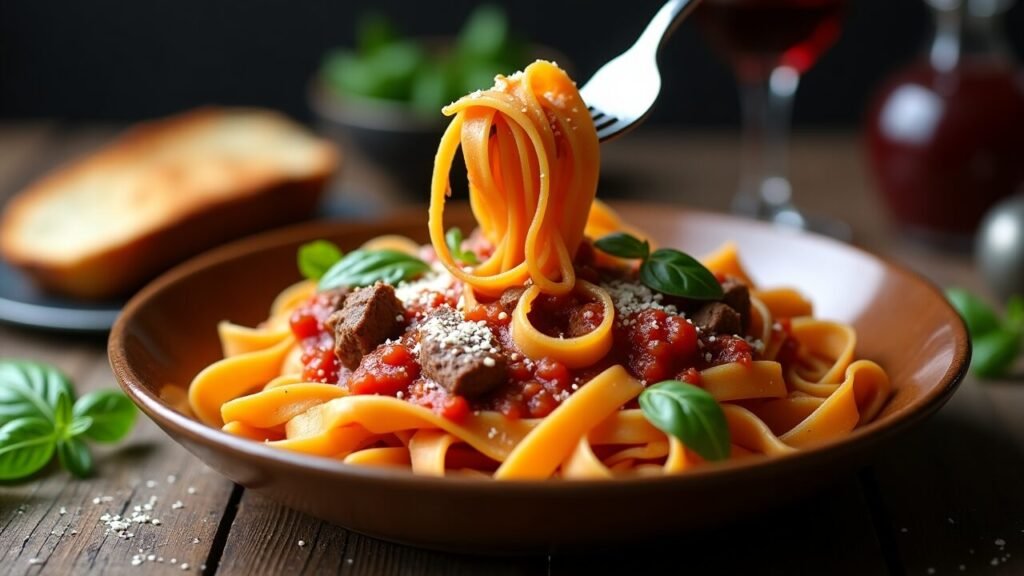
When you want to create something that feels like a warm embrace on a plate, beef pappardelle with tomatoes delivers comfort food sophistication that’s both rustic and elegant. This isn’t just pasta with meat sauce – this is a celebration of slow-cooked beef that becomes so tender it falls apart at the touch of a fork, nestled with wide ribbons of fresh pappardelle and bathed in a rich, aromatic tomato sauce that’s been simmering to perfection.
What makes this dish absolutely extraordinary is the way time transforms simple ingredients into something magical. The beef slowly braises until it’s impossibly tender, releasing its flavors into a sauce that becomes complex and deeply satisfying. The wide pappardelle pasta is the perfect vehicle for this luxurious sauce, with its broad surfaces catching every bit of that rich, meaty goodness while maintaining the perfect al dente texture.
This recipe succeeds because it combines traditional Italian techniques with ingredients that are accessible in any well-stocked kitchen. The slow braising process allows tougher cuts of beef to become melt-in-your-mouth tender while creating layers of flavor that can’t be rushed. Each component – from the perfectly seasoned beef to the bright acidity of the tomatoes – works in harmony to create a dish that’s both comforting and sophisticated.
Whether you’re looking to master a classic Italian technique, impress dinner guests with restaurant-quality results, or simply craving the kind of meal that makes your house smell incredible and brings the family together around the table, this beef pappardelle represents Italian comfort food at its absolute best.
Ingredients Breakdown
For the Braised Beef:
- 3 pounds beef chuck roast, cut into 2-inch pieces – Chuck roast is ideal for braising because its marbling and connective tissue break down into incredibly tender, flavorful meat. Avoid lean cuts that will become dry.
- 3 tablespoons olive oil – For browning the beef, which creates the foundation of flavor through the Maillard reaction.
- 1 large yellow onion, diced – Provides aromatic sweetness and helps build the flavor base. Yellow onions offer the best balance for this dish.
- 2 large carrots, diced – Adds natural sweetness and helps balance the acidity of the tomatoes while contributing to the sauce’s body.
- 3 celery stalks, diced – Part of the classic Italian soffritto that forms the flavor foundation of countless dishes.
- 6 cloves garlic, minced – Essential for authentic Italian flavor. Fresh garlic provides aromatic depth that jarred garlic can’t match.
- 1/2 cup dry red wine – Deglazes the pan and adds complexity to the sauce. Choose something you’d drink – the flavor concentrates during cooking.
- 2 tablespoons tomato paste – Provides concentrated tomato flavor and helps thicken the sauce while adding rich color.
For the Tomato Sauce Base:
- 1 can (28 oz) whole San Marzano tomatoes, crushed by hand – San Marzano tomatoes are sweeter and less acidic than regular canned tomatoes, making them ideal for long-cooking sauces.
- 2 cups beef broth – Provides additional body and richness to the braising liquid. Good quality broth makes a noticeable difference.
- 2 bay leaves – Adds subtle complexity and traditional Italian flavor. Remove before serving.
- 2 teaspoons dried oregano – Classic Italian herb that complements the beef and tomatoes beautifully.
- 1 teaspoon dried thyme – Adds earthy, aromatic notes that enhance the overall flavor profile.
- 2 teaspoons salt – Start with this amount and adjust as the sauce reduces and flavors concentrate.
- 1 teaspoon black pepper – Freshly ground provides the best flavor and gentle heat.
- 1/4 teaspoon red pepper flakes – Optional, but adds a subtle warmth that enhances rather than overwhelms.
For the Pasta and Finishing:
- 1.5 pounds fresh pappardelle – Fresh pasta has superior texture and flavor, but high-quality dried pappardelle works well too. The wide ribbons are perfect for catching the chunky sauce.
- 1/2 cup fresh basil, chopped – Added at the end for brightness and authentic Italian flavor. Fresh basil is essential – dried doesn’t provide the same impact.
- 1 cup Parmigiano-Reggiano, freshly grated – Use authentic Parmigiano-Reggiano and grate it fresh for the best flavor and melting properties.
- 3 tablespoons fresh parsley, chopped – Adds color and fresh herbal notes that brighten the rich sauce.
- 2 tablespoons heavy cream – Optional, but adds luxurious richness and helps bind the sauce to the pasta.
- Salt for pasta water – Use plenty of salt – the water should taste like seawater.
Quality Ingredient Notes: The quality of your beef makes a significant difference. Look for well-marbled chuck roast with good fat distribution throughout. Avoid pre-cut stew meat, which often comes from various parts of the animal and won’t cook evenly.
For the tomatoes, San Marzano varieties are worth the extra cost if available. Their natural sweetness and lower acidity make them ideal for long-cooking sauces. If unavailable, use the best quality whole canned tomatoes you can find.
Wine Selection: Choose a red wine you’d actually drink – something medium-bodied like Chianti, Sangiovese, or even a good Cabernet Sauvignon. The alcohol cooks off, but the flavor concentrates, so quality matters.
Step-by-Step Instructions
Step 1: Prepare and Season the Beef (10 minutes) Pat the chuck roast pieces completely dry with paper towels – moisture prevents proper browning. Season generously on all sides with salt and pepper, using about 2 teaspoons of salt total. Let the seasoned beef sit at room temperature for 30 minutes while you prepare other ingredients. This allows the seasoning to penetrate and brings the meat closer to room temperature for more even cooking.
Step 2: Brown the Beef for Maximum Flavor (12-15 minutes) Heat 2 tablespoons of olive oil in a large, heavy-bottomed Dutch oven or braising pot over medium-high heat. When the oil shimmers, add the beef pieces in a single layer, being careful not to overcrowd – work in batches if necessary. Brown the beef on all sides, about 3-4 minutes per side, until deeply golden brown. Don’t move the pieces too early; they’ll release from the pot when properly browned. Transfer the browned beef to a plate and set aside. This browning step is crucial for developing deep, complex flavors.
Step 3: Build the Aromatic Base (8-10 minutes) Reduce heat to medium and add the remaining tablespoon of olive oil to the same pot. Add the diced onion, carrots, and celery, scraping up any browned bits from the bottom of the pot – these add tremendous flavor. Cook, stirring occasionally, until the vegetables are softened and lightly caramelized, about 6-8 minutes. Add the minced garlic and cook for another minute until fragrant. This soffritto forms the flavor foundation of the entire dish.
Step 4: Deglaze and Add Tomato Paste (3-4 minutes) Pour in the red wine, scraping up any remaining browned bits from the bottom of the pot. Let the wine simmer for 2-3 minutes to cook off the alcohol and reduce slightly. Add the tomato paste and stir constantly for about 1 minute until it darkens slightly and becomes fragrant. This step develops the tomato paste’s flavor and prevents any raw taste in the finished sauce.
Step 5: Add Liquids and Begin Braising (5 minutes) Return the browned beef to the pot along with any accumulated juices. Add the crushed tomatoes, beef broth, bay leaves, oregano, thyme, salt, pepper, and red pepper flakes if using. The liquid should almost cover the beef – add more broth or water if needed. Bring the mixture to a gentle simmer, then reduce heat to low. The liquid should barely bubble – vigorous boiling will make the meat tough.
Step 6: Slow Braise to Perfection (2.5-3 hours) Cover the pot and transfer to a preheated 325°F oven, or continue on the stovetop over very low heat. Braise for 2.5 to 3 hours, checking every 45 minutes and adding more liquid if needed. The beef is done when it falls apart easily when tested with a fork. During the last hour, you can remove the lid to allow some liquid to evaporate and concentrate the flavors if the sauce seems too thin.
Step 7: Prepare the Pasta (10-12 minutes) About 15 minutes before the beef finishes braising, bring a large pot of heavily salted water to a rolling boil. Fresh pappardelle typically cooks in 2-4 minutes, while dried pasta takes 8-12 minutes. Cook until al dente – it should have a slight bite since it will continue cooking when combined with the hot sauce. Reserve 1 cup of pasta cooking water before draining.
Step 8: Finish and Combine (5 minutes) Remove the bay leaves from the braised beef sauce. Taste and adjust seasoning – you might need more salt or pepper as flavors have concentrated. If using heavy cream, stir it in now. Add the drained pasta to the pot with the beef and sauce, tossing gently to combine. If the sauce seems too thick, add some reserved pasta water a little at a time until you achieve the perfect consistency. The sauce should coat the pasta without being soupy.
Step 9: Final Touches and Serve (3 minutes) Remove from heat and stir in half the fresh basil and parsley. Serve immediately in warmed bowls, topped with freshly grated Parmigiano-Reggiano and the remaining herbs. The contrast of the rich, tender beef with the bright herbs and sharp cheese creates the perfect balance of flavors.
Tips and Variations
Professional Braising Techniques:
The key to exceptional braised beef is patience and proper temperature control. The liquid should never boil vigorously – maintain just a gentle simmer or tiny bubbles breaking the surface. High heat will make the meat tough and stringy rather than tender.
Don’t skip the browning step, even though it adds time. The Maillard reaction that occurs during browning creates hundreds of flavor compounds that can’t be achieved any other way. Each piece should be deeply golden brown on all surfaces.
Size consistency matters when cutting the beef. Uniform pieces ensure even cooking – some pieces shouldn’t be falling apart while others are still tough. Aim for 2-inch chunks that will break down into perfect bite-sized pieces.
Make-Ahead and Storage Strategies: This dish actually improves when made a day ahead, as the flavors continue to meld and develop. Cool the braised beef completely, then refrigerate overnight. Reheat gently while you cook fresh pasta for serving.
The braised beef can be frozen for up to 3 months. Thaw overnight in the refrigerator before reheating. You may need to add a splash of broth or wine when reheating to restore the proper consistency.
Delicious Variations to Try:
Wine-Forward Version: Use a full bottle of red wine instead of just 1/2 cup, reducing it by half before adding other liquids. This creates a richer, more complex sauce reminiscent of classic Barolo braised beef.
Short Rib Variation: Replace chuck roast with beef short ribs for an even richer, more luxurious dish. The cooking time remains the same, but the result is incredibly decadent.
Mushroom Enhanced: Add 8 oz of mixed mushrooms (porcini, cremini, or shiitake) during the last hour of braising for earthy complexity and additional umami.
Lighter Tomato Version: Add fresh cherry tomatoes during the last 30 minutes of cooking for brighter, fresher tomato flavor alongside the rich sauce.
Herb Variations: Try fresh rosemary or sage instead of oregano and thyme for different flavor profiles. Add hardy herbs during braising and delicate ones at the end.
Regional Italian Style: Add pancetta or guanciale at the beginning with the vegetables for more traditional Italian flavor, or finish with a splash of good balsamic vinegar.
Serving Suggestions
This rich, satisfying dish pairs beautifully with accompaniments that complement rather than compete with its deep, complex flavors.
Wine Pairings: Italian red wines are the natural choice – try Chianti Classico, Brunello di Montalcino, or Barolo for special occasions. The tannins in these wines complement the rich beef while their acidity balances the tomato sauce. For more accessible options, Sangiovese or even a good Cabernet Sauvignon work beautifully.
Bread and Starters: Crusty Italian bread or focaccia is essential for sopping up every drop of that incredible sauce. A simple bruschetta or antipasto plate makes an elegant starter that doesn’t overwhelm the palate before the rich main course.
Salad Companions: A simple arugula salad with lemon vinaigrette provides peppery contrast and helps cleanse the palate. Caesar salad is another classic pairing, though keep the portions modest given the richness of the pasta.
Vegetable Sides: Roasted vegetables like zucchini, bell peppers, or fennel complement the Italian flavors without adding excessive richness. Sautéed spinach with garlic or braised Swiss chard also work wonderfully.
Presentation Ideas: Serve in wide, shallow bowls that showcase the beautiful pasta ribbons and chunky sauce. Warm the bowls in a low oven for a few minutes before serving to keep the dish at optimal temperature.
For family-style serving, present in a large serving bowl with serving spoons, allowing everyone to help themselves. Provide extra grated cheese and perhaps a drizzle of good olive oil for those who want to add finishing touches.
Special Occasion Touches: For entertaining, consider serving smaller portions as a primi piatti (first course) followed by a lighter second course like grilled fish or roasted chicken. This follows traditional Italian meal structure and allows guests to enjoy the rich pasta without being overwhelmed.
Storage and Reheating Instructions
Optimal Storage Methods: This dish stores exceptionally well and often tastes even better the next day as flavors continue to develop. Cool completely before storing to prevent condensation. The braised beef sauce can be stored separately from leftover pasta, or together if already combined.
Store in airtight containers in the refrigerator for up to 4 days. The sauce may thicken considerably as it cools, which is normal. The pasta will continue to absorb sauce during storage.
Freezing Guidelines: The braised beef sauce freezes beautifully for up to 3 months. Freeze in portion-sized containers for easy meal planning. However, previously cooked pasta doesn’t freeze as well, so consider freezing just the sauce and cooking fresh pasta when ready to serve.
If freezing the complete dish, slightly undercook the pasta initially as it will continue to soften during freezing and reheating.
Reheating for Best Results: For stovetop reheating, place in a heavy-bottomed pot over low heat, stirring gently and frequently. Add splashes of beef broth, wine, or pasta water to restore the proper consistency as the dish heats through.
Microwave reheating works for individual portions – use 50% power and heat in 1-minute intervals, stirring between each interval. Add a tablespoon of liquid to prevent drying out.
If reheating just the sauce, you can cook fresh pasta and combine them, which often produces better results than reheating already combined pasta and sauce.
Quality Maintenance Tips: The beef will continue to break down during storage, which actually improves the dish’s texture. However, if the sauce becomes too thick, thin it gradually with warm broth or pasta water until you reach the desired consistency.
Fresh herbs lose their vibrancy during storage, so consider stirring in fresh basil and parsley when reheating to brighten the flavors.
Recipe Notes
Equipment Recommendations: A heavy-bottomed Dutch oven or braising pot is essential for even heat distribution and preventing scorching during the long cooking process. Cast iron, enameled cast iron, or heavy stainless steel all work excellently.
If you don’t have an oven-safe pot, you can braise on the stovetop using a heat diffuser to maintain very low, even heat. However, oven braising provides more consistent temperature control.
Ingredient Quality Impact: The quality of your beef significantly affects the final result. Well-marbled chuck roast from a reputable butcher will produce superior flavor and texture compared to generic supermarket cuts.
San Marzano tomatoes are worth seeking out for their superior sweetness and lower acidity. If unavailable, choose whole canned tomatoes over crushed or diced, as whole tomatoes are typically higher quality.
Timing and Planning: This dish requires about 3.5 hours total, with most of that time being hands-off braising. Plan accordingly and consider making it a day ahead for entertaining or busy schedules.
The pasta should be cooked just before serving for the best texture. However, you can have everything else ready and simply cook the pasta when you’re ready to eat.
Troubleshooting Common Issues: If the sauce is too thin after braising, remove the lid during the last hour to allow evaporation, or simmer uncovered on the stovetop until it reaches the desired consistency.
If the beef isn’t tender after 3 hours, continue cooking – some cuts may need up to 4 hours depending on the specific piece of meat and your oven’s actual temperature.
Nutrition Information (Per Serving)
| Nutrient | Amount |
|---|---|
| Calories | 620 |
| Total Fat | 18g |
| Saturated Fat | 8g |
| Carbohydrates | 68g |
| Sugar | 12g |
| Fiber | 5g |
| Protein | 42g |
| Sodium | 880mg |
| Cholesterol | 95mg |
| Iron | 6.8mg |
| Vitamin C | 15mg |
Nutrition information is an estimate and may vary based on specific ingredients used.
Recipe Card Summary
Course: Main Dish, Pasta
Cuisine: Italian
Servings: 6-8
Prep Time: 30 minutes
Cook Time: 3 hours
Total Time: 3 hours 30 minutes
Ingredients:
For the Braised Beef:
- 3 pounds beef chuck roast, cut into 2-inch pieces
- 3 tablespoons olive oil
- 1 large yellow onion, diced
- 2 large carrots, diced
- 3 celery stalks, diced
- 6 cloves garlic, minced
- 1/2 cup dry red wine
- 2 tablespoons tomato paste
For the Sauce:
- 1 can (28 oz) whole San Marzano tomatoes, crushed
- 2 cups beef broth
- 2 bay leaves
- 2 teaspoons dried oregano
- 1 teaspoon dried thyme
- 2 teaspoons salt
- 1 teaspoon black pepper
- 1/4 teaspoon red pepper flakes (optional)
For Serving:
- 1.5 pounds fresh pappardelle
- 1/2 cup fresh basil, chopped
- 1 cup Parmigiano-Reggiano, grated
- 3 tablespoons fresh parsley, chopped
- 2 tablespoons heavy cream (optional)
Instructions:
- Season beef pieces and let sit 30 minutes at room temperature.
- Brown beef in batches in Dutch oven until deep golden. Set aside.
- Cook onion, carrots, and celery until softened. Add garlic, cook 1 minute.
- Add wine, scraping up browned bits. Cook 2-3 minutes.
- Add tomato paste, cook 1 minute until fragrant.
- Return beef to pot with tomatoes, broth, herbs, and seasonings.
- Bring to simmer, cover, and braise in 325°F oven for 2.5-3 hours.
- Cook pasta until al dente. Reserve pasta water before draining.
- Combine pasta with beef sauce, adding pasta water if needed.
- Finish with fresh herbs and serve with grated cheese.
Notes:
- Don’t skip browning the beef for maximum flavor
- Beef should fall apart easily when done
- Can be made day ahead and reheated
- Use plenty of salt in pasta water
Nutrition: 620 calories, 42g protein, 68g carbs, 5g fiber per serving
Diet Tags
- High Protein
- Comfort Food
- Italian Cuisine
- Make-Ahead Friendly
- Slow-Cooked
- Family-Style
- Rich and Hearty
- Traditional Recipe
- Weekend Cooking
- Special Occasion
Health Benefits
This hearty beef pappardelle provides substantial nutritional benefits alongside its incredible comfort food appeal. The slow-braised beef is an excellent source of high-quality complete protein, providing all essential amino acids necessary for muscle maintenance and growth. A single serving delivers about 42 grams of protein, making this dish particularly satisfying and helpful for maintaining stable blood sugar levels.
The beef also provides significant amounts of iron, zinc, and B vitamins, particularly B12, which supports red blood cell formation and nervous system function. The slow braising process breaks down tough connective tissues, making the nutrients more bioavailable while creating that melt-in-your-mouth texture.
The tomatoes contribute lycopene, a powerful antioxidant that supports heart health and may help protect against certain cancers. Cooking tomatoes actually increases lycopene availability, making this sauce more nutritious than raw tomatoes.
The vegetables in the soffritto – onions, carrots, and celery – provide fiber, vitamins, and antioxidants. Carrots add beta-carotene for eye health, while onions contribute quercetin, an anti-inflammatory compound.
The pasta provides complex carbohydrates for sustained energy, and when made with enriched flour, contributes B vitamins and iron. The combination of protein and carbohydrates makes this dish particularly satisfying and helps maintain steady energy levels.
Frequently Asked Questions
1. Can I use a different cut of beef for this recipe? Chuck roast is ideal because of its marbling and connective tissue that breaks down beautifully during braising. Short ribs work excellently but are more expensive. Avoid lean cuts like sirloin or round, which will become dry and tough. Brisket can work but may need longer cooking time.
2. Can I make this recipe in a slow cooker? Yes, but brown the beef and vegetables first for best flavor. Transfer everything to a slow cooker and cook on low for 6-8 hours or high for 3-4 hours. The texture will be slightly different, but still delicious. You may need to reduce the liquid since slow cookers don’t allow much evaporation.
3. What if I can’t find fresh pappardelle? High-quality dried pappardelle works well, though the texture will be slightly different. Other wide pasta like fettuccine, tagliatelle, or even rigatoni can substitute. The key is choosing pasta shapes that will hold the chunky sauce well.
4. How do I know when the beef is properly braised? The beef should fall apart easily when tested with a fork – you should be able to break it into pieces with minimal pressure. If it’s still tough or chewy after 3 hours, continue cooking. Some cuts may need up to 4 hours depending on size and your oven’s actual temperature.
5. Can I make this dish dairy-free? Absolutely! Simply omit the heavy cream and Parmigiano-Reggiano, or use dairy-free alternatives. The dish will still be incredibly flavorful from the braised beef and rich tomato sauce. You can finish with a drizzle of good olive oil instead of cheese for richness.
Final Thoughts
This beef pappardelle with tomatoes represents everything beautiful about Italian cooking – it takes simple, quality ingredients and transforms them through time, patience, and proper technique into something that’s greater than the sum of its parts. The slow braising process is almost meditative, filling your kitchen with incredible aromas and creating anticipation that makes the final dish even more rewarding.
What makes this recipe truly special is how it teaches fundamental cooking skills while producing restaurant-quality results. You’ll learn proper browning techniques, understand how braising works, and master the art of building layered flavors – skills that will serve you well in countless other dishes.
The beauty of this dish lies in its flexibility and forgiving nature. Once you understand the basic technique, you can adapt it to your preferences, add seasonal vegetables, or experiment with different herbs and wines. It’s the kind of recipe that becomes a foundation for creativity while always delivering satisfaction.
This is the perfect dish for Sunday cooking, when you have time to let the beef slowly transform while you relax and perhaps share a glass of wine with family or friends. It’s also wonderful for entertaining, as most of the work is done well in advance, leaving you free to enjoy your guests.
I encourage you to embrace the slow cooking process and make this recipe your own. Try different wines, experiment with herbs, or add vegetables that appeal to your family. The techniques remain constant, but personalizing the flavors makes it uniquely yours.
Please share your experiences with this recipe in the comments below. I’d love to hear about your braising adventures, any variations you discovered, and how your family reacted to this hearty, comforting dish. Whether this becomes your go-to Sunday dinner or a special occasion masterpiece, I hope it brings as much joy to your table as it has to mine!