
Best French Toast Casserole Recipe | Make-Ahead Breakfast
Introduction
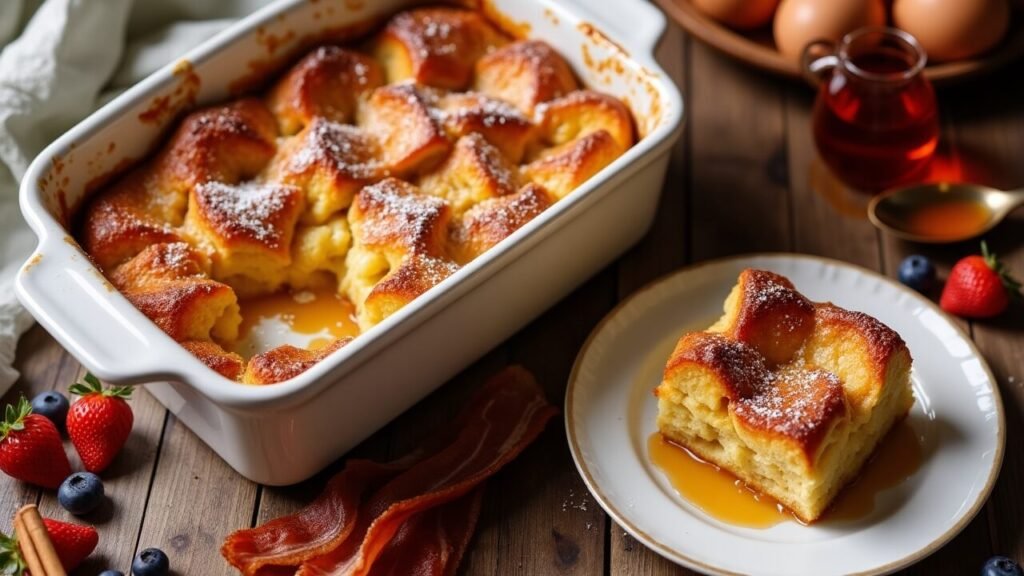
When you want all the indulgent comfort of classic French toast without the morning hassle of standing over a griddle, French toast casserole delivers pure breakfast bliss in one spectacular dish. This golden, custardy creation transforms day-old bread into a luxurious breakfast experience that’s part bread pudding, part French toast, and entirely irresistible. Each spoonful offers the perfect balance of creamy custard, tender bread, and that distinctive cinnamon-vanilla flavor that makes French toast so beloved.
What makes French toast casserole so brilliantly practical? Unlike traditional French toast that requires last-minute preparation and careful timing, this casserole version can be assembled the night before, then simply popped in the oven while you enjoy your morning coffee. The result is a stress-free breakfast that feeds a crowd and tastes like you spent hours in the kitchen, when actually you’ve done most of the work while relaxing the evening before.
The beauty of this recipe lies in its versatility and foolproof nature. Whether you’re hosting weekend guests, preparing for a holiday morning, feeding a large family, or meal-prepping breakfast for the week, this casserole adapts beautifully to your needs. It’s forgiving enough for kitchen novices yet sophisticated enough to impress the most discerning brunch enthusiasts.
This French toast casserole works equally well for casual family breakfasts, elegant brunch parties, holiday celebrations, or any time you want to turn an ordinary morning into something special. It’s the kind of dish that creates memories and starts conversations, proving that some of the best meals are the ones shared around the breakfast table.
In this comprehensive guide, you’ll discover the secrets to achieving the perfect custardy texture, preventing soggy bottoms, maximizing flavor development, and creating beautiful presentations that make this humble casserole look restaurant-worthy.
Ingredients Breakdown
For the Bread Base:
Day-old bread (12-16 slices, about 1 loaf): The foundation of great casserole. Choose thick-cut bread like brioche, challah, or Texas toast for the most luxurious results. Day-old bread is ideal because it’s slightly stale and absorbs the custard better without falling apart. Fresh bread can work if lightly toasted first.
Unsalted butter (4 tablespoons, melted): Adds richness and helps create the golden, slightly crispy top that contrasts beautifully with the creamy interior. Use real butter for the best flavor – don’t substitute with margarine for this special dish.
For the Custard Base:
Large eggs (8 whole eggs): The binding agent that transforms liquid ingredients into silky custard. Use fresh, high-quality eggs at room temperature for the best texture and richness. This generous amount ensures proper setting and luxurious mouthfeel.
Whole milk (2 cups): Provides the creamy base for the custard. Whole milk is essential for richness – don’t substitute with lower-fat versions, as they won’t create the same luxurious texture. The milk should be at room temperature for smooth mixing.
Heavy cream (1/2 cup): Adds extra richness and helps create the signature custardy texture. This is what elevates the casserole from ordinary to extraordinary, creating that restaurant-quality mouthfeel.
Granulated sugar (1/3 cup): Sweetens the custard and helps with browning during baking. The amount is perfectly balanced to complement the natural sweetness of the bread and toppings without being overwhelming.
Pure vanilla extract (1 tablespoon): Essential for authentic French toast flavor. Use pure vanilla extract rather than artificial for the most authentic, aromatic results. This generous amount ensures the vanilla flavor shines through.
Ground cinnamon (1 teaspoon): The signature spice that makes French toast instantly recognizable. Use fresh, high-quality cinnamon for the most aromatic and flavorful results.
Salt (1/2 teaspoon): Enhances all flavors and prevents the dish from tasting flat. This small amount makes a significant difference in the overall taste profile.
For the Topping:
Brown sugar (1/4 cup, packed): Creates a delicious, slightly caramelized top layer that adds textural contrast and extra sweetness. Light brown sugar works best for this recipe.
Ground cinnamon (1/2 teaspoon): Additional cinnamon for the topping enhances the warm spice flavor throughout the dish.
Optional Flavor Enhancers:
- Nutmeg (1/4 teaspoon) for warm spice complexity
- Orange zest (1 teaspoon) for bright citrus notes
- Maple extract (1/2 teaspoon) for enhanced breakfast flavors
- Rum extract (1/2 teaspoon) for sophisticated depth
- Fresh berries (1 cup) for fruity addition
- Chopped pecans or almonds (1/2 cup) for crunch
Dietary Substitutions:
- Dairy-free: Use plant-based milk and coconut cream
- Lower sugar: Reduce sugar by half and use sugar-free syrup
- Gluten-free: Use gluten-free bread varieties
- Egg-free: Use aquafaba-based egg replacer (though texture will differ significantly)
- Lighter version: Use 2% milk and reduce cream to 1/4 cup
Step-by-Step Instructions
1. Prepare Your Baking Dish Generously butter a 9×13-inch baking dish or spray with cooking spray. This prevents sticking and ensures easy serving. If making individual portions, butter 8-10 ramekins or small baking dishes. Proper preparation is essential for clean presentation.
2. Prepare the Bread Cut bread into 1-inch thick slices if not pre-sliced, then cut each slice into large cubes or triangles. Arrange the bread pieces in your prepared baking dish in an overlapping pattern, creating an attractive, rustic appearance. The pieces should fit snugly but not be packed too tightly.
3. Create the Custard Base In a large bowl, whisk together eggs until well beaten and slightly frothy. Add milk, cream, sugar, vanilla extract, cinnamon, and salt. Whisk vigorously until completely smooth and well combined. The mixture should be homogeneous with no streaks of egg or undissolved sugar.
4. Combine Bread and Custard Pour the custard mixture evenly over the arranged bread, making sure all pieces are moistened. Gently press down on the bread with a spatula or your hands to help it absorb the custard. Let sit for 10-15 minutes, pressing occasionally, until most custard is absorbed.
5. Add the Topping In a small bowl, combine brown sugar and cinnamon for the topping. Sprinkle this mixture evenly over the soaked bread. Drizzle the melted butter over the entire surface, ensuring even distribution for optimal browning.
6. Rest and Chill (Optional but Recommended) Cover the dish with plastic wrap and refrigerate for at least 2 hours or overnight. This resting time allows the bread to fully absorb the custard and develop deeper flavors. If serving immediately, let rest at room temperature for 30 minutes.
7. Bake to Golden Perfection Preheat oven to 350°F (175°C). Remove plastic wrap and bake for 45-55 minutes, until the top is golden brown and the center is set but still slightly jiggly. A knife inserted in the center should come out mostly clean. Don’t overbake, as this will create a dry texture.
8. Rest and Serve Let the casserole rest for 10-15 minutes before serving to allow the custard to set completely. This makes serving neater and prevents the custard from being too runny. Serve warm with maple syrup, fresh berries, or your favorite breakfast accompaniments.
Tips and Variations
Expert Tips for Perfect Results:
- Bread choice matters: Brioche, challah, or thick Texas toast create the most luxurious results
- Day-old bread is best: Slightly stale bread absorbs custard better without becoming mushy
- Don’t skip the rest: Allowing time for custard absorption prevents soggy bottoms and ensures even cooking
- Temperature testing: Center should be set but still have a slight jiggle when done
- Make-ahead magic: Overnight chilling actually improves flavor and texture
Delicious Flavor Variations:
Berry Bliss: Layer fresh or frozen berries between bread pieces and add lemon zest to custard
Apple Cinnamon: Add diced apples, extra cinnamon, and a touch of nutmeg for fall flavors
Chocolate Indulgence: Use chocolate bread or add chocolate chips and a tablespoon of cocoa powder
Orange Cream: Add orange zest and replace some milk with orange juice for citrus brightness
Banana Foster: Layer sliced bananas and add rum extract with extra brown sugar
Peaches and Cream: Include diced peaches and a touch of almond extract
Savory Breakfast: Omit sugar, add cheese, herbs, and cooked bacon or sausage
Holiday Eggnog: Replace some milk with eggnog and add nutmeg during holiday season
Serving Suggestions
French toast casserole is wonderfully versatile and works beautifully for various occasions and presentations.
Classic Breakfast Presentations:
- Serve warm with butter pats and warm maple syrup for traditional appeal
- Dust with powdered sugar and add fresh berries for elegant color contrast
- Offer variety with different syrups: maple, berry, or caramel
- Include crispy bacon or breakfast sausage for protein balance
Brunch Party Ideas:
- Buffet style: Keep warm in a slow cooker set on low for serving crowds
- Individual portions: Bake in ramekins for elegant, restaurant-style presentation
- Toppings bar: Offer various fruits, nuts, syrups, and whipped cream
- Beverage pairings: Coffee, fresh juice, mimosas, or breakfast cocktails
Holiday and Special Occasion Serving:
- Christmas morning: Add cranberries and orange zest for festive flavors
- Easter brunch: Serve with spring berries and edible flowers
- Mother’s Day: Create elegant individual servings with gourmet toppings
- Weekend guests: Prepare ahead for stress-free hosting
Creative Serving Ideas:
- Dessert option: Serve smaller portions with vanilla ice cream
- Picnic friendly: Cool completely and cut into squares for portable treats
- Afternoon tea: Cut into small squares and serve with coffee or tea
- Breakfast meal prep: Portion into containers for grab-and-go breakfasts
Accompaniment Suggestions:
- Fresh fruit: Berries, sliced bananas, or seasonal fruit salads
- Protein options: Bacon, sausage, or Greek yogurt
- Beverage matches: Coffee, tea, hot chocolate, or fresh juices
- Condiment variety: Different syrups, honey, or fruit preserves
Storage and Reheating Instructions
Refrigerator Storage: Store leftover casserole covered in the refrigerator for up to 4 days. Cover tightly with plastic wrap or transfer to airtight containers. The custard texture holds well during storage, making this perfect for meal prep or enjoying throughout the week.
Freezer Storage: French toast casserole freezes well for up to 2 months. Freeze individual portions or the whole casserole. Wrap tightly in plastic wrap and aluminum foil, or use freezer-safe containers. Label with date and contents for easy identification.
Make-Ahead Assembly: Assemble the entire casserole up to 24 hours before baking. Cover tightly and refrigerate. This actually improves the texture and flavor as bread fully absorbs the custard. Bake directly from refrigerator, adding 5-10 minutes to cooking time.
Reheating Instructions:
- Individual portions: Microwave for 30-60 seconds or until heated through
- Larger portions: Reheat in 350°F oven for 10-15 minutes, covered with foil
- From frozen: Thaw overnight in refrigerator, then reheat as above
- Maintaining texture: Add a splash of milk or cream when reheating to restore moisture
Meal Prep Strategies:
- Pre-portion into individual containers for easy grab-and-go breakfasts
- Prepare multiple casseroles and freeze one for future use
- Make mini versions in muffin tins for portion-controlled servings
- Prepare components separately and assemble when ready to bake
Recipe Notes
Bread Selection Secrets: The quality and type of bread significantly impact the final result. Brioche creates the most luxurious texture, challah offers rich flavor, and thick Texas toast provides sturdy structure. Avoid thin-sliced sandwich bread, which can become mushy and doesn’t provide the right texture.
Custard Consistency: The ideal custard should coat the back of a spoon and be completely smooth. If it seems too thick, add a bit more milk; if too thin, add an extra egg. The custard-to-bread ratio is crucial for proper setting and texture.
Baking Tips: The casserole is done when the center is set but still has a slight jiggle – it will continue cooking from residual heat. Overbaking creates a dry, rubbery texture. If the top browns too quickly, tent with foil for the remaining baking time.
Troubleshooting Common Issues:
- Soggy bottom: Ensure bread is day-old and allow proper absorption time
- Dry texture: Don’t overbake; check doneness carefully
- Uneven cooking: Arrange bread pieces evenly and ensure custard is well-distributed
- Too sweet: Balance with a pinch more salt or serve with tart fruit
Professional Tips:
- Room temperature ingredients mix more easily and create smoother custard
- Pressing bread helps absorption and prevents floating pieces
- A water bath (bain-marie) can create even more gentle, custard-like texture
Nutrition Information (Per Serving)
Based on 12 servings from one 9×13 casserole
| Nutrient | Amount |
|---|---|
| Calories | 285 |
| Total Fat | 12g |
| Saturated Fat | 7g |
| Carbohydrates | 35g |
| Sugar | 18g |
| Dietary Fiber | 2g |
| Protein | 12g |
| Sodium | 385mg |
| Cholesterol | 165mg |
| Calcium | 145mg |
| Iron | 2.1mg |
| Potassium | 195mg |
| Vitamin A | 185 IU |
| Vitamin D | 45 IU |
| Riboflavin | 0.4mg |
| Phosphorus | 185mg |
| Folate | 45mcg |
Nutrition information is an estimate and may vary based on specific bread types and portion sizes used.
Recipe Card Summary
Course: Breakfast, Brunch
Cuisine: American, French-inspired
Servings: 12
Prep Time: 20 minutes
Rest Time: 2 hours to overnight
Cook Time: 45-55 minutes
Total Time: 3-4 hours (including rest time)
Ingredients:
- 12-16 slices day-old bread, cubed
- 4 tablespoons melted butter
- 8 large eggs
- 2 cups whole milk
- 1/2 cup heavy cream
- 1/3 cup granulated sugar
- 1 tablespoon vanilla extract
- 1 teaspoon cinnamon
- 1/2 teaspoon salt
- 1/4 cup brown sugar
- 1/2 teaspoon cinnamon (for topping)
Instructions:
- Butter 9×13-inch baking dish and arrange bread pieces
- Whisk together eggs, milk, cream, sugar, vanilla, cinnamon, and salt
- Pour custard over bread, press gently to absorb
- Combine brown sugar and cinnamon, sprinkle over top
- Drizzle with melted butter and rest 2 hours or overnight
- Bake at 350°F for 45-55 minutes until golden and set
- Rest 10-15 minutes before serving
Notes: Use day-old bread for best texture. Can be assembled night before. Don’t overbake to maintain custardy texture. Store leftovers up to 4 days or freeze up to 2 months.
Nutrition: See detailed nutrition table above
Diet Tags
- Vegetarian
- Make-Ahead Friendly
- Freezer-Friendly
- Crowd-Pleaser
- Comfort Food
- Brunch Perfect
- Holiday Breakfast
- Kid-Friendly
- Meal Prep Suitable
- Special Occasion
Health Benefits
High-Quality Protein: Each serving provides 12 grams of protein from eggs and milk, supporting muscle maintenance and providing sustained energy for busy mornings.
Calcium Rich: Dairy ingredients contribute significant calcium for bone health and muscle function.
B Vitamins: Eggs provide B vitamins including B12, riboflavin, and folate, essential for energy metabolism and nervous system health.
Sustained Energy: The combination of protein, carbohydrates, and fats provides steady energy release throughout the morning.
Vitamin D: Eggs and fortified milk provide vitamin D for bone health and immune function.
Iron Source: Enriched bread and eggs contribute iron for healthy blood oxygen transport.
Portion Control: Pre-cut servings help with portion awareness compared to unlimited pancakes or toast.
Family Bonding: Shared breakfast experiences support emotional well-being and family connection.
FAQs
1. Can I make French toast casserole without letting it sit overnight? Yes, though overnight resting produces the best texture. If making immediately, let it rest for at least 30 minutes at room temperature so the bread can absorb the custard. Press down gently on the bread several times during this period to encourage absorption. The texture won’t be quite as perfect as the overnight version, but it will still be delicious.
2. Why is my French toast casserole soggy on the bottom? Soggy bottoms usually result from using fresh bread instead of day-old, or not allowing enough time for custard absorption. Make sure your bread is at least a day old (or lightly toasted if fresh), and give it adequate time to absorb the custard. Also, don’t use too much custard mixture for the amount of bread.
3. Can I prepare this casserole in advance and freeze it? Yes! You can assemble the entire casserole, wrap it tightly, and freeze for up to 2 months. Thaw overnight in the refrigerator before baking, and add 10-15 minutes to the cooking time. You can also freeze individual portions for quick breakfast options throughout the month.
4. What’s the best bread to use for French toast casserole? Brioche, challah, and thick-cut Texas toast work best because they’re rich, sturdy, and absorb custard beautifully. Avoid thin sandwich bread, which becomes mushy. If you only have regular bread, choose thick-sliced versions and let them sit out overnight to become slightly stale before using.
5. How do I know when the casserole is fully cooked? The casserole is done when the top is golden brown and the center is set but still has a very slight jiggle when you gently shake the dish. A knife inserted in the center should come out mostly clean with just a few moist crumbs. The internal temperature should reach 160°F. Don’t overbake, as this creates a dry, rubbery texture.
Final Thoughts
French toast casserole represents the perfect solution to one of breakfast’s greatest challenges – how to serve something special and indulgent without the stress of last-minute preparation. This genius dish transforms the beloved flavors of French toast into a make-ahead masterpiece that feeds crowds while letting you relax and enjoy your morning alongside your family and guests.
What makes this casserole truly special is how it elevates humble ingredients into something that feels luxurious and celebratory. The transformation of day-old bread into a golden, custardy delight proves that some of the best dishes come from creative solutions to practical problems. It’s comfort food at its finest, proving that breakfast can be both nurturing and impressive.
From a practical standpoint, mastering French toast casserole opens up countless possibilities for stress-free entertaining and meal planning. Whether you’re hosting holiday guests, preparing for busy weekdays, or simply want to make weekend mornings more special, this recipe delivers consistent, crowd-pleasing results that require minimal active cooking time.
The versatility of French toast casserole means you’ll never get bored with this breakfast staple. From seasonal fruit additions to creative flavor variations, from elegant brunch presentations to casual family breakfasts, this dish adapts beautifully to any occasion while maintaining its signature comfort and satisfaction.
So embrace the make-ahead magic, gather your favorite bread and ingredients, and prepare to discover how this simple casserole can transform your breakfast routine. Once you experience the joy of serving a spectacular breakfast with minimal morning effort, you’ll wonder how you ever managed busy mornings without this recipe in your repertoire. Here’s to many memorable mornings shared over this golden, delicious casserole!
