
Bibimbap – Mixed Rice Bowl (Beginner-Friendly Korean Classic)
1. Introduction
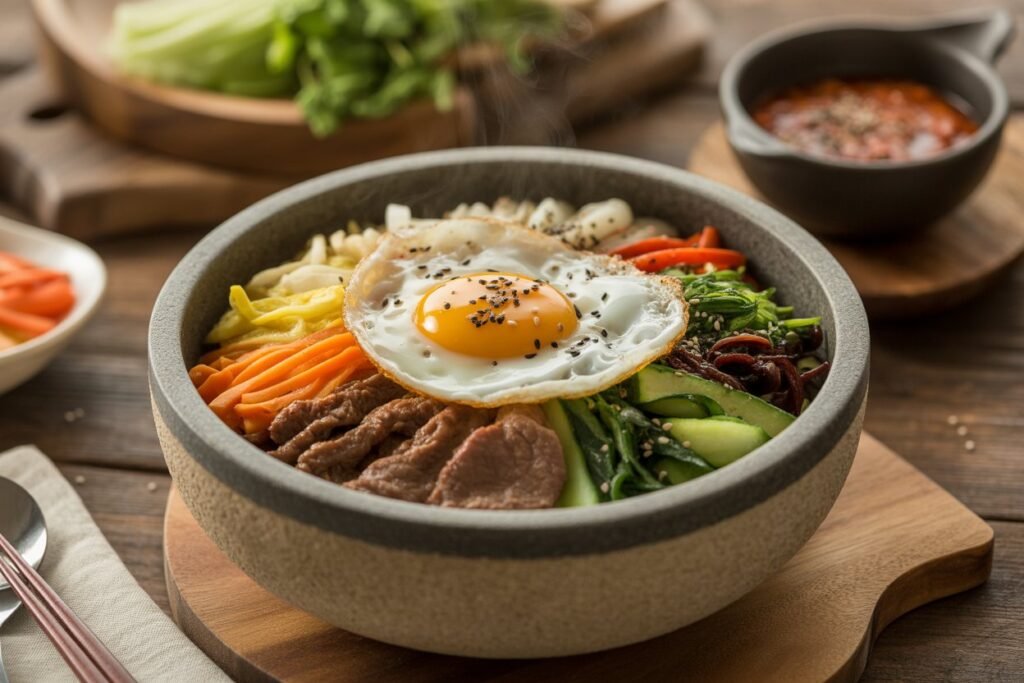
Bibimbap is one of those dishes that looks impressive but is surprisingly easy to make once you understand the basics. At its heart, Bibimbap is a warm bowl of rice topped with colorful vegetables, protein, and a rich sauce, all mixed together right before eating. The name literally means “mixed rice,” and that simple idea is what makes this dish so comforting and flexible.
What makes Bibimbap especially great for beginner cooks is that there’s no complicated technique involved. Each ingredient is prepared separately using simple methods like sautéing or blanching, then everything comes together in one bowl. You don’t need fancy equipment or hard-to-find ingredients to make a satisfying version at home.
Another reason people love Bibimbap is how customizable it is. You can keep it vegetarian, add beef or chicken, make it spicy or mild, and use whatever vegetables you enjoy or already have in your fridge. It’s also a great way to learn basic cooking skills like seasoning, timing, and balancing flavors without feeling overwhelmed.
In this guide, you’ll learn exactly what goes into a traditional Bibimbap, how to prepare each component step by step, and how to adjust the recipe to suit your taste and skill level. By the end, you’ll feel confident putting together a beautiful, flavorful bowl that feels both nourishing and satisfying.
2. Ingredients Breakdown
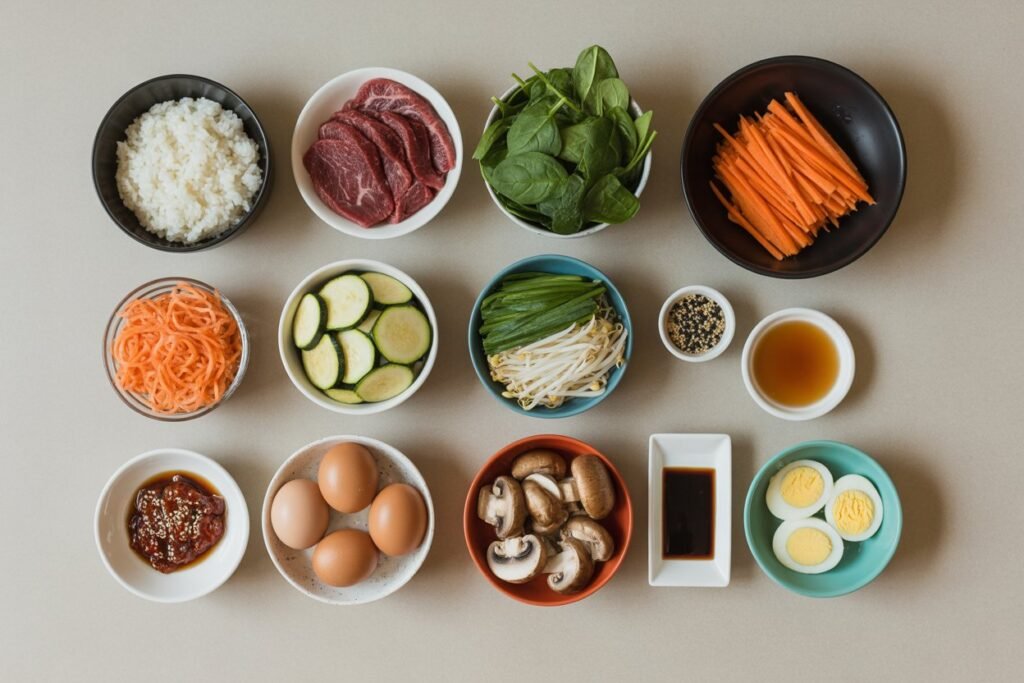
Understanding each ingredient helps you cook with confidence. Below is a breakdown of the main components and how they work together.
Cooked White Rice
Rice is the base of Bibimbap. Short-grain white rice is traditional because it’s slightly sticky and holds the toppings well. Medium-grain rice also works well. If you prefer a healthier option, brown rice is fine, but keep in mind it has a firmer texture.
Tip: Freshly cooked, warm rice gives the best flavor and texture.
Beef (or Protein of Choice)
Thinly sliced beef, often sirloin or ribeye, is commonly used. It’s usually marinated lightly for flavor and cooked quickly.
Substitutions:
- Chicken breast or thighs
- Firm tofu for a vegetarian option
- Mushrooms for a plant-based alternative
Spinach
Spinach is blanched quickly and seasoned lightly. It adds freshness and color.
Tip: Squeeze out excess water after blanching to avoid a watery bowl.
Carrots
Julienned carrots add natural sweetness and crunch. They are lightly sautéed to soften them just enough.
Zucchini
Zucchini brings a mild, clean flavor. Slice it thin and cook briefly so it stays tender, not mushy.
Bean Sprouts
Bean sprouts are crisp and refreshing. They’re usually blanched and seasoned simply with sesame oil and salt.
Mushrooms
Shiitake mushrooms are traditional, but button or cremini mushrooms work too. They add a savory, earthy flavor.
Eggs
A fried egg with a slightly runny yolk is classic. The yolk creates a natural sauce when mixed into the rice.
Gochujang (Korean Chili Paste)
This is the signature sauce of Bibimbap. It’s slightly spicy, slightly sweet, and very flavorful.
Tip: You can adjust the amount or mix it with a little sesame oil or sugar if you prefer it milder.
Sesame Oil & Sesame Seeds
These add aroma and a nutty finish. A little goes a long way.
3. Step-by-Step Instructions
Follow these simple steps to build your Bibimbap bowl with confidence.
Step 1: Cook the Rice
Rinse the rice until the water runs clear, then cook according to package instructions. Keep it warm until ready to serve.
Tip: Rice can be cooked ahead and reheated gently with a splash of water.
Step 2: Prepare the Vegetables
Blanch spinach and bean sprouts separately in boiling water for about 30 seconds. Drain, cool, squeeze dry, and season lightly with salt and sesame oil.
Sauté carrots, zucchini, and mushrooms individually in a lightly oiled pan over medium heat for 2–3 minutes each. Season lightly.
Tip: Cooking vegetables separately keeps their colors and textures distinct.
Step 3: Cook the Protein
Marinate the beef with soy sauce, garlic, and a little sesame oil for 10 minutes. Cook in a hot pan until just done, about 2–3 minutes.
Step 4: Fry the Eggs
Heat a non-stick pan and fry eggs sunny-side-up or over-easy, depending on preference.
Step 5: Assemble the Bowl
Place warm rice in a bowl. Arrange vegetables and beef neatly on top in sections.
Step 6: Add Sauce and Garnish
Add a spoon of gochujang, sprinkle with sesame seeds, and top with the fried egg.
Step 7: Mix and Enjoy
Just before eating, mix everything together thoroughly to combine flavors.
4. Tips and Variations
- Use fresh, high-quality vegetables for the best flavor.
- Keep seasoning light since the gochujang adds plenty of flavor.
- For kids, reduce or skip gochujang and use soy sauce instead.
- For adults, add extra chili paste or chili oil for heat.
- Make it creamy by adding a soft-boiled egg or extra sesame oil.
- Gluten-free option: use gluten-free soy sauce and certified gluten-free gochujang.
5. Serving Suggestions
Bibimbap is filling on its own, but it pairs well with:
- Light cucumber salad
- Miso or seaweed soup
- Kimchi or pickled radish
For drinks, try barley tea or sparkling water with lemon. Bibimbap also works well for themed Korean-style dinner nights.
6. Storage and Reheating Instructions
Store leftovers in an airtight container in the refrigerator for up to 3 days. Keep sauce separate if possible.
Reheating:
- Microwave: Heat in 1-minute intervals, stirring in between.
- Stovetop: Reheat gently in a pan with a small splash of water.
Eggs are best cooked fresh.
7. Recipe Notes
- Can be prepped ahead of time.
- Best served with warm rice.
- Use a wide bowl for easy mixing.
- Prepare toppings in advance for quick assembly.
8. Nutrition Information (Per Serving)
| Nutrient | Amount |
|---|---|
| Calories | 550 kcal |
| Fat | 18 g |
| Saturated Fat | 5 g |
| Carbs | 65 g |
| Sugar | 7 g |
| Fiber | 6 g |
| Protein | 28 g |
| Sodium | 820 mg |
| Cholesterol | 185 mg |
| Calcium | 120 mg |
| Iron | 4.5 mg |
Nutrition information is an estimate and may vary based on specific ingredients used.
9. Recipe Card Summary
Course: Main Dish
Cuisine: Korean
Servings: 2
Prep Time: 25 minutes
Cook Time: 20 minutes
Total Time: 45 minutes
Ingredients
- Cooked white rice
- Beef or protein of choice
- Spinach
- Carrots
- Zucchini
- Bean sprouts
- Mushrooms
- Eggs
- Gochujang
- Sesame oil, sesame seeds, soy sauce
Instructions
- Cook rice and keep warm.
- Prepare vegetables separately.
- Cook protein.
- Fry eggs.
- Assemble bowl and serve.
Notes: Adjust sauce to taste.
Diet Tags: Customizable, High-Protein, Dairy-Free Option, Gluten-Free Option
10. Health Benefits Section
- Eggs provide protein and essential vitamins.
- Vegetables add fiber and antioxidants.
- Sesame oil supports heart health in moderation.
- Rice provides steady energy.
11. Suggested Sauce
Gochujang mixed with sesame oil and a little sugar creates a balanced Bibimbap sauce.
12. Avoid These Mistakes
- Over-seasoning vegetables
- Using cold rice
- Overcooking eggs
- Mixing before serving
- Skipping sauce balance
13. FAQs
1. Can I make Bibimbap vegetarian?
Yes, tofu or mushrooms work very well.
2. Is Bibimbap spicy?
It can be mild or spicy depending on the sauce.
3. Can I prepare ingredients ahead?
Yes, toppings can be made one day in advance.
4. What rice is best?
Short or medium-grain white rice is ideal.
5. Can I skip gochujang?
Yes, soy sauce or sesame dressing can be used.
6. Is Bibimbap healthy?
It’s balanced and nutrient-rich when made with fresh ingredients.