
Bindaetteok (Korean Mung Bean Pancakes)
Introduction
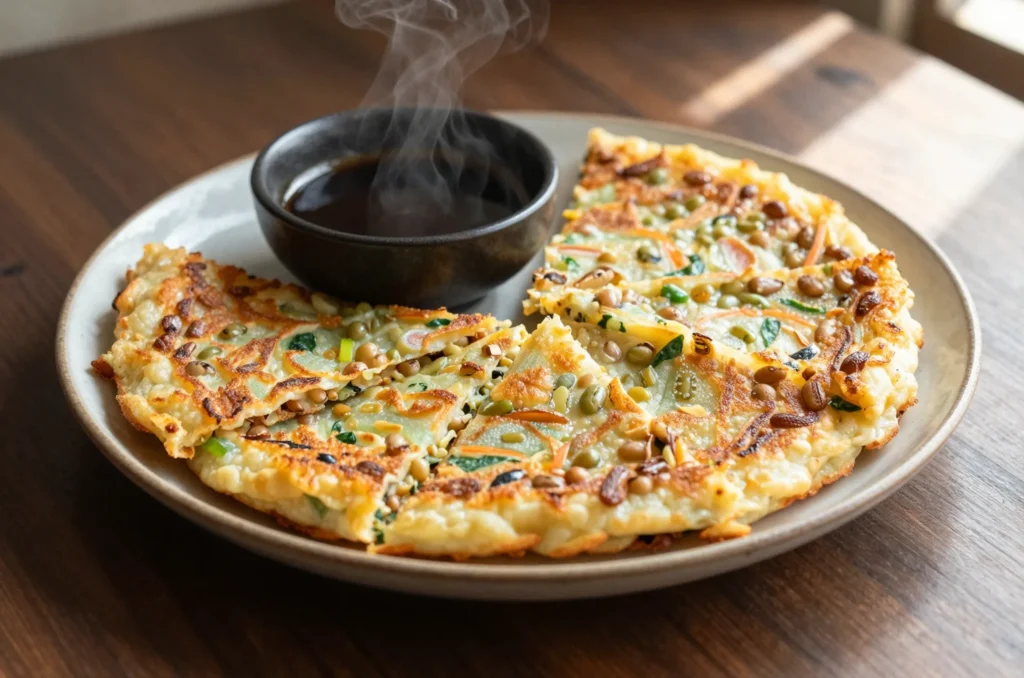
Bindaetteok, also known as Korean mung bean pancakes, is a hearty and comforting dish with a long history in Korean home cooking. Unlike lighter vegetable pancakes, bindaetteok has a rich, filling texture that makes it satisfying even as a main dish. It is crisp on the outside, soft inside, and packed with savory flavor from mung beans, vegetables, and optional meat.
This dish is especially enjoyable if you want to learn something slightly different from flour-based pancakes. The base is made from soaked mung beans, which blend into a smooth batter that fries beautifully. While soaking may sound advanced, the process itself is simple and does not require constant attention.
Bindaetteok is often served during family gatherings or special occasions, but it is also very practical for everyday cooking. Once you understand the method, it becomes a reliable recipe you can return to whenever you want something filling and homemade.
In this guide, you will learn how to make classic bindaetteok step by step using clear instructions and beginner-friendly tips. You will also learn how to adjust the recipe for different diets, store leftovers, and avoid common mistakes so your pancakes turn out crisp and flavorful every time.
Why You’ll Love This Recipe
This bindaetteok recipe is filling without being heavy. Mung beans provide a naturally creamy texture and make the pancakes satisfying without relying on refined flour.
It is also a great recipe for learning basic preparation skills like soaking, blending, and pan-frying. These skills build confidence and translate well to other dishes.
Another reason to love this recipe is its flexibility. You can include pork for a richer flavor or keep it vegetarian with vegetables only. The seasoning is simple, allowing the natural taste of mung beans to shine.
Most importantly, this dish feels rewarding. Turning simple dried beans into crispy pancakes is a process that makes home cooking feel meaningful and enjoyable.
Ingredients Breakdown
Mung Beans
Mung beans are the base of bindaetteok. Use dried, split mung beans if possible, as they soak faster and blend more smoothly. Soaking softens them and helps create a creamy batter. Rinse them well before soaking.
Water
Water is used for soaking and blending the beans. Add just enough during blending to create a thick, pourable batter. Too much water will make the pancakes difficult to crisp.
Egg
Egg helps bind the batter and adds richness. One egg is usually enough to support the mixture without overpowering the bean flavor.
Pork (Optional)
Thinly sliced pork adds depth and savory flavor. If you prefer a lighter version, you can skip it entirely or replace it with mushrooms.
Mung Bean Sprouts
These add texture and freshness. Lightly rinse and drain them before mixing into the batter.
Onion and Scallions
Onion adds sweetness, while scallions provide mild sharpness. Slice them thin so they cook evenly.
Garlic
Garlic adds aroma and depth. Mince it finely so it blends well into the batter.
Salt and Sesame Oil
Salt enhances flavor, and sesame oil adds a nutty aroma. Use sesame oil sparingly so it does not overpower the dish.
Neutral Cooking Oil
Use vegetable, canola, or sunflower oil for frying. Enough oil is important to achieve crispy edges.
Substitution Options
For a vegetarian version, omit pork and add more vegetables. For gluten-free needs, this recipe is naturally gluten-free as it uses no wheat flour.
Step-by-Step Instructions
- Soak the Mung Beans
Rinse the mung beans thoroughly. Soak them in plenty of water for 6 to 8 hours or overnight until soft. Drain well before blending. - Blend the Batter
Place soaked mung beans, egg, garlic, salt, and a small amount of water in a blender. Blend until smooth but slightly textured. The batter should be thick and spoonable. - Prepare the Fillings
Slice pork, onion, and scallions thinly. Rinse and drain mung bean sprouts. Add everything to the batter and mix gently until evenly combined. - Heat the Pan
Heat a nonstick or heavy pan over medium heat. Add enough oil to coat the bottom. The oil should shimmer before adding batter. - Cook the Pancakes
Spoon batter into the pan and flatten slightly. Cook for about 4 minutes until the bottom is golden brown and crisp. - Flip and Finish
Flip carefully and cook the other side for another 3 to 4 minutes. Press gently with a spatula to ensure even browning. - Drain and Slice
Remove pancakes and place briefly on paper towels. Slice into wedges and serve hot.
Tips and Variations
For extra crispiness, do not overcrowd the pan. Cook pancakes in batches if needed.
If the batter feels too thick, add water one spoon at a time.
For kids, omit pork and garlic and keep seasoning mild.
For adults, add chili flakes or sliced chilies for extra heat.
A vegan version works well without egg; just blend the beans slightly smoother.
You can also add finely chopped vegetables like zucchini or carrots for variety.
Serving Suggestions
Bindaetteok is often served as a main dish or shared plate.
Serve it with steamed rice, simple pickled vegetables, or a light soup.
For presentation, slice neatly and garnish with scallions.
It pairs well with mild teas, sparkling water, or light citrus drinks. It also fits nicely into a Korean-style home meal.
Storage and Reheating Instructions
Store leftovers in an airtight container in the refrigerator for up to 3 days.
Freeze cooked pancakes with parchment paper between layers for up to 1 month.
Reheat in a pan or oven to restore crispiness.
Microwaving is possible but will soften the texture.
Recipe Notes
Soaking beans ahead of time makes cooking easier.
A blender works better than a food processor for smooth batter.
Medium heat gives the best balance between crispness and even cooking.
Use fresh oil for best flavor.
Nutrition Information (Per Serving)
| Nutrient | Amount |
|---|---|
| Calories | 280 kcal |
| Fat | 13 g |
| Saturated Fat | 2.5 g |
| Carbohydrates | 26 g |
| Sugar | 2 g |
| Fiber | 6 g |
| Protein | 14 g |
| Sodium | 430 mg |
| Cholesterol | 70 mg |
| Calcium | 60 mg |
| Iron | 3.2 mg |
Nutrition information is an estimate and may vary based on specific ingredients used.
Recipe Card Summary
Course: Main or Side
Cuisine: Korean
Servings: 3 to 4
Prep Time: 15 minutes (plus soaking)
Cook Time: 20 minutes
Total Time: About 8 hours 35 minutes
Ingredients
Mung beans
Water
Egg
Pork (optional)
Mung bean sprouts
Onion
Scallions
Garlic
Salt
Sesame oil
Neutral cooking oil
Instructions
Soak beans
Blend batter
Mix fillings
Heat pan
Cook pancakes
Flip and finish
Notes
Naturally gluten-free
Serve hot for best texture
Diet Tags: Gluten-Free, High-Protein, Dairy-Free, Beginner-Friendly
Health Benefits
Mung beans are rich in plant protein and fiber.
They support digestion and help keep you full longer.
Vegetables add vitamins and minerals, making this dish balanced and nourishing.
Recommended Sauce
A simple dipping sauce made with soy sauce, rice vinegar, sesame oil, and sliced onion pairs perfectly with bindaetteok and enhances its savory flavor.
Avoid These Mistakes During the Process
Do not skip soaking the beans.
Do not add too much water when blending.
Do not fry on high heat.
Do not overcrowd the pan.
Frequently Asked Questions
- Can I make bindaetteok without pork
Yes, it is delicious with vegetables only. - How long should mung beans soak
At least 6 hours, or overnight for best results. - Why is my pancake falling apart
The batter may be too wet or undercooked before flipping. - Can I prepare the batter ahead of time
Yes, store it covered in the refrigerator for up to one day. - Is bindaetteok suitable for beginners
Yes, the steps are simple once the beans are soaked. - Can I freeze bindaetteok
Yes, cooked pancakes freeze well and reheat nicely.
Whether you’re feeding a crowd or just craving comfort food, this Bindaetteok (Mung Bean Pancakes) recipe is sure to hit the spot. Let me know how it turns out for you in the comments below
