
Dakgalbi (Korean Spicy Chicken)
Introduction
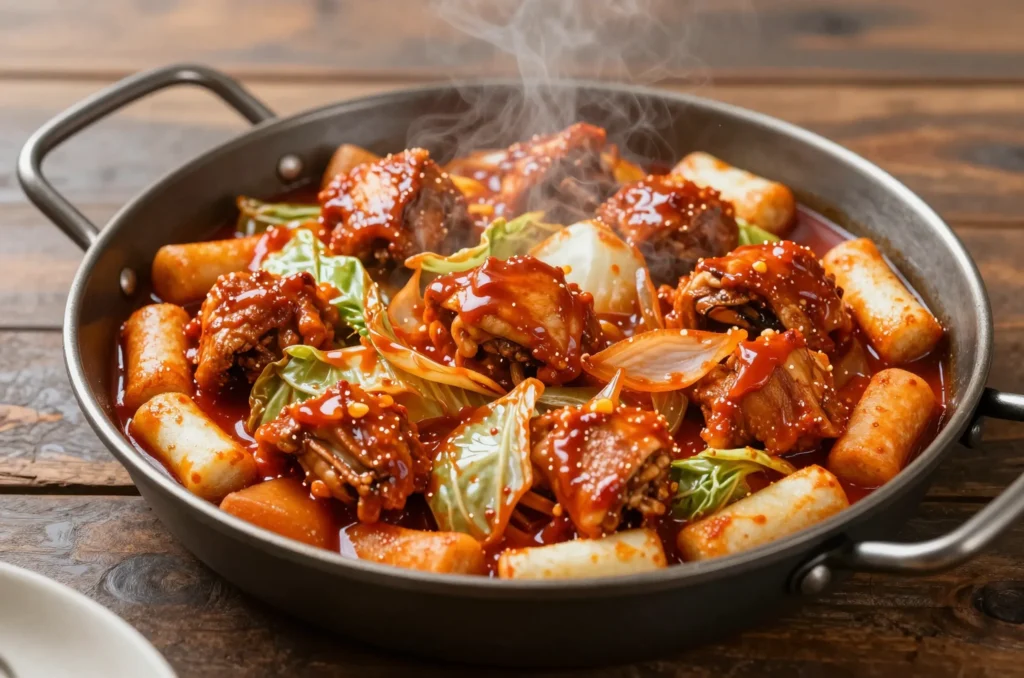
Dakgalbi is a bold, comforting Korean dish known for its rich red sauce, tender chicken, and hearty vegetables. It is spicy, savory, and slightly sweet, making every bite full of flavor. Despite its strong taste, dakgalbi is surprisingly easy to make, even for beginner cooking learners.
This dish is traditionally cooked in a large pan and shared at the table, but it works just as well in a home kitchen on a regular stove. Everything cooks together, which means fewer dishes and less stress while cooking.
Dakgalbi is especially satisfying because it feels like a complete meal. You get protein from the chicken, fiber from vegetables, and deep flavor from the sauce. You can adjust the spice level easily, which makes it suitable for different preferences.
In this article, you will learn how to make classic dakgalbi step by step. You will also learn how to customize it, store leftovers, avoid common mistakes, and serve it in a way that feels warm and inviting.
Why You’ll Love This Recipe
This dakgalbi recipe is simple and forgiving. You do not need advanced cooking skills or special tools to make it taste good.
It is cooked in one pan, which makes cleanup easy and keeps flavors concentrated.
The recipe is flexible. You can control the spice, change vegetables, or adjust portion sizes easily.
Most importantly, dakgalbi teaches confidence. You learn how to balance flavors, cook chicken properly, and manage heat without pressure.
Ingredients Breakdown
Chicken Thighs
Chicken thighs are best for dakgalbi because they stay juicy and tender. Cut them into bite-sized pieces so they cook evenly. Chicken breast can be used, but thighs give better texture.
Gochujang
Gochujang is Korean chili paste. It provides spice, depth, and a slight sweetness. Adjust the amount depending on how spicy you want the dish.
Gochugaru
Gochugaru is Korean chili flakes. It adds heat and color. You can reduce or skip it for a milder version.
Soy Sauce
Soy sauce adds salt and umami. It balances the sweetness and spice of the sauce.
Garlic and Ginger
Garlic adds aroma, while ginger brings warmth and freshness. Both are important for building flavor.
Sugar
A small amount of sugar balances the heat and salt. You can use white or brown sugar.
Sesame Oil
Sesame oil adds a nutty finish. Use it lightly so it does not overpower the dish.
Cabbage
Cabbage softens as it cooks and absorbs the sauce well. It adds sweetness and volume.
Sweet Potato
Sweet potato adds natural sweetness and makes the dish more filling. Slice it thin so it cooks evenly.
Onion
Onion adds depth and mild sweetness. Slice it thick enough so it does not disappear while cooking.
Rice Cakes (Optional)
Rice cakes add chewiness and make the dish more traditional. Soak them briefly if they are hard.
Substitution Options
You can add zucchini, carrots, or mushrooms. For dietary preferences, use more vegetables and less chicken.
Step-by-Step Instructions
- Prepare the Sauce
In a bowl, mix gochujang, gochugaru, soy sauce, minced garlic, grated ginger, sugar, and sesame oil until smooth. - Marinate the Chicken
Add chicken pieces to the sauce and mix until well coated. Let it rest for at least 15 minutes for better flavor. - Prepare the Vegetables
Slice cabbage, sweet potato, onion, and any additional vegetables. Keep everything ready before cooking. - Heat the Pan
Place a large pan or skillet over medium heat. Add a small amount of oil to prevent sticking. - Cook the Chicken
Add the marinated chicken to the pan. Cook for about 5 minutes, stirring gently, until it starts to cook through. - Add Vegetables and Rice Cakes
Add vegetables and rice cakes. Stir well so everything is coated in sauce. Cover and cook for 8 to 10 minutes, stirring occasionally. - Finish and Taste
Cook uncovered for a few minutes to thicken the sauce. Taste and adjust seasoning if needed. Serve hot.
Tips and Variations
For less spice, reduce gochugaru and add more cabbage.
For kids, use very little chili paste and focus on sweet vegetables.
For adults, add extra chili flakes or sliced chilies for more heat.
A cheese-topped version is popular. Add shredded cheese at the end and let it melt.
You can also serve dakgalbi with rice or noodles to stretch portions.
Serving Suggestions
Serve dakgalbi hot straight from the pan.
It pairs well with steamed rice or lettuce leaves for wrapping.
For presentation, sprinkle sesame seeds or sliced green onions on top.
Light drinks like barley tea or sparkling water balance the spice well.
Storage and Reheating Instructions
Store leftovers in an airtight container in the refrigerator for up to 3 days.
Freeze cooked dakgalbi for up to 1 month.
Reheat in a pan over medium heat with a splash of water to loosen the sauce.
Microwaving is possible but stir halfway for even heating.
Recipe Notes
Marinating improves flavor but is not required for long periods.
Cut vegetables evenly for consistent cooking.
Use a wide pan to prevent overcrowding.
Adjust sauce thickness by cooking uncovered at the end.
Nutrition Information (Per Serving)
| Nutrient | Amount |
|---|---|
| Calories | 420 kcal |
| Fat | 18 g |
| Saturated Fat | 3.5 g |
| Carbohydrates | 28 g |
| Sugar | 9 g |
| Fiber | 4 g |
| Protein | 32 g |
| Sodium | 890 mg |
| Cholesterol | 145 mg |
| Calcium | 85 mg |
| Iron | 3.9 mg |
Nutrition information is an estimate and may vary based on specific ingredients used.
Recipe Card Summary
Course: Main
Cuisine: Korean
Servings: 3 to 4
Prep Time: 20 minutes
Cook Time: 20 minutes
Total Time: 40 minutes
Ingredients
Chicken thighs
Gochujang
Gochugaru
Soy sauce
Garlic
Ginger
Sugar
Sesame oil
Cabbage
Sweet potato
Onion
Rice cakes (optional)
Instructions
Mix sauce
Marinate chicken
Prepare vegetables
Cook chicken
Add vegetables
Finish and serve
Notes
Adjust spice to taste
Serve immediately
Diet Tags: Dairy-Free, High-Protein, Beginner-Friendly
Health Benefits
Chicken provides lean protein for muscle and energy.
Vegetables add fiber and essential vitamins.
Garlic and ginger support digestion and immunity.
Recommended Sauce
Dakgalbi is already saucy, but you can serve extra gochujang mixed with a little honey and sesame oil on the side for dipping or drizzling.
Avoid These Mistakes During the Process
Do not cook on high heat.
Do not overcrowd the pan.
Do not skip stirring.
Do not add vegetables too late.
Frequently Asked Questions
- Can I make dakgalbi less spicy
Yes, reduce chili paste and flakes and add more vegetables. - Can I use chicken breast
Yes, but thighs stay juicier. - Can I prepare dakgalbi ahead of time
Yes, marinate chicken a day ahead and cook when ready. - What vegetables work best
Cabbage, sweet potato, onion, and carrots work very well. - Can I add cheese
Yes, add shredded cheese at the end and let it melt. - Is dakgalbi good for beginners
Yes, it is simple, flexible, and easy to adjust.
Whether you’re feeding a crowd or just craving comfort food, this Dakgalbi (Spicy Chicken) recipe is sure to hit the spot. Let me know how it turns out for you in the comments below