
Deep-Fried Turkey – Crispy, Juicy Holiday Bird
1. Introduction
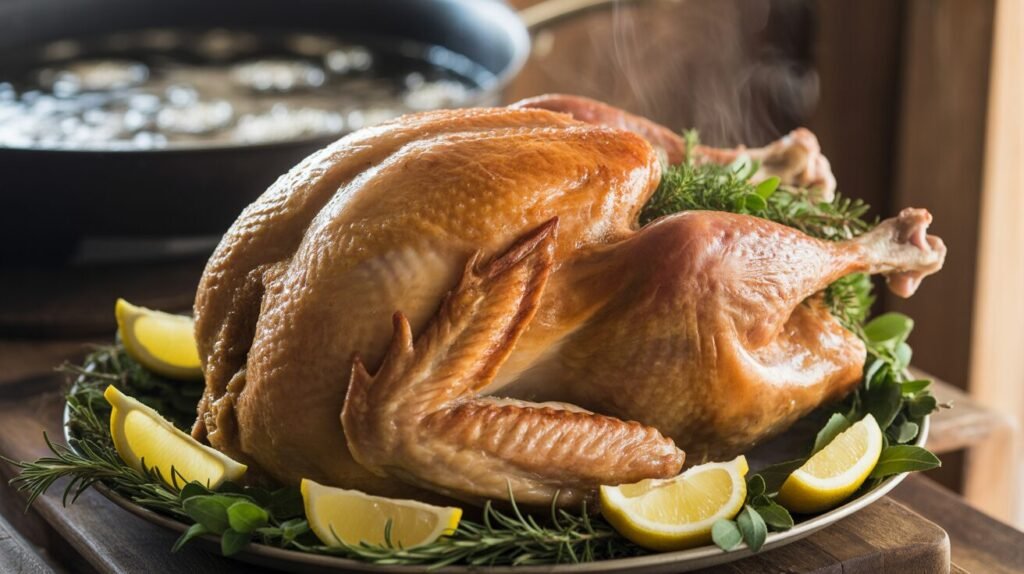
Deep-fried turkey is the ultimate indulgence for holiday feasts or special gatherings. Unlike traditional roasted birds, deep-frying produces an incredibly crispy exterior while keeping the meat juicy and flavorful. The high heat locks in moisture, giving you tender breast and thigh meat without drying.
This method may seem intimidating, but with proper preparation, safety, and timing, it’s a fast, delicious, and impressive way to serve turkey. In this guide, you’ll learn how to safely fry a turkey, season it for maximum flavor, and achieve that coveted golden-brown skin. Whether for Thanksgiving, Christmas, or a backyard celebration, a deep-fried turkey is a showstopper that guests will rave about.
2. Ingredients Breakdown
Whole Turkey (10–14 lbs)
A moderate size is safer for deep-frying. Ensure the turkey is completely thawed and dry.
Peanut or Canola Oil
Used for frying due to high smoke points. Oil quantity must fully submerge the turkey.
Salt and Pepper
Simple seasoning that enhances the natural flavor of the turkey.
Herbs and Spices (Optional)
Paprika, garlic powder, onion powder, cayenne, and dried herbs can be added for additional flavor.
Brine (Optional)
Brining the turkey a day before frying adds extra moisture and flavor.
Ingredient Substitutions
- Oil → peanut, canola, sunflower, or grapeseed oil
- Seasonings → use your favorite poultry rub
- Brine → optional, for extra juiciness
3. Step-by-Step Instructions
1. Safety First
Use a large, heavy-duty propane fryer outdoors on a flat surface, away from structures and water. Never fry indoors or in a garage.
2. Prep the Turkey
- Remove giblets, neck, and any excess fat.
- Pat the turkey completely dry inside and out—moisture causes dangerous splattering.
- Remove any ice if using a thawed frozen turkey.
3. Season the Turkey
Rub with salt, pepper, and any optional spices. A brined turkey can be fried directly without extra salt.
4. Heat the Oil
- Pour oil into the fryer pot.
- Preheat to 350°F (175°C). Use a thermometer to monitor temperature carefully.
5. Lower the Turkey
- Slowly and carefully lower the turkey into the hot oil using a fryer basket or hook.
- Oil may bubble vigorously—stand back.
6. Fry the Turkey
- Fry for approximately 3–4 minutes per pound. For a 12-pound turkey, that’s about 36–48 minutes.
- Monitor temperature. Maintain oil at 350°F.
7. Check for Doneness
- Internal temperature should reach 165°F (74°C) in the thickest part of the breast and 175°F (79°C) in the thigh.
8. Remove and Rest
- Carefully lift the turkey from the oil and let it drain on a tray lined with paper towels.
- Let it rest 15–20 minutes before carving.
4. Tips and Variations
Expert Tips
- Always fry outdoors on a flat, non-flammable surface.
- Keep a fire extinguisher nearby.
- Dry the turkey thoroughly to prevent oil splatter.
- Monitor oil temperature to avoid burning.
- Use long gloves and protective eyewear.
Variations
- Cajun Deep-Fried Turkey: Rub with Cajun spices before frying.
- Herb-Infused Oil: Add bay leaves, garlic, or rosemary to oil for subtle flavor.
- Citrus Butter Injection: Inject lemon and herb butter for extra flavor inside the turkey.
- Spicy Fried Turkey: Add chili powder or cayenne to the rub.
5. Serving Suggestions
Best Side Dishes
- Classic mashed potatoes
- Cornbread stuffing
- Cranberry sauce
- Roasted vegetables
- Coleslaw or slaw salad
Garnishes
- Lemon or orange slices
- Fresh herbs (thyme, rosemary, sage)
Drink Pairings
- Bold red wine like Zinfandel or Cabernet Sauvignon
- Craft beer or dark ale
- Sparkling cider
Meal Themes
- Backyard celebration
- Holiday feasts
- Casual family gatherings
6. Storage and Reheating Instructions
Refrigerator
- Carved turkey can be stored in airtight containers for 3–4 days.
Freezer
- Freeze portions in airtight bags for up to 3 months.
Reheating
- Oven: Cover and heat at 300°F with a splash of broth for 15–20 minutes.
- Microwave: Use medium power in smaller portions.
7. Recipe Notes
- Never fry a frozen turkey—oil can overflow or explode.
- Use peanut oil or other high smoke point oils.
- Monitor oil level to ensure the turkey is fully submerged but not overflowing.
- Always fry with adult supervision.
8. Nutrition Information (Per Serving)
| Nutrient | Amount |
|---|---|
| Calories | 420 |
| Fat | 30g |
| Saturated Fat | 8g |
| Carbs | 1g |
| Sugar | 0g |
| Fiber | 0g |
| Protein | 42g |
| Sodium | 480mg |
| Cholesterol | 140mg |
| Calcium | 20mg |
| Iron | 1.5mg |
Nutrition information is an estimate and may vary based on oil absorption and seasoning.
9. Recipe Card Summary
Course: Main Dish
Cuisine: American
Servings: 12
Prep Time: 20 minutes + 12–24 hours brine (optional)
Cook Time: 36–48 minutes (for 12 lbs)
Total Time: 40–50 minutes (plus optional brining)
Ingredients
- 1 whole turkey (10–14 lbs), fully thawed
- Peanut or canola oil for frying
- Salt and pepper
- Optional spice rub or herbs
- Optional brine ingredients: salt, sugar, aromatics
- Optional butter or citrus injection
Instructions
- Prepare brine if desired; refrigerate turkey 12–24 hours.
- Remove turkey from brine, rinse, and pat dry.
- Season turkey with salt, pepper, and optional spices.
- Heat oil to 350°F in a large outdoor fryer.
- Carefully lower turkey into oil. Fry 3–4 minutes per pound.
- Monitor temperature; maintain 350°F.
- Remove turkey when internal temp reaches 165°F breast, 175°F thigh.
- Drain on paper towels and rest 15–20 minutes.
- Carve and serve.
Diet Tags
- High Protein
- Gluten-Free
- Holiday-Friendly
Health Benefits
- High-quality protein
- Rich in B vitamins
- Low in carbs
- Crispy skin offers indulgent flavor without extra breading
FAQs
1. Can I deep-fry a frozen turkey?
No. The turkey must be fully thawed and dry.
2. How do I prevent oil overflow?
Test oil volume by placing turkey in water first. Mark the water level, then use the same amount of oil in the fryer.
3. How long does it take to fry a 12-pound turkey?
Approximately 36–48 minutes at 350°F (3–4 minutes per pound).
4. Is peanut oil necessary?
It has a high smoke point, but canola, sunflower, or grapeseed oil also work.
5. Can I add flavor to the turkey while frying?
Yes—inject herb butter or season the skin with a spice rub.
11. Final Thoughts
Deep-Fried Turkey is fast, flavorful, and unforgettable. While safety precautions are essential, the result is tender, juicy meat and golden, crispy skin that rivals any roasted turkey. Perfect for holidays, outdoor gatherings, or special celebrations, this method delivers a show-stopping centerpiece. Follow these steps carefully, and you’ll enjoy a moist, flavorful, and visually stunning turkey every time.