
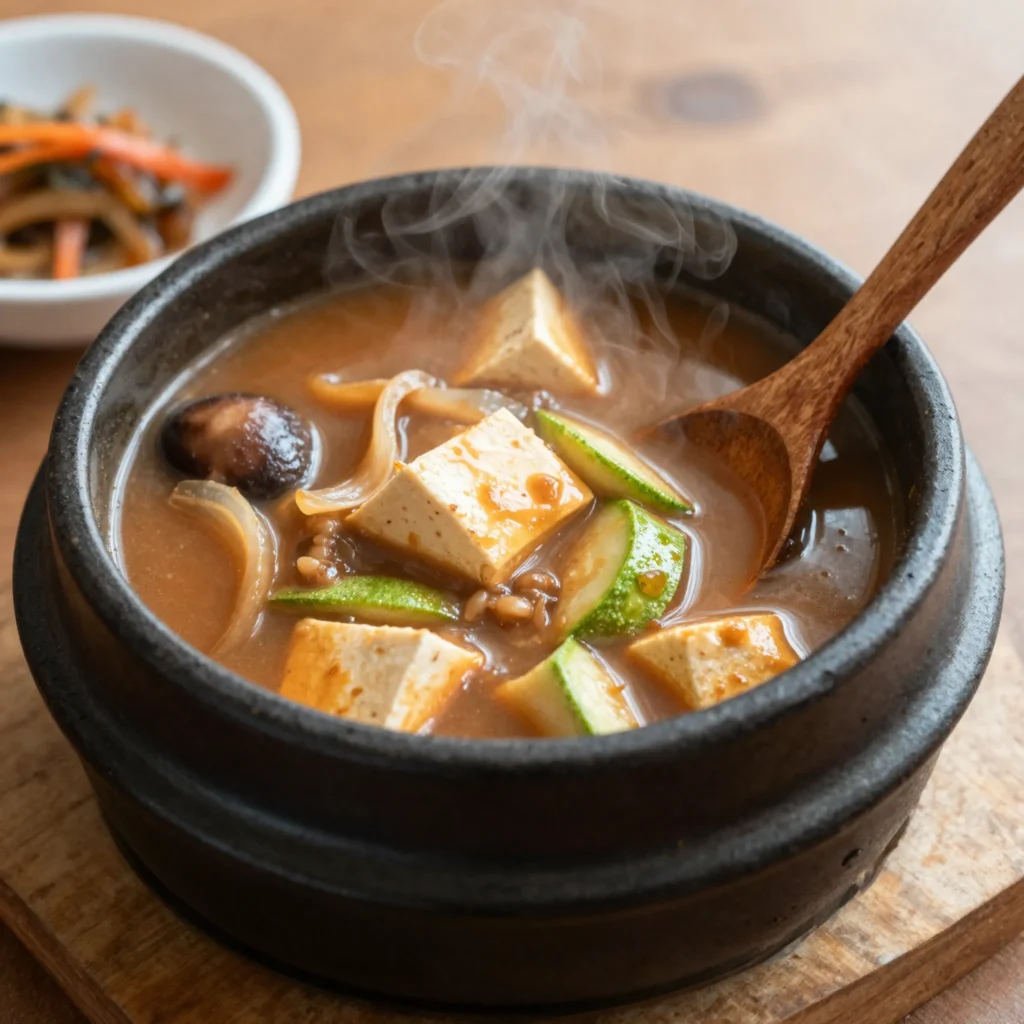
Doenjang Jjigae – Soybean Paste Stew
1. Introduction
If you are looking for a warm, deeply comforting dish that feels nourishing without being complicated, Doenjang Jjigae is a perfect place to start. This traditional Korean soybean paste stew is rich, savory, and packed with bold flavor, yet it comes together with simple ingredients and straightforward steps. It is the kind of meal that feels satisfying after a long day, filling without being heavy, and familiar even if you are trying Korean food for the first time.
Doenjang Jjigae is known for its earthy depth, created by fermented soybean paste simmered gently with vegetables, tofu, and broth. It does not rely on complicated techniques or expensive ingredients, which makes it ideal for beginner cooking learners. Once you understand the basic method, you can adjust it endlessly to suit your taste, whether you prefer it mild, spicy, vegetarian, or hearty with seafood or meat.
What makes this dish especially appealing is how forgiving it is. You do not need perfect knife skills or exact measurements. The stew improves as it simmers, allowing flavors to develop naturally. You can cook it on the stovetop in under 30 minutes, making it practical for everyday meals.
In this guide, you will learn how to choose the right ingredients, how to layer flavors correctly, and how to avoid common mistakes. By the end, you will feel confident preparing a bowl of Doenjang Jjigae that tastes authentic, comforting, and deeply satisfying.
Why You’ll Love This Recipe
- Simple ingredients with big flavor
- Beginner-friendly cooking method
- Customizable for different diets
- Comforting, warm, and filling
- Perfect for everyday home cooking
2. Ingredients Breakdown
Understanding each ingredient will help you cook with confidence and adjust the recipe to your needs.
Doenjang (Korean Soybean Paste)
This is the heart of the dish. Doenjang is fermented, thick, and deeply savory. It is saltier and earthier than miso. Look for traditional Korean doenjang in an Asian grocery store.
Tip: If it smells strong, that is normal. The aroma mellows as it cooks.
Substitution: In an emergency, you can mix dark miso with a small amount of soy sauce, but the flavor will not be identical.
Anchovy-Kelp Broth
This broth provides depth without heaviness. It is traditionally made from dried anchovies and dried kelp simmered in water.
Tip: Remove anchovies before simmering to avoid bitterness.
Vegetarian option: Use kelp and dried shiitake mushrooms instead.
Tofu
Soft or medium tofu works best. It absorbs flavor while adding protein and texture.
Tip: Add tofu near the end to prevent breaking.
Zucchini
Adds freshness and balances the fermented flavor.
Substitution: Korean squash or yellow squash works well.
Onion
Provides sweetness and structure to the broth.
Potato
Adds body and makes the stew more filling.
Tip: Cut into small cubes for even cooking.
Mushrooms
Traditional options include enoki or shiitake, but button mushrooms also work.
Garlic
Essential for aroma and depth. Fresh garlic is always best.
Green Chili Pepper
Adds gentle heat.
Tip: Remove seeds for a milder stew.
Gochujang (Optional)
Adds spice and slight sweetness. Use sparingly.
3. Step-by-Step Instructions
- Prepare the broth
In a pot, bring anchovy-kelp broth to a gentle boil over medium heat. Keep it warm while preparing ingredients. - Dissolve the soybean paste
Scoop doenjang into a small strainer or bowl. Slowly mix with hot broth until smooth, then add back to the pot. This prevents clumps. - Add firm vegetables first
Add potatoes and onions. Simmer for 5 to 7 minutes until slightly tender. - Add remaining vegetables
Stir in zucchini, mushrooms, garlic, and green chili. Let simmer gently for another 5 minutes. - Adjust seasoning
Taste the broth. Add a small amount of gochujang if you want more depth or spice. - Add tofu last
Gently add tofu cubes and simmer for 3 to 5 minutes. Avoid stirring too much. - Final simmer
Let everything come together, then turn off heat. Rest for 2 minutes before serving.
4. Tips and Variations
Expert Tips
- Always dissolve doenjang before adding
- Gentle simmering develops better flavor
- Taste before adding extra salt
Variations
- Vegetarian: Use mushroom-kelp broth
- Seafood: Add clams or shrimp near the end
- Meat: Thinly sliced beef can be added with onions
- Kid-friendly: Skip chili and reduce garlic
- Adult version: Add extra chili and gochujang
5. Serving Suggestions
Serve hot with:
- Steamed white rice
- Simple cucumber salad
- Kimchi or pickled radish
Garnishes:
- Sliced green onions
- Sesame oil drizzle
Pairing Ideas:
- Barley tea
- Light Korean side dishes
6. Storage and Reheating Instructions
Refrigerator:
Store in an airtight container for up to 3 days.
Freezer:
Freeze without tofu for best texture, up to 1 month.
Reheating:
- Microwave: Heat in intervals, stirring gently
- Stovetop: Reheat on low heat, add water if thick
7. Recipe Notes
- Can be prepped ahead of time
- Flavor improves the next day
- Use fresh garlic for best aroma
- Stone pot enhances heat retention
8. Nutrition Information (Per Serving)
| Nutrient | Amount |
|---|---|
| Calories | 230 kcal |
| Fat | 11 g |
| Saturated Fat | 2 g |
| Carbohydrates | 18 g |
| Sugar | 4 g |
| Fiber | 4 g |
| Protein | 15 g |
| Sodium | 980 mg |
| Cholesterol | 0 mg |
| Calcium | 180 mg |
| Iron | 3.5 mg |
Nutrition information is an estimate and may vary based on specific ingredients used.
9. Recipe Card Summary
Course: Main Dish
Cuisine: Korean
Servings: 2–3
Prep Time: 10 minutes
Cook Time: 20 minutes
Total Time: 30 minutes
Ingredients
- 2 tbsp doenjang
- 2 cups anchovy-kelp broth
- 1 small potato
- 1/2 zucchini
- 1/2 onion
- 100 g tofu
- 1 clove garlic
- 1 green chili
- Optional gochujang
Instructions
- Heat broth
- Dissolve doenjang
- Add vegetables
- Simmer
- Add tofu
- Serve hot
Notes
Adjust spice and vegetables to taste.
Diet Tags:
Vegetarian option, High Protein, Dairy-Free, Gluten-Free Option
10. Health Benefits Section
- Fermented soybean paste: Supports gut health
- Tofu: Plant-based protein
- Vegetables: Fiber and vitamins
- Garlic: Supports immunity
11. Suggested Sauces
- Sesame oil drizzle
- Optional chili oil
- Light soy sauce for seasoning adjustment
12. Avoid These Mistakes
- Boiling aggressively
- Adding tofu too early
- Oversalting before tasting
- Skipping broth preparation
13. FAQs
1. Is Doenjang Jjigae very salty?
It is savory but balanced when diluted properly.
2. Can beginners make this dish?
Yes, it is ideal for learning basic stew techniques.
3. Can I make it vegetarian?
Yes, use mushroom and kelp broth.
4. Can I meal prep this stew?
Yes, it stores well and reheats easily.
5. Is this dish spicy?
Only if chili or gochujang is added.
6. What rice goes best with it?
Short-grain white rice is traditional