
Easy Fruit Sorbet Cups Recipe | Refreshing Summer Dessert
Introduction
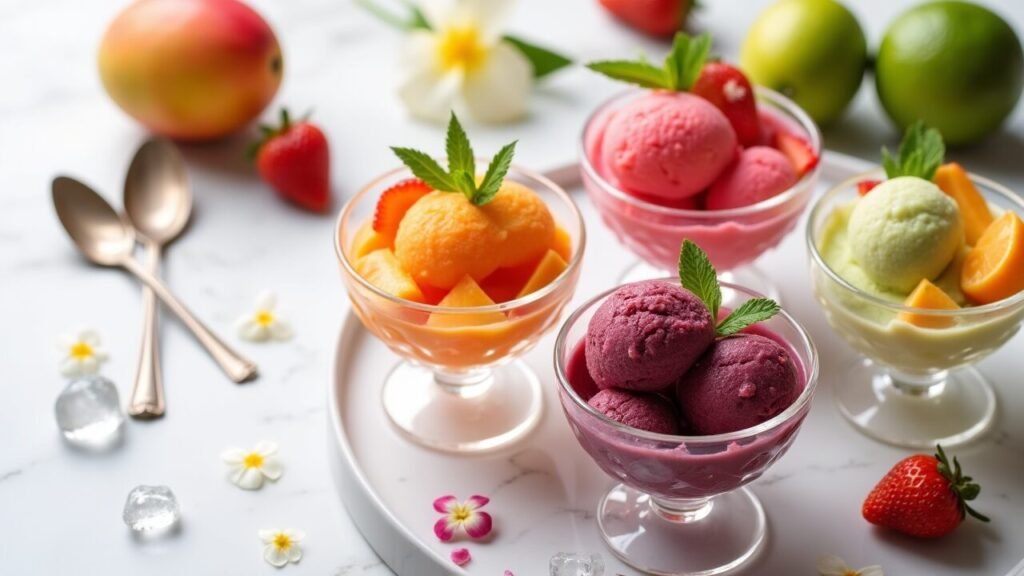
When the temperature rises and you’re craving something cool, refreshing, and naturally sweet, fruit sorbet cups deliver pure frozen perfection. These vibrant, smooth desserts capture the essence of peak-season fruit in an elegant, light treat that cleanses the palate and satisfies sweet cravings without the heaviness of traditional frozen desserts.
What makes fruit sorbet so irresistible? Unlike ice cream or gelato, sorbet showcases the pure, concentrated flavor of fresh fruit with a crystalline texture that melts beautifully on your tongue. The natural sweetness of ripe fruit, enhanced with just a touch of sugar and brightened with citrus, creates a dessert that tastes like summer itself. Each spoonful delivers intense fruit flavor with a refreshing coolness that’s both satisfying and invigorating.
The beauty of homemade sorbet lies in its simplicity and endless customization possibilities. With just three or four basic ingredients and an ice cream maker or even a food processor, you can create restaurant-quality sorbets that rival the finest gelaterias. From classic strawberry and mango to exotic combinations like watermelon-basil or blood orange-pomegranate, the possibilities are limited only by your imagination and the seasonal fruit available.
These sorbet cups aren’t just desserts – they’re versatile treats perfect for elegant dinner parties, casual summer gatherings, healthy snacking, or palate cleansers between courses. They’re naturally dairy-free, can be made sugar-free with the right sweeteners, and provide a guilt-free way to enjoy dessert while getting vitamins and antioxidants from real fruit.
In this comprehensive guide, you’ll discover the secrets to achieving perfectly smooth texture, balancing sweetness and acidity, preventing ice crystals, and creating beautiful presentations that make these simple sorbets feel special and sophisticated.
Ingredients Breakdown
For the Basic Sorbet Base (Makes 4 cups):
Fresh or frozen fruit (4 cups, prepared): The star of your sorbet. Choose fruit at peak ripeness for maximum flavor and natural sweetness. Strawberries should be deep red and fragrant, mangoes should yield slightly to pressure, and berries should be plump and glossy. Frozen fruit works excellently and is often more economical, especially for out-of-season varieties.
Granulated sugar (1/2 to 3/4 cup): Provides sweetness and prevents the sorbet from freezing too hard. The amount depends on the natural sweetness of your fruit – very sweet fruits like mango need less, while tart fruits like cranberries need more. Sugar also affects texture, so don’t eliminate it entirely even if using sweet fruit.
Fresh lemon juice (2-4 tablespoons): Essential for balancing flavors and preventing oxidation. The acidity brightens fruit flavors and helps maintain vibrant colors. Use more for sweet fruits and less for naturally tart ones. Fresh lemon juice provides better flavor than bottled versions.
Water (1/4 to 1/2 cup): Helps achieve proper consistency and makes blending easier. Some very juicy fruits may need less water, while drier fruits may need more. The goal is a smooth puree that will freeze to the right texture.
Pinch of salt: Enhances fruit flavors and balances sweetness. This tiny amount makes a noticeable difference in the overall taste profile.
Popular Fruit Combinations:
Strawberry Sorbet: 4 cups hulled strawberries, 1/2 cup sugar, 3 tablespoons lemon juice, 1/4 cup water
Mango Sorbet: 4 cups cubed ripe mango, 1/3 cup sugar, 2 tablespoons lime juice, 1/4 cup water
Mixed Berry: 2 cups strawberries + 1 cup blueberries + 1 cup raspberries, 2/3 cup sugar, 3 tablespoons lemon juice
Watermelon-Mint: 4 cups cubed watermelon, 1/4 cup sugar, 2 tablespoons lime juice, 2 tablespoons fresh mint leaves
Peach-Ginger: 4 cups peeled peaches, 1/2 cup sugar, 3 tablespoons lemon juice, 1 teaspoon fresh grated ginger
Optional Flavor Enhancers:
- Fresh herbs (mint, basil, thyme) for complexity
- Vanilla extract (1 teaspoon) for depth
- Honey or agave nectar as sugar alternatives
- Liqueurs (2-3 tablespoons) for adult versions
- Coconut water instead of regular water for tropical notes
Dietary Substitutions:
- Sugar-free: Use erythritol, stevia, or monk fruit sweetener (adjust quantities as these vary in sweetness)
- Lower sugar: Reduce sugar by up to half if using very sweet fruit
- Vegan: Naturally vegan as written
- Keto-friendly: Use keto-approved sweeteners and choose lower-sugar fruits like berries
- Paleo: Replace sugar with honey or pure maple syrup
Step-by-Step Instructions
1. Prepare Your Fruit Wash, hull, peel, or pit your fruit as needed. Cut larger fruits into chunks for easier blending. If using frozen fruit, let it thaw slightly for easier processing, but don’t let it get too warm – partially frozen fruit actually blends better and keeps the mixture cold.
2. Create the Simple Syrup (Optional but Recommended) In a small saucepan, combine the sugar with 1/4 cup water. Heat over medium heat, stirring until sugar completely dissolves, about 2-3 minutes. This creates a simple syrup that incorporates more easily than granulated sugar and helps prevent graininess. Let cool completely before proceeding.
3. Blend to Perfection In a food processor or high-powered blender, combine the prepared fruit, cooled simple syrup (or granulated sugar if skipping the syrup step), lemon juice, remaining water, and salt. Blend until completely smooth, 2-3 minutes. Stop to scrape down sides as needed.
4. Strain for Smoothness (Optional) For ultra-smooth sorbet, especially with seeded fruits like raspberries or blackberries, strain the puree through a fine-mesh sieve, pressing the solids to extract maximum juice. This step is optional but creates professional-quality texture.
5. Chill the Base Refrigerate the fruit puree for at least 2 hours or overnight. This step improves the final texture and makes churning more efficient. Cold bases freeze faster and more evenly.
6. Churn the Sorbet Pour the chilled base into your ice cream maker and churn according to manufacturer’s instructions, typically 20-25 minutes. The sorbet should have the consistency of soft-serve ice cream when done. If you don’t have an ice cream maker, see the alternative method in the tips section.
7. Final Freeze Transfer the churned sorbet to a freezer-safe container, pressing plastic wrap directly onto the surface to prevent ice crystals from forming. Freeze for at least 2-4 hours until firm enough to scoop properly.
8. Serve in Style Let the sorbet soften for 5-10 minutes at room temperature before scooping for the best texture. Serve in chilled bowls or glasses, garnished with fresh fruit, mint leaves, or a drizzle of fruit coulis for elegant presentation.
Tips and Variations
Expert Tips for Perfect Sorbet:
- Sugar balance: Too little sugar creates icy texture, too much prevents proper freezing – taste and adjust before churning
- Alcohol addition: Add 1-2 tablespoons of liqueur for smoother texture and enhanced flavor (alcohol prevents hard freezing)
- No ice cream maker method: Freeze the base in a shallow pan, stirring every 30 minutes for 3-4 hours until smooth
- Texture test: Properly churned sorbet should hold soft peaks when the machine stops
- Storage secret: Press plastic wrap directly onto sorbet surface to prevent ice crystals
Creative Flavor Combinations:
Tropical Paradise: Mango, pineapple, and coconut water with lime juice and mint
Berry Basil: Mixed berries with fresh basil leaves for an herbal twist
Citrus Medley: Orange, grapefruit, and lemon with a touch of honey
Spiced Pear: Ripe pears with cinnamon, ginger, and a splash of white wine
Cucumber Lime: Refreshing cucumber with lime juice and mint for a spa-like treat
Blood Orange Pomegranate: Dramatic color and complex flavor perfect for winter
Peach Lavender: Summer peaches with dried culinary lavender for elegance
Watermelon Feta: Sweet watermelon with crumbled feta and black pepper for savory-sweet complexity
Serving Suggestions
Fruit sorbet cups offer endless presentation and serving possibilities for any occasion.
Elegant Presentations:
- Serve in chilled glass bowls or vintage teacups for sophisticated appeal
- Layer different colored sorbets in clear glasses for rainbow effects
- Use an ice cream scoop warmed in hot water for perfectly round scoops
- Garnish with fresh fruit, edible flowers, or herb sprigs for restaurant-style plating
Creative Serving Ideas:
- Palate cleanser: Small portions between courses at dinner parties
- Dessert flight: Offer 3-4 small portions of different flavors on one plate
- Fruit cups: Serve in hollowed-out fruit like pineapple or orange halves
- Parfait style: Layer with fresh fruit and granola for textural contrast
Seasonal Presentations:
- Summer: Serve with fresh berries and mint in outdoor settings
- Fall: Pair apple or pear sorbet with cinnamon cookies
- Winter: Citrus sorbets with candied citrus peel for brightness
- Spring: Berry sorbets with edible flowers and fresh fruit garnishes
Party and Event Ideas:
- Wedding desserts: Elegant alternative to heavy cakes
- Kids’ parties: Colorful, healthy alternative to sugary treats
- Brunch gatherings: Refreshing finish to rich morning meals
- Wine pairings: Light dessert that won’t compete with good wines
Adult Variations:
- Prosecco float: Add a splash of sparkling wine just before serving
- Liqueur enhancement: Drizzle with complementary liqueurs
- Wine sorbet: Replace some water with wine for sophisticated flavors
Storage and Reheating Instructions
Freezer Storage: Properly stored sorbet maintains quality for up to 1 month in the freezer. Use airtight containers and press plastic wrap directly onto the surface to prevent ice crystal formation. Label containers with flavor and date for easy identification.
Serving from Storage: Remove sorbet from freezer 5-10 minutes before serving to allow slight softening for easier scooping. If it becomes too hard, let it sit at room temperature until scoopable, or microwave in 10-second intervals, stirring between, until soft enough to scoop.
Texture Maintenance: Homemade sorbet without stabilizers may become icy over time. If this happens, let it soften slightly, then re-process in a food processor until smooth, and refreeze. This refreshes the texture and incorporates any separated components.
Make-Ahead Strategies:
- Prepare fruit purees up to 2 days ahead and refrigerate until ready to churn
- Churn sorbet up to 3 days before serving for optimal texture
- Make multiple flavors and store separately for variety at events
- Freeze individual portions in small containers for grab-and-go treats
Travel and Transport: For transporting sorbet, use insulated containers with dry ice or frozen gel packs. Pack containers tightly to minimize air space and temperature fluctuation. Plan serving within 2-3 hours of transport for best texture.
Recipe Notes
Fruit Selection Secrets: The quality of your fruit directly impacts your sorbet quality. Overripe fruit often works better than underripe, as the natural sugars are fully developed. Frozen fruit can be superior to fresh for consistency and availability.
Sweetness Testing: Always taste your base before churning and adjust sweetness as needed. Remember that frozen desserts taste less sweet than the base mixture, so it should taste slightly sweeter than your desired final result.
Ice Cream Maker Alternatives: Without a machine, use the “still-freeze” method: freeze the base in a shallow pan, stirring vigorously every 30-45 minutes for 3-4 hours. A food processor can also create sorbet by processing frozen fruit chunks with a small amount of simple syrup.
Troubleshooting Common Issues:
- Too icy: Not enough sugar or over-churning – adjust recipe and reduce churn time
- Won’t freeze: Too much alcohol or sugar – reduce these components
- Grainy texture: Sugar didn’t dissolve completely – use simple syrup method
- Lost flavor: Over-diluted with water – use less liquid next time
Professional Tips: Commercial sorbets often contain stabilizers like corn syrup or guar gum. For home cooking, a small amount of vodka (1-2 tablespoons) can improve texture without affecting flavor significantly.
Nutrition Information (Per Serving)
Based on 1/2 cup serving of strawberry sorbet (8 servings per batch)
| Nutrient | Amount |
|---|---|
| Calories | 85 |
| Total Fat | 0g |
| Saturated Fat | 0g |
| Carbohydrates | 22g |
| Sugar | 20g |
| Dietary Fiber | 2g |
| Protein | 1g |
| Sodium | 2mg |
| Cholesterol | 0mg |
| Calcium | 12mg |
| Iron | 0.3mg |
| Potassium | 140mg |
| Vitamin C | 58mg |
| Vitamin A | 12 IU |
| Folate | 18mcg |
| Magnesium | 8mg |
| Phosphorus | 18mg |
| Manganese | 0.3mg |
Nutrition information is an estimate and may vary significantly based on fruit type and sugar content used.
Recipe Card Summary
Course: Dessert, Palate Cleanser
Cuisine: French, International
Servings: 8 (1/2 cup each)
Prep Time: 20 minutes
Chill Time: 2 hours
Churn Time: 25 minutes
Freeze Time: 2-4 hours
Total Time: 5-7 hours
Ingredients:
- 4 cups fresh or frozen fruit, prepared
- 1/2 to 3/4 cup granulated sugar
- 2-4 tablespoons fresh lemon juice
- 1/4 to 1/2 cup water
- Pinch of salt
Instructions:
- Prepare fruit by washing, hulling, and chopping as needed
- Make simple syrup by dissolving sugar in 1/4 cup water (optional)
- Blend fruit, syrup, lemon juice, remaining water, and salt until smooth
- Strain mixture if desired for ultra-smooth texture
- Chill base for at least 2 hours or overnight
- Churn in ice cream maker for 20-25 minutes
- Transfer to container and freeze 2-4 hours until firm
- Let soften 5-10 minutes before scooping and serving
Notes: Adjust sugar based on fruit sweetness. Press plastic wrap directly onto surface to prevent ice crystals. Best served within 1 month for optimal texture and flavor.
Nutrition: See detailed nutrition table above
Diet Tags
- Dairy-Free
- Vegan
- Gluten-Free
- Fat-Free
- Low-Calorie
- Natural Sweeteners Compatible
- Paleo-Friendly (with honey)
- Keto-Compatible (with sugar substitutes)
- Kid-Friendly
- Allergy-Friendly
- Fresh Fruit Based
- No Artificial Ingredients
Health Benefits
Antioxidant Rich: Fresh fruits provide powerful antioxidants like vitamin C, anthocyanins, and flavonoids that support immune function and fight cellular damage.
Hydration Support: High water content from fruits helps maintain proper hydration, especially important during hot weather.
Natural Vitamins: Each serving provides significant amounts of vitamins and minerals depending on fruit choice, particularly vitamin C and potassium.
Low Fat: Naturally fat-free dessert option that satisfies sweet cravings without added fats or dairy.
Portion Control: Individual serving cups help with portion awareness compared to larger containers of ice cream.
Digestive Health: Natural fiber from fruit supports healthy digestion and gut function.
Natural Energy: Fruit sugars provide quick energy without artificial additives or excessive processing.
Weight Management: Lower calorie alternative to traditional frozen desserts while still providing satisfaction.
FAQs
1. Can I make sorbet without an ice cream maker? Absolutely! Use the “still-freeze” method: pour your chilled base into a shallow, freezer-safe dish and freeze for 45 minutes. Remove and stir vigorously with a fork, breaking up ice crystals. Repeat this process every 30-45 minutes for 3-4 hours until you achieve a smooth, scoopable consistency. A food processor can also work with frozen fruit chunks.
2. Why is my sorbet too hard or too soft after freezing? Texture problems usually come from sugar balance. Too little sugar creates rock-hard, icy sorbet, while too much prevents proper freezing, leaving it soft. The ideal ratio is about 1 cup sugar per 4 cups fruit, adjusted for the fruit’s natural sweetness. Adding 1-2 tablespoons of alcohol also improves texture.
3. How can I prevent my sorbet from becoming icy and crystalline? Several factors help: ensure your base is properly chilled before churning, don’t over-churn (stop when it reaches soft-serve consistency), press plastic wrap directly onto the surface before freezing, and store at consistent temperatures. A small amount of corn syrup or vodka also helps maintain smooth texture.
4. What’s the best way to balance sweetness in different fruits? Taste your fruit base before adding sugar – very sweet fruits like mango need less, while tart fruits like cranberries need more. A good rule of thumb: the mixture should taste slightly sweeter than you want the final product, as freezing dulls sweetness perception. Start with less sugar and add more as needed.
5. Can I make sugar-free sorbet that still has good texture? Yes! Sugar substitutes like erythritol work well, though you may need to experiment with quantities as sweetness levels vary. Consider adding a small amount of corn syrup or even vodka to help with texture. Some fruits like very ripe bananas or dates can provide natural sweetness and help with texture too.
Final Thoughts
Fruit sorbet cups represent the perfect intersection of health and indulgence, proving that the most satisfying desserts often showcase nature’s own sweetness in its purest form. These vibrant, refreshing treats remind us that luxury doesn’t always require complexity – sometimes the most elegant desserts are born from the simplest combination of peak-season fruit, a touch of sweetness, and careful technique.
What makes homemade sorbet truly special is the control you have over every element. You choose the ripeness of your fruit, adjust the sweetness to your preference, and create flavor combinations that would cost a fortune at high-end restaurants. Each batch captures a moment in time – the peak of berry season, the tropical sweetness of perfect mango, or the bright tang of winter citrus.
From a practical standpoint, mastering sorbet technique opens up endless possibilities for entertaining, healthy snacking, and creative expression in the kitchen. These desserts work beautifully for casual family dinners and elegant dinner parties alike, providing a light, refreshing ending that leaves guests feeling satisfied rather than overwhelmed.
The versatility of sorbet means you’ll never be limited by season or occasion. Summer’s abundant berries, fall’s crisp apples and pears, winter’s bright citrus, and spring’s first strawberries can all be transformed into memorable frozen treats that celebrate the best of each season.
So fire up that ice cream maker, visit your local farmers market for the ripest fruit you can find, and prepare to create desserts that taste like pure sunshine captured in frozen form. Once you experience the intense, clean flavors of homemade sorbet, you’ll wonder why you ever settled for store-bought versions. Here’s to many refreshing adventures in your frozen dessert journey!