
Easy Pork Stir Fry Recipe | Quick & Flavorful Weeknight Dinner
Introduction
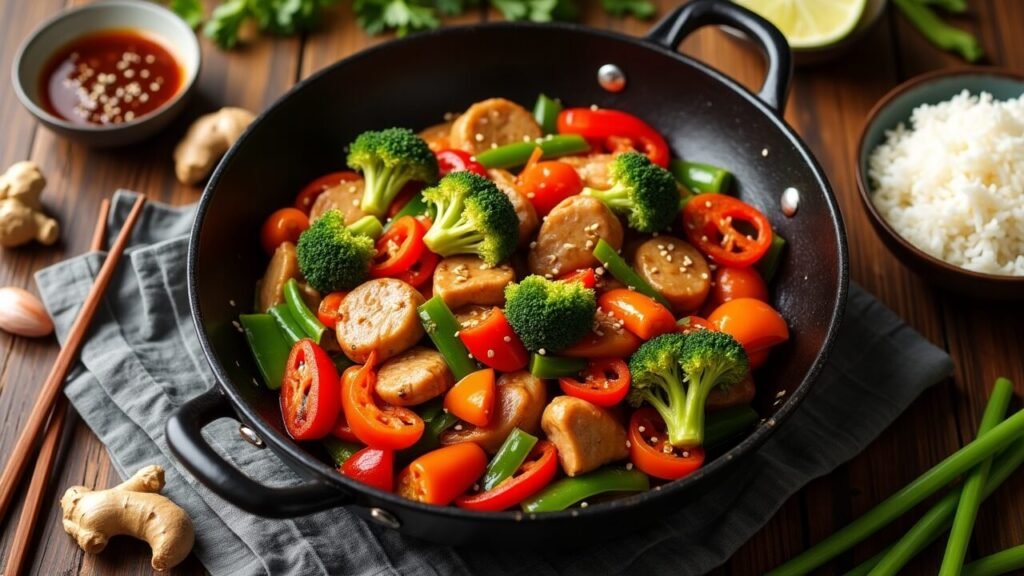
When you need a delicious, healthy dinner on the table in under 20 minutes, pork stir fry delivers everything you’re looking for in one satisfying dish. This vibrant meal combines tender strips of perfectly seasoned pork with crisp, colorful vegetables, all brought together by a savory-sweet sauce that coats every ingredient with incredible flavor. It’s the kind of meal that proves healthy eating doesn’t have to be time-consuming or bland – sometimes the best dishes are the simplest ones executed with the right techniques.
What makes pork stir fry so brilliantly practical? Unlike complex recipes that require hours of preparation, stir frying is all about high heat, quick cooking, and fresh ingredients that retain their texture, color, and nutritional value. The result is a meal that’s not only delicious but also packed with protein, vitamins, and fiber, making it perfect for busy families who want to eat well without spending hours in the kitchen.
The beauty of pork stir fry lies in its incredible versatility and foolproof nature. Once you master the basic technique, you can customize it with whatever vegetables you have on hand, adjust the sauce to suit your family’s taste preferences, and even adapt it to various dietary needs. It’s equally at home as a quick weeknight dinner, a meal prep solution for busy weeks, or an impressive dish for casual entertaining.
Whether you’re cooking for picky eaters who need their vegetables disguised in delicious sauce, health-conscious diners looking for balanced nutrition, or busy professionals who need something fast but satisfying, this pork stir fry delivers on all fronts. It’s proof that some of the best meals are the ones that bring together simple ingredients with smart cooking techniques.
In this comprehensive guide, you’ll discover the secrets to achieving restaurant-quality stir fry at home, including proper meat preparation, vegetable cutting techniques, sauce balancing, and the crucial timing that makes the difference between soggy vegetables and perfectly crisp results.
Ingredients Breakdown
For the Pork:
Pork tenderloin or pork shoulder (1 1/2 pounds): Tenderloin cooks quickly and stays tender, while shoulder has more flavor but requires slightly longer cooking. Cut against the grain into thin strips about 1/4-inch thick for quick, even cooking. Partially freezing the meat for 30 minutes makes slicing easier and more uniform.
Soy sauce (2 tablespoons): For marinating the pork, providing umami depth and helping tenderize the meat. Use regular soy sauce rather than low-sodium for the marinade – you need the salt content for proper flavor penetration.
Cornstarch (1 tablespoon): Creates a light coating that helps the pork stay tender and allows the sauce to cling better. This technique, called “velveting,” is essential for restaurant-quality texture.
Vegetable oil (1 tablespoon): For marinating and preventing the pork from sticking together. Use a neutral oil with a high smoke point like canola or vegetable oil.
For the Vegetables:
Bell peppers (2 medium, mixed colors): Provide sweetness, crunch, and vibrant color. Cut into strips about 1/4-inch wide for even cooking. Different colored peppers make the dish more visually appealing.
Snap peas or snow peas (1 cup): Add fresh crunch and bright green color. Trim the ends and remove strings if present. These cook very quickly, so add them near the end.
Carrots (2 medium): Cut into thin matchsticks or diagonal slices for quick cooking. Baby carrots can be used but should be sliced thinly for even cooking.
Broccoli florets (2 cups): Cut into uniform, bite-sized pieces. The stems can be used too – just peel and slice thinly. Broccoli adds nutrition and substance to the dish.
Garlic (4 cloves, minced): Fresh garlic is essential for authentic Asian flavors. Mince finely so it doesn’t burn during the high-heat cooking process.
Fresh ginger (1 tablespoon, minced): Provides aromatic warmth and authentic Asian flavor. Use fresh ginger only – dried doesn’t provide the same bright, zingy taste.
Green onions (3-4, sliced): Use both white and green parts. The white parts go in during cooking, while the green parts are perfect for garnish.
For the Stir Fry Sauce:
Soy sauce (1/3 cup): The base of the sauce, providing saltiness and umami. Use regular soy sauce for the best flavor balance.
Chicken or vegetable broth (1/4 cup): Adds depth and helps create the right consistency. Low-sodium broth works well since soy sauce provides plenty of salt.
Brown sugar (2 tablespoons): Balances the saltiness and adds subtle sweetness. You can substitute with honey or maple syrup if preferred.
Rice vinegar (1 tablespoon): Provides acidity that brightens all the flavors. Don’t substitute with other vinegars – rice vinegar has the mildest, most appropriate flavor.
Sesame oil (1 teaspoon): A little goes a long way. This provides the distinctive nutty flavor that makes stir fry taste authentic. Use it sparingly as it can be overpowering.
Cornstarch (1 tablespoon): Thickens the sauce so it coats the ingredients properly. Mix with a little cold water before adding to prevent lumps.
Red pepper flakes (1/4 teaspoon, optional): Adds heat to taste. Adjust according to your family’s spice tolerance.
For Cooking:
Vegetable oil (2-3 tablespoons): High-smoke-point oil for stir frying. You’ll use this in batches as you cook different components.
Optional Garnishes:
- Sesame seeds for crunch and nutty flavor
- Fresh cilantro for color and freshness
- Lime wedges for extra brightness
- Crushed peanuts for texture contrast
Dietary Substitutions:
- Gluten-free: Use tamari instead of soy sauce
- Low-sodium: Use low-sodium soy sauce and broth, add extra ginger and garlic for flavor
- Dairy-free: Recipe is naturally dairy-free
- Lower-carb: Serve over cauliflower rice instead of regular rice
- Vegetarian: Substitute firm tofu or tempeh for pork, adjust cooking time accordingly
Step-by-Step Instructions
Prepare the Pork:
1. Slice and Marinate Cut pork into thin strips against the grain, about 1/4-inch thick. In a bowl, combine sliced pork with 2 tablespoons soy sauce, 1 tablespoon cornstarch, and 1 tablespoon oil. Mix well and let marinate for at least 15 minutes while you prepare other ingredients. This velveting process ensures tender, juicy meat.
Prepare the Sauce and Vegetables:
2. Mix the Sauce In a small bowl, whisk together soy sauce, broth, brown sugar, rice vinegar, sesame oil, and red pepper flakes if using. In a separate small bowl, mix cornstarch with 2 tablespoons cold water until smooth. Set both aside – you’ll need them during the quick cooking process.
3. Prep All Vegetables Cut all vegetables into uniform, bite-sized pieces. This is crucial for even cooking. Arrange them in the order you’ll add them to the wok: harder vegetables like carrots and broccoli first, then peppers, and finally quick-cooking items like snap peas.
Start Stir Frying:
4. Heat the Wok Heat a large wok or large skillet over high heat until very hot. Add 1 tablespoon oil and swirl to coat. The oil should shimmer and almost smoke – this high heat is essential for proper stir frying.
5. Cook the Pork Add marinated pork in a single layer, letting it sear undisturbed for 1-2 minutes until golden brown on one side. Then stir fry for another 2-3 minutes until cooked through. Remove pork to a plate and set aside.
6. Stir Fry the Vegetables Add another tablespoon of oil to the wok. Add garlic, ginger, and white parts of green onions, stirring constantly for 30 seconds until fragrant. Add harder vegetables first (carrots, broccoli) and stir fry for 2-3 minutes. Then add bell peppers and cook 1-2 minutes more.
7. Add Quick-Cooking Vegetables Add snap peas and stir fry for another minute until all vegetables are crisp-tender. They should be bright in color and still have some crunch – overcooked vegetables ruin a good stir fry.
Final Assembly:
8. Combine and Sauce Return the cooked pork to the wok with the vegetables. Pour in the prepared sauce and stir quickly to combine. Add the cornstarch slurry and stir constantly for 1-2 minutes until the sauce thickens and coats everything evenly.
9. Finish and Serve Remove from heat and sprinkle with green parts of green onions and any desired garnishes like sesame seeds. Serve immediately over steamed rice or noodles while hot and fresh.
Tips and Variations
Expert Tips for Perfect Stir Fry:
- High heat is crucial: Your wok should be smoking hot before adding ingredients
- Don’t overcrowd: Cook in batches if necessary to maintain high temperature
- Prep everything first: Stir frying happens fast – have all ingredients ready before you start
- Cut uniformly: Even-sized pieces ensure even cooking
- Keep it moving: Constantly stir and toss ingredients to prevent burning
Pork Cut Variations:
Pork Tenderloin: Most tender, cooks quickly, perfect for beginners
Pork Shoulder: More flavorful but requires longer cooking time
Pork Chops: Boneless chops work well, just slice thinly
Ground Pork: Different texture but cooks even faster
Leftover Pork: Roast or grilled pork can be added at the end just to heat through
Vegetable Combinations:
Classic Mix: Bell peppers, onions, carrots, and snap peas
Asian Greens: Bok choy, Chinese broccoli, and snow peas
Colorful Medley: Purple cabbage, yellow squash, and red peppers
Seasonal Variations: Use asparagus in spring, zucchini in summer, Brussels sprouts in fall
Protein Boost: Add mushrooms and water chestnuts for extra texture
Sauce Variations:
Teriyaki Style: Add more brown sugar and a splash of mirin
Spicy Szechuan: Include Szechuan peppercorns and chili garlic sauce
Sweet and Sour: Add pineapple chunks and rice vinegar
Ginger Scallion: Double the ginger and add more green onions
Black Bean: Include black bean sauce for deeper umami flavor
Serving Suggestions
Pork stir fry is wonderfully versatile and works beautifully with various accompaniments and presentations.
Classic Asian Presentations:
- Serve over steamed white or brown rice for traditional appeal
- Offer with lo mein or rice noodles for variety
- Include jasmine rice for its fragrant, slightly sticky texture
- Provide chopsticks alongside forks for authentic dining experience
Family-Style Serving:
- Large platter presentation: Serve stir fry over rice on a large serving platter
- Individual bowls: Portion rice into bowls and top with stir fry
- Buffet style: Keep stir fry warm in a slow cooker with rice on the side
- Kid-friendly: Serve with mild sauce on the side for picky eaters
Healthy Alternatives:
- Cauliflower rice: Low-carb option that absorbs flavors beautifully
- Quinoa: Higher protein grain that complements the dish well
- Brown rice: More fiber and nutrients than white rice
- Zucchini noodles: Fresh, light option for summer meals
Accompaniment Ideas:
- Appetizers: Pot stickers, spring rolls, or wonton soup
- Side dishes: Steamed edamame or cucumber salad
- Beverages: Green tea, jasmine tea, or light beer
- Condiments: Sriracha, chili oil, or extra soy sauce for customization
Meal Prep Applications:
- Portion into containers with rice for work lunches
- Store components separately to maintain texture
- Double the recipe for easy week-long lunches
- Pack with fresh vegetables for added crunch
Storage and Reheating Instructions
Refrigerator Storage: Store leftover pork stir fry in airtight containers in the refrigerator for up to 4 days. The flavors actually improve overnight as they have time to meld together. Store rice separately if possible to maintain the best texture.
Freezer Storage: Pork stir fry freezes well for up to 3 months in freezer-safe containers or bags. Vegetables may be slightly softer after freezing, but the dish remains delicious. Freeze in individual portions for easy reheating.
Reheating Instructions:
- Microwave: Heat in 30-second intervals, stirring between, until heated through
- Stovetop: Reheat in a large skillet over medium heat, adding a splash of broth if needed
- Oven: Reheat covered at 350°F for 10-15 minutes until warmed through
- From frozen: Thaw overnight in refrigerator before reheating
Maintaining Quality:
- Add a splash of soy sauce or broth when reheating to refresh flavors
- Reheat only what you’ll eat to prevent multiple heating cycles
- Store vegetables and meat together for best flavor integration
- Don’t reheat more than once for food safety
Make-Ahead Strategies:
- Prep vegetables: Cut up to 2 days ahead and store in refrigerator
- Marinate pork: Can marinate up to 24 hours for deeper flavor
- Sauce preparation: Mix sauce up to 1 week ahead and refrigerate
- Complete meal prep: Cook entire dish and portion for the week
Recipe Notes
Pork Selection and Preparation: Choose cuts with some marbling for best flavor – completely lean cuts can become dry. Slicing against the grain is crucial for tender results. If pork seems tough after cooking, it was likely sliced with the grain or overcooked.
Wok vs. Skillet: A wok’s shape allows for better heat distribution and tossing, but a large skillet works fine. The key is having enough surface area so ingredients aren’t crowded. Cast iron skillets retain heat well and work excellently for stir frying.
Oil and Temperature Control: Use oils with high smoke points like vegetable, canola, or peanut oil. The oil should shimmer and almost smoke before adding ingredients. If the oil smokes heavily, reduce heat slightly but maintain the high temperature needed for proper stir frying.
Sauce Consistency: The sauce should coat ingredients lightly, not pool in the bottom of the pan. If too thin, add more cornstarch slurry. If too thick, add a splash of broth. The cornstarch slurry must be mixed until completely smooth to prevent lumps.
Troubleshooting Common Issues:
- Soggy vegetables: Heat too low or overcrowded pan
- Dry pork: Overcooked or skipped marinating step
- Bland flavor: Not enough sauce or didn’t season properly
- Sauce won’t thicken: Cornstarch slurry not mixed properly or not cooked long enough
Nutrition Information (Per Serving)
Based on 4 servings without rice
| Nutrient | Amount |
|---|---|
| Calories | 285 |
| Total Fat | 12g |
| Saturated Fat | 3g |
| Carbohydrates | 15g |
| Sugar | 10g |
| Dietary Fiber | 3g |
| Protein | 32g |
| Sodium | 865mg |
| Cholesterol | 75mg |
| Calcium | 55mg |
| Iron | 2.1mg |
| Potassium | 485mg |
| Vitamin A | 3,850 IU |
| Vitamin C | 85mg |
| Vitamin K | 45mcg |
| Folate | 65mcg |
| Phosphorus | 285mg |
| Niacin | 8.5mg |
Nutrition information is an estimate and may vary based on specific ingredients and portion sizes used.
Recipe Card Summary
Course: Main Dish
Cuisine: Asian-inspired
Servings: 4
Prep Time: 15 minutes
Marinating Time: 15 minutes
Cook Time: 10 minutes
Total Time: 40 minutes
Ingredients:
- 1 1/2 lbs pork tenderloin, sliced thin
- 2 tbsp + 1/3 cup soy sauce
- 2 tbsp cornstarch (1 for pork, 1 for sauce)
- 4 tbsp vegetable oil
- 2 mixed bell peppers, sliced
- 1 cup snap peas
- 2 carrots, julienned
- 2 cups broccoli florets
- 4 cloves garlic, minced
- 1 tbsp fresh ginger, minced
- 3-4 green onions, sliced
- 1/4 cup chicken broth
- 2 tbsp brown sugar
- 1 tbsp rice vinegar
- 1 tsp sesame oil
Instructions:
- Marinate sliced pork with 2 tbsp soy sauce, 1 tbsp cornstarch, and 1 tbsp oil for 15 minutes
- Mix sauce ingredients; prepare cornstarch slurry separately
- Cut all vegetables uniformly
- Heat wok over high heat, cook pork until golden, remove
- Stir fry vegetables starting with hardest, adding garlic and ginger first
- Return pork, add sauce and cornstarch slurry
- Stir until sauce thickens and coats everything
- Garnish and serve immediately over rice
Notes: High heat is essential. Don’t overcrowd pan. Prep all ingredients before starting. Adjust sauce thickness with cornstarch slurry or broth.
Nutrition: See detailed nutrition table above
Diet Tags
- High-Protein
- Dairy-Free
- Quick & Easy
- Weeknight Dinner
- Meal Prep Friendly
- One-Pan Meal
- Asian-Inspired
- Vegetable-Rich
- Family-Friendly
- Gluten-Free (with tamari)
Health Benefits
Lean Protein Source: Pork tenderloin provides high-quality protein with all essential amino acids for muscle maintenance and satiety.
Vegetable Powerhouse: Multiple colorful vegetables provide vitamins A, C, and K, plus fiber for digestive health and immune support.
Antioxidant Rich: Bell peppers and broccoli offer antioxidants that help protect against cellular damage and support overall health.
Heart-Healthy Cooking: Stir frying uses minimal oil while preserving nutrients better than longer cooking methods.
Balanced Macronutrients: Provides protein, healthy carbohydrates, and minimal saturated fat for sustained energy.
Vitamin C Boost: High vitamin C content from vegetables supports immune function and collagen production.
Low in Saturated Fat: Lean pork and vegetable oil keep saturated fat content low for heart health.
Quick Nutrient Preservation: Fast cooking preserves heat-sensitive vitamins better than longer cooking methods.
FAQs
1. Why does my pork turn out tough and chewy? Tough pork usually results from overcooking or not slicing against the grain. Cut the meat into thin strips perpendicular to the muscle fibers, and don’t cook longer than 4-5 minutes total. The marinating step with cornstarch also helps tenderize the meat, so don’t skip it.
2. How do I keep my vegetables crisp and not soggy? The key is high heat and not overcrowding the pan. Cook vegetables in batches if necessary, and add them in order of cooking time needed – harder vegetables first, quick-cooking ones last. Don’t cover the pan, as steam will make vegetables soggy.
3. Can I prep this stir fry ahead of time? You can prep components ahead: slice meat and vegetables up to 2 days early, mix the sauce up to a week ahead, and marinate the pork up to 24 hours. However, the actual stir frying should be done just before serving for the best texture and flavor.
4. What’s the best way to get restaurant-style flavor at home? Use high heat throughout the cooking process, don’t skip the marinating step for the pork, and make sure your wok or pan is very hot before adding ingredients. Also, use fresh ginger and garlic rather than powdered, and finish with sesame oil for authentic flavor.
5. Can I use frozen vegetables in this recipe? Fresh vegetables work best for stir frying because they maintain better texture and don’t release excess water. If using frozen, thaw and pat them completely dry first, and expect slightly softer results. Add frozen vegetables directly to the hot pan without thawing for better texture retention.
Final Thoughts
Pork stir fry represents everything wonderful about quick, healthy cooking – it proves that delicious, nutritious meals don’t have to be complicated or time-consuming. This vibrant dish brings together the best of fresh ingredients, smart cooking techniques, and bold flavors to create something that’s both satisfying and good for you.
What makes this recipe truly special is how it transforms simple ingredients into something that feels restaurant-quality through proper technique and timing. The high-heat cooking preserves the vegetables’ crunch and vibrant colors while developing complex flavors that make each bite interesting and satisfying. It’s proof that home cooking can be both efficient and exceptional.
From a practical standpoint, mastering stir fry technique opens up endless possibilities for quick, healthy meals. Once you understand the principles – high heat, proper prep, correct timing – you can adapt this basic method to whatever ingredients you have on hand, making it one of the most valuable skills in any home cook’s repertoire.
The beauty of pork stir fry lies in its perfect balance of convenience and nutrition. It’s fast enough for busy weeknights, healthy enough for everyday eating, and delicious enough to satisfy the whole family. It’s the kind of recipe that solves the eternal dinner dilemma of wanting something quick, healthy, and actually appetizing.
So heat up that wok, gather your freshest vegetables, and prepare to discover how this simple technique can revolutionize your weeknight cooking routine. The confidence and skills you gain from mastering stir fry will serve you well in countless future meals, proving that some of the best dishes are those that combine speed, nutrition, and incredible flavor in one perfect pan!