
Easy Zucchini Noodles with Pesto Recipe | Low-Carb & Fresh
Introduction
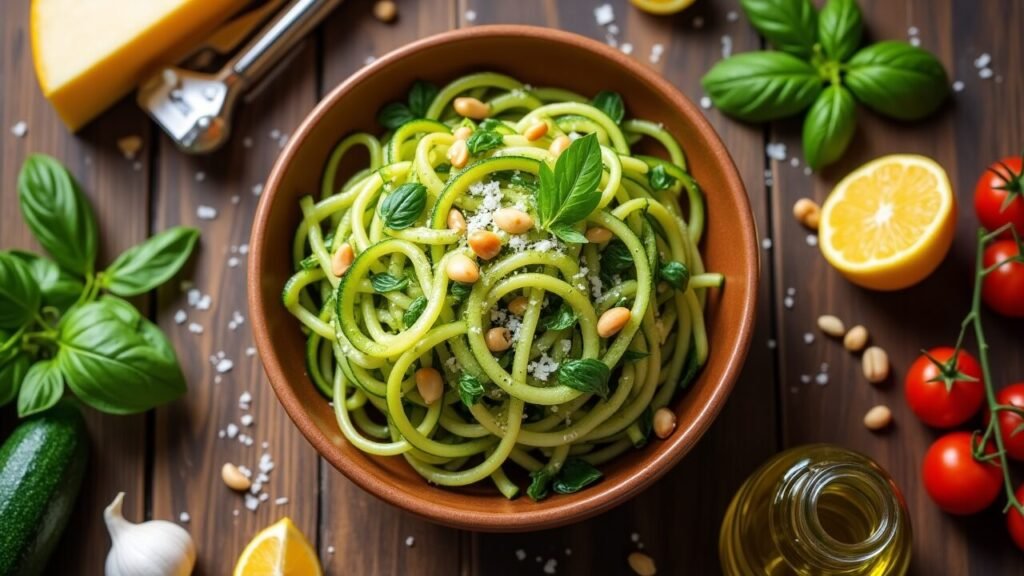
When you’re craving the comfort of pasta but want something light, fresh, and incredibly healthy, zucchini noodles with pesto deliver all the satisfaction without any of the heaviness. These vibrant green “zoodles” tossed in aromatic basil pesto create a meal that’s both visually stunning and nutritionally dense, proving that healthy eating can be every bit as delicious and satisfying as traditional comfort food. Each twirl of the fork brings together the mild, crisp texture of fresh zucchini with the bold, herbaceous flavors of homemade pesto.
What makes zucchini noodles with pesto so brilliantly appealing? This dish transforms humble summer zucchini into something that looks and feels like indulgent pasta while providing a fraction of the calories and carbohydrates. The fresh, clean taste of zucchini pairs perfectly with the rich, garlicky pesto, creating a harmony of flavors that’s both light enough for hot summer days and satisfying enough to serve as a complete meal.
The beauty of this recipe lies in its simplicity and incredible nutritional value. Zucchini noodles are packed with vitamins, minerals, and water content that keeps you hydrated and energized, while homemade pesto provides healthy fats from olive oil and pine nuts, plus incredible flavor from fresh basil. Together, they create a dish that’s naturally gluten-free, low-carb, and bursting with nutrients.
Whether you’re following a low-carb lifestyle, looking for lighter summer meals, trying to incorporate more vegetables into your diet, or simply want a quick and healthy dinner that doesn’t sacrifice flavor, this zucchini noodle dish delivers on all fronts. It comes together in minutes, uses fresh seasonal ingredients, and provides the kind of clean, energizing nutrition that makes you feel great.
In this comprehensive guide, you’ll discover the secrets to creating perfect zucchini noodles with ideal texture, making restaurant-quality pesto from scratch, preventing watery results, and customizing this versatile dish to suit your taste preferences and dietary needs.
Ingredients Breakdown
For the Zucchini Noodles:
Medium zucchini (4-5, about 2 pounds): Choose firm zucchini with smooth, unblemished skin. Medium-sized zucchini (6-8 inches long) work best – they’re not too seedy and have the ideal texture for spiralizing. Avoid oversized zucchini, which can be watery and full of large seeds.
Salt (1 teaspoon): For drawing out excess moisture from the zucchini noodles. This crucial step prevents the dish from becoming watery and helps maintain the best texture.
For the Homemade Basil Pesto:
Fresh basil leaves (2 cups, packed): The star ingredient that provides the signature pesto flavor. Use only fresh basil – dried won’t work for pesto. Choose leaves that are bright green without dark spots or yellowing.
Pine nuts (1/3 cup): Traditional pesto nuts that provide richness and subtle flavor. Toast them lightly for enhanced taste, though raw pine nuts work fine too. Store in the freezer to prevent rancidity.
Garlic (3-4 cloves, peeled): Provides the pungent backbone of authentic pesto. Adjust the amount based on your preference – start with 3 cloves and add more if desired.
Parmesan cheese (1/2 cup, freshly grated): Use genuine Parmigiano-Reggiano for the best flavor. Freshly grated cheese melts better and has superior taste compared to pre-grated versions.
Extra virgin olive oil (1/2 cup): Use high-quality extra virgin olive oil as its flavor is prominent in pesto. The oil should be fruity and aromatic, not bitter or harsh.
Salt (1/2 teaspoon, or to taste): Enhances all the other flavors and helps balance the richness of the oil and cheese.
Fresh lemon juice (1 tablespoon): Adds brightness and helps prevent the basil from oxidizing and turning brown. Fresh lemon juice is essential.
For Serving and Garnish:
Cherry tomatoes (1 cup, halved): Add color, sweetness, and juicy bursts of flavor that complement both the zucchini and pesto.
Additional Parmesan cheese (1/4 cup, grated): For serving and adding extra richness to individual portions.
Pine nuts (2 tablespoons, toasted): For garnish and added crunch.
Fresh basil leaves: For garnish and extra aromatic appeal.
Optional Additions:
- Grilled chicken or shrimp for extra protein
- Sun-dried tomatoes for concentrated flavor
- Mozzarella balls for creaminess
- Red pepper flakes for heat
- Lemon zest for extra brightness
- Avocado for healthy fats and creaminess
Equipment Needed:
- Spiralizer, julienne peeler, or sharp knife
- Food processor or high-powered blender
- Large mixing bowl
- Kitchen towels or paper towels
Dietary Substitutions:
- Nut-free pesto: Replace pine nuts with sunflower seeds or pumpkin seeds
- Dairy-free: Omit Parmesan or use nutritional yeast
- Vegan: Skip cheese entirely or use vegan Parmesan alternative
- Lower-fat: Reduce olive oil and add vegetable broth for consistency
- Paleo-friendly: Recipe is naturally paleo as written
Step-by-Step Instructions
Prepare the Zucchini Noodles:
1. Create the Noodles Wash and dry the zucchini thoroughly. Trim the ends and use a spiralizer to create long, spaghetti-like noodles. If you don’t have a spiralizer, use a julienne peeler or sharp knife to create thin strips. Try to make the noodles as uniform as possible for even cooking and presentation.
2. Remove Excess Moisture Place the zucchini noodles in a large colander and toss with 1 teaspoon of salt. Let them sit for 15-20 minutes to draw out excess water. This step is crucial for preventing a watery dish.
3. Drain and Dry After the resting period, use clean kitchen towels or paper towels to gently squeeze the zucchini noodles, removing as much moisture as possible. Don’t be too aggressive – you want to remove water without breaking the noodles.
Make the Pesto:
4. Toast the Pine Nuts (Optional) For enhanced flavor, lightly toast the pine nuts in a dry skillet over medium heat for 2-3 minutes until fragrant and lightly golden. Watch carefully as they can burn quickly. Let cool completely before using.
5. Prepare the Basil Gently wash the basil leaves and pat them completely dry. Remove any thick stems. Wet basil will make the pesto watery and cause it to brown more quickly.
6. Make the Pesto In a food processor, pulse the garlic cloves until roughly chopped. Add the pine nuts and pulse a few more times. Add the basil leaves and process while slowly drizzling in the olive oil until you reach your desired consistency. Add the Parmesan cheese, salt, and lemon juice, then pulse to combine. Taste and adjust seasonings as needed.
Assembly and Serving:
7. Combine Noodles and Pesto In a large mixing bowl, gently toss the dried zucchini noodles with the pesto. Start with about 3/4 of the pesto and add more as needed. The noodles should be well-coated but not swimming in sauce.
8. Add Fresh Elements Gently fold in the halved cherry tomatoes, being careful not to break them. If using other additions like mozzarella or sun-dried tomatoes, add them now.
9. Final Touches Transfer to serving bowls and garnish with additional grated Parmesan cheese, toasted pine nuts, and fresh basil leaves. Serve immediately while the noodles are at their crispest.
10. Optional Warm Serving For a warm dish, quickly sauté the zucchini noodles in a large skillet over medium heat for 1-2 minutes before tossing with pesto. Don’t overcook – they should still have some crunch.
Tips and Variations
Expert Tips for Perfect Results:
- Choose the right zucchini: Medium-sized, firm zucchini create the best noodles
- Don’t skip the salting: This prevents watery, soggy noodles
- Work quickly: Assemble and serve immediately for the best texture
- Keep pesto green: Add lemon juice and avoid overprocessing to prevent browning
- Store components separately: Keep pesto and noodles separate until ready to serve
Zucchini Noodle Perfection:
Spiralizer settings: Use the medium or thin noodle blade for the best pasta-like texture
Knife technique: If cutting by hand, use a sharp knife and try to keep strips uniform
Moisture management: Salting and drying is crucial – don’t rush this step
Texture preference: Some prefer completely raw for maximum crunch, others like them slightly warmed
Storage: Fresh noodles are best used within 24 hours of making
Pesto Variations:
Classic Basil: Traditional recipe as written above
Spinach Pesto: Replace half the basil with fresh spinach for milder flavor and extra nutrients
Arugula Pesto: Use arugula instead of basil for peppery, sophisticated flavor
Sun-dried Tomato Pesto: Add 1/4 cup oil-packed sun-dried tomatoes for concentrated flavor
Walnut Pesto: Replace pine nuts with walnuts for different flavor and lower cost
Herb Mix: Combine basil with parsley, cilantro, or mint for complex herbal notes
Protein and Addition Ideas:
Grilled Protein: Chicken, shrimp, or salmon complement the fresh flavors beautifully
Plant-Based: Chickpeas, white beans, or hemp hearts for vegetarian protein
Cheese Additions: Fresh mozzarella balls, feta, or goat cheese for creaminess
Vegetable Boost: Roasted bell peppers, artichoke hearts, or steamed broccoli
Textural Elements: Toasted seeds, chopped nuts, or crispy breadcrumbs
Serving Suggestions
Zucchini noodles with pesto work beautifully for various occasions and can be presented in numerous appealing ways.
Light and Fresh Presentations:
- Serve in chilled bowls for hot summer days when you want something refreshing
- Present as an elegant starter course with small portions and beautiful garnishes
- Offer as part of a Mediterranean mezze spread with olives, cheese, and bread
- Include in picnic baskets – pack components separately and assemble on-site
Complete Meal Options:
- Protein bowls: Top with grilled chicken, salmon, or shrimp for substantial meals
- Garden abundance: Add roasted vegetables like bell peppers, cherry tomatoes, and mushrooms
- Grain addition: Serve over quinoa or farro for those wanting more substance
- Bread pairing: Accompany with crusty sourdough or focaccia for carb lovers
Elegant Dinner Presentations:
- Fine dining style: Twirl noodles in individual portions with artistic garnish placement
- Family style: Serve in a large, beautiful bowl with serving utensils for sharing
- Layered presentation: Create height by twirling noodles and placing proteins on top
- Color contrast: Use white bowls to showcase the vibrant green pesto
Seasonal Adaptations:
- Summer: Keep completely cold with extra fresh herbs and cherry tomatoes
- Spring: Add fresh peas, asparagus tips, and lemon zest
- Fall: Include roasted butternut squash and toasted pumpkin seeds
- Winter: Warm slightly and add heartier vegetables like roasted mushrooms
Dietary Accommodation:
- Keto-friendly: Already perfect for ketogenic diets with high fat, low carb profile
- Paleo: Omit cheese for strict paleo compliance
- Vegan: Use nutritional yeast instead of Parmesan cheese
- Gluten-free: Naturally gluten-free alternative to wheat pasta
Storage and Reheating Instructions
Immediate Storage: Store leftover zucchini noodles with pesto in airtight containers in the refrigerator for up to 2 days. However, they’re best enjoyed fresh as the zucchini releases more water over time, potentially making the dish watery.
Component Storage: For best results, store zucchini noodles and pesto separately. Prepared zucchini noodles keep for 2-3 days in the refrigerator, while homemade pesto stays fresh for up to 1 week when stored with a thin layer of olive oil on top to prevent oxidation.
Pesto Storage Tips: Store homemade pesto in airtight containers with a thin layer of olive oil floating on top to prevent browning. It can also be frozen in ice cube trays for up to 6 months – perfect for portioning single servings.
Serving Leftover Noodles: When serving leftover zucchini noodles, drain any accumulated liquid first. You may need to pat them dry again with paper towels. The texture will be softer than fresh, but still delicious.
Make-Ahead Strategies:
- Pesto: Make up to 1 week ahead and store covered in refrigerator
- Zucchini prep: Spiralize noodles up to 1 day ahead, store unsalted until ready to use
- Component prep: Prepare all components separately and assemble just before serving
- Freezer pesto: Make large batches and freeze in portions for quick meals
Refreshing Leftovers:
- Add fresh lemon juice and olive oil to refresh flavors
- Include fresh herbs like basil or parsley to brighten the dish
- Add new elements like fresh cherry tomatoes or cheese
- Serve at room temperature rather than cold for better flavor
Recipe Notes
Zucchini Selection and Preparation: The key to great zucchini noodles is starting with the right zucchini. Choose medium-sized ones that feel firm and heavy for their size. The skin should be smooth and free from soft spots. Larger zucchini tend to be more watery and seedy, while very small ones don’t spiralize well.
Moisture Control: This is the most critical aspect of successful zucchini noodles. The salting step draws out excess water that would otherwise dilute the pesto and make the dish soggy. Don’t skip this step, and be thorough when drying the noodles after salting.
Pesto Consistency: The ideal pesto should be thick enough to coat the noodles without being paste-like. If it’s too thick, add more olive oil gradually. If too thin, add more cheese or nuts. The consistency will also depend on your food processor and personal preference.
Serving Temperature: Zucchini noodles can be served completely raw (my preferred method for maximum crunch and nutrition) or lightly warmed. If warming, do it very briefly – overcooked zucchini noodles become mushy and release more water.
Troubleshooting Common Issues:
- Watery dish: Didn’t salt zucchini long enough or didn’t dry thoroughly
- Brown pesto: Basil was wet or overprocessed – add lemon juice to slow browning
- Bland flavor: Under-seasoned pesto or need more garlic/cheese
- Mushy noodles: Overcooked or stored too long after preparation
- Pesto too thick: Add more olive oil gradually until desired consistency
Nutrition Information (Per Serving)
Based on 4 servings as a main dish
| Nutrient | Amount |
|---|---|
| Calories | 285 |
| Total Fat | 26g |
| Saturated Fat | 5g |
| Carbohydrates | 9g |
| Sugar | 6g |
| Dietary Fiber | 3g |
| Protein | 8g |
| Sodium | 385mg |
| Cholesterol | 10mg |
| Calcium | 165mg |
| Iron | 1.8mg |
| Potassium | 485mg |
| Vitamin A | 1,250 IU |
| Vitamin C | 35mg |
| Vitamin K | 85mcg |
| Folate | 45mcg |
| Magnesium | 45mg |
| Phosphorus | 135mg |
| Manganese | 0.8mg |
Nutrition information is an estimate and may vary based on specific ingredients and portion sizes used.
Recipe Card Summary
Course: Main Dish, Side Dish
Cuisine: Italian-inspired, Mediterranean
Servings: 4
Prep Time: 20 minutes
Rest Time: 15 minutes (for salting)
Total Time: 35 minutes
Ingredients:
- 4-5 medium zucchini (about 2 lbs)
- 1 tsp salt (for zucchini)
- 2 cups fresh basil leaves, packed
- 1/3 cup pine nuts
- 3-4 garlic cloves
- 1/2 cup freshly grated Parmesan
- 1/2 cup extra virgin olive oil
- 1/2 tsp salt
- 1 tbsp fresh lemon juice
- 1 cup cherry tomatoes, halved
- Additional Parmesan and pine nuts for serving
Instructions:
- Spiralize zucchini into noodles using spiralizer or julienne peeler
- Toss zucchini noodles with 1 tsp salt, let sit 15-20 minutes
- Meanwhile, make pesto: process garlic and pine nuts, add basil and oil
- Add Parmesan, salt, and lemon juice to pesto, pulse to combine
- Pat zucchini noodles dry thoroughly with kitchen towels
- Toss dried noodles with pesto until well coated
- Add cherry tomatoes and gently combine
- Serve immediately with additional cheese and nuts
Notes: Don’t skip salting step for zucchini. Serve immediately for best texture. Store pesto separately from noodles. Can be made with store-bought pesto if needed.
Nutrition: See detailed nutrition table above
Diet Tags
- Low-Carb
- Keto-Friendly
- Gluten-Free
- Vegetarian
- Mediterranean Diet
- Low-Calorie
- High-Fiber
- Fresh & Light
- Quick & Easy
- No-Cook Option
Health Benefits
Low in Calories and Carbs: At only 9 grams of carbs per serving, this dish provides pasta satisfaction without the blood sugar spike.
Nutrient Dense: Zucchini provides vitamins A and C, potassium, and folate while being naturally low in calories.
Healthy Fats: Olive oil and pine nuts provide monounsaturated fats that support heart health and nutrient absorption.
Antioxidant Rich: Fresh basil contains antioxidants and anti-inflammatory compounds that support overall health.
Hydration Support: Zucchini’s high water content helps maintain proper hydration, especially important in summer.
Digestive Health: High fiber content supports healthy digestion and gut microbiome.
Heart Health: The Mediterranean-style ingredients support cardiovascular health through healthy fats and antioxidants.
Weight Management: Low calorie density and high fiber content promote satiety while supporting weight management goals.
FAQs
1. Can I make zucchini noodles without a spiralizer? Absolutely! You can use a julienne peeler, vegetable peeler to create ribbons, or a sharp knife to cut thin strips. While a spiralizer creates the most pasta-like noodles, other methods work well too. The key is trying to keep the pieces uniform in size for even texture and cooking.
2. How do I prevent my zucchini noodles from getting watery? The salting step is crucial – don’t skip it. Salt the spiralized zucchini, let it sit for 15-20 minutes, then thoroughly pat dry with kitchen towels. Also, serve the dish immediately after combining with pesto, and consider storing components separately if making ahead.
3. Can I warm up zucchini noodles, or must they be served cold? You can serve them either way! For warm noodles, quickly sauté them in a large skillet for 1-2 minutes – just until heated through but still crisp. Don’t overcook or they’ll become mushy and release more water. Many people prefer them completely raw for maximum crunch and nutrition.
4. How long does homemade pesto last? Homemade pesto keeps in the refrigerator for up to 1 week when stored properly with a thin layer of olive oil on top. It can also be frozen in ice cube trays for up to 6 months. The color may darken slightly over time, but it’s still safe to eat and delicious.
5. What can I substitute for pine nuts in the pesto? Walnuts, almonds, sunflower seeds, or pumpkin seeds all work well as pine nut substitutes. Each will give slightly different flavor – walnuts are rich and earthy, almonds are mild and sweet, while seeds provide nutty flavor at a lower cost. Toast them lightly for enhanced flavor.
Final Thoughts
Zucchini noodles with pesto represent the perfect marriage of health and indulgence, proving that eating well doesn’t mean sacrificing flavor or satisfaction. This vibrant dish transforms humble summer vegetables into something that feels both luxurious and virtuous, delivering all the comfort of pasta with none of the heaviness.
What makes this recipe truly special is how it showcases the beauty of simple, fresh ingredients prepared with care. The mild, crisp texture of properly prepared zucchini noodles provides the perfect canvas for aromatic, garlicky pesto, while additions like cherry tomatoes and pine nuts add bursts of flavor and textural interest that keep each bite exciting.
From a practical standpoint, this dish offers incredible value for health-conscious cooks. It’s naturally low in calories and carbohydrates while being rich in nutrients, healthy fats, and flavor. It comes together quickly, uses seasonal ingredients at their peak, and provides the kind of clean, energizing nutrition that makes you feel great after eating.
The versatility of zucchini noodles with pesto means it can easily adapt to your preferences, dietary needs, and seasonal ingredient availability. Whether you’re following a specific eating plan, trying to incorporate more vegetables, or simply want a lighter alternative to traditional pasta, this dish delivers consistent, satisfying results.
So embrace the spiralizer, stock up on fresh summer zucchini, and prepare to discover how this simple technique can revolutionize your approach to healthy, satisfying meals. The lightness you’ll feel and the flavors you’ll enjoy will make this recipe a treasured part of your healthy cooking repertoire!