
Fried Shrimp Po’ Boy Recipe – Authentic New Orleans Style
Introduction
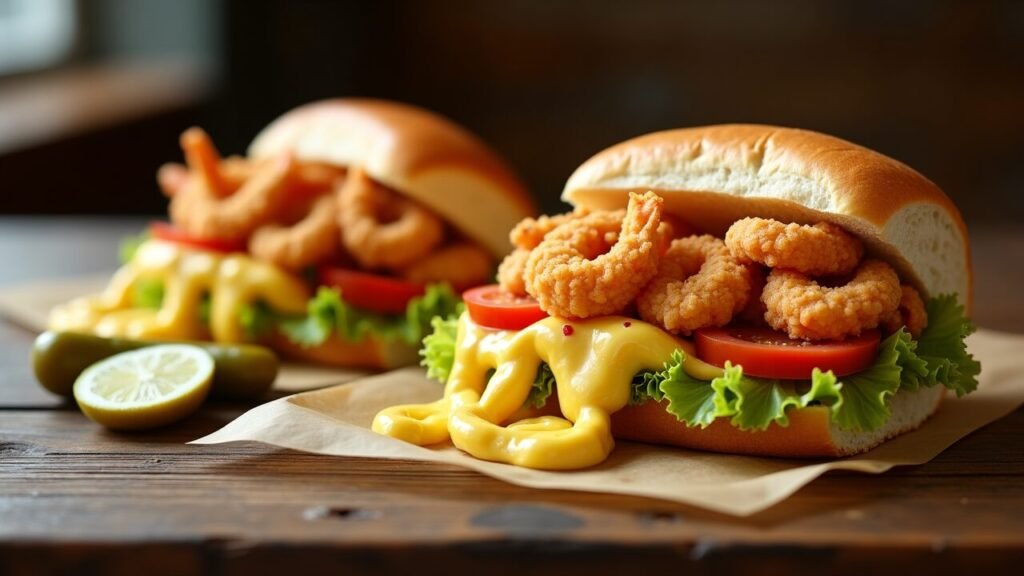
There’s nothing quite like biting into an authentic fried shrimp po’ boy – that moment when your teeth break through the crispy, golden coating to reveal perfectly seasoned, tender shrimp, all nestled in a pillowy-soft French bread roll with the perfect balance of creamy remoulade, crisp lettuce, and juicy tomatoes. This isn’t just a sandwich; it’s a culinary love letter to New Orleans, capturing the soul of Louisiana’s greatest contribution to American sandwich artistry.
What makes a truly exceptional po’ boy is the harmony of textures and flavors working together in perfect balance. The shrimp must be impeccably fresh and seasoned with that distinctive blend of spices that makes Louisiana cuisine so irresistible. The coating needs to be light yet substantial, creating an audible crunch that gives way to succulent seafood. And the bread – oh, the bread – must be authentic New Orleans French bread with its crispy crust and airy, absorbent interior that soaks up all those delicious flavors without falling apart.
This recipe succeeds because it respects the traditions while providing techniques that ensure success in your home kitchen. The shrimp are properly prepared and seasoned, the coating creates that perfect crunch without being heavy, and the remoulade sauce brings together all the classic flavors that make this sandwich legendary. Every component is designed to complement the others, creating a symphony of taste and texture that transports you straight to the French Quarter.
Whether you’re craving a taste of New Orleans, looking to impress friends with authentic regional cuisine, or simply wanting to master one of America’s greatest sandwiches, this fried shrimp po’ boy delivers the real deal – messy, satisfying, and absolutely unforgettable in the best possible way.
Ingredients Breakdown
For the Fried Shrimp:
- 2 pounds large shrimp (26-30 count), peeled and deveined – Large shrimp provide substantial bites and stay tender when properly cooked. Look for shrimp that smell like the ocean, not fishy.
- 2 cups buttermilk – Creates tender, flavorful shrimp while helping the coating adhere perfectly. The acidity also helps break down proteins for maximum tenderness.
- 2 cups all-purpose flour – The base for the coating that creates that essential crispy exterior.
- 1 cup cornmeal, fine ground – Adds extra crunch and that distinctive Louisiana texture. Avoid coarse cornmeal which can be gritty.
- 2 tablespoons Creole seasoning – The heart and soul of Louisiana flavor. Use a quality blend or make your own with paprika, garlic powder, onion powder, oregano, and cayenne.
- 1 teaspoon garlic powder – Adds aromatic depth that complements the seafood beautifully.
- 1 teaspoon onion powder – Provides savory complexity without chunks that might burn during frying.
- 1 teaspoon paprika – Contributes color and mild, sweet pepper flavor.
- 1/2 teaspoon cayenne pepper – Adjust to taste, but some heat is essential for authentic flavor.
- 1 teaspoon salt – Essential for proper seasoning of both shrimp and coating.
- 1/2 teaspoon black pepper – Freshly ground provides the best flavor.
- Vegetable oil for frying – Use a neutral oil with high smoke point like peanut, canola, or vegetable oil.
For the Remoulade Sauce:
- 1 cup mayonnaise – The creamy base that holds all the flavors together. Use good quality mayonnaise for best results.
- 2 tablespoons Creole or whole grain mustard – Provides tang and texture. Creole mustard is traditional but whole grain works well too.
- 1 tablespoon fresh lemon juice – Adds brightness and helps balance the richness of the mayonnaise.
- 2 teaspoons prepared horseradish – Gives a gentle kick that cuts through the richness without overwhelming.
- 2 cloves garlic, minced – Fresh garlic is essential for authentic flavor.
- 2 green onions, finely chopped – Adds color, mild onion flavor, and freshness.
- 2 tablespoons fresh parsley, minced – Provides color and herbal notes.
- 1 tablespoon capers, chopped – Adds briny, tangy pops of flavor throughout the sauce.
- 1 teaspoon paprika – For color and subtle sweetness.
- 1/2 teaspoon cayenne pepper – Adjust to taste for desired heat level.
- 1/2 teaspoon Worcestershire sauce – Adds umami depth and complexity.
- Salt and pepper to taste – For final seasoning balance.
For Assembly:
- 4 New Orleans-style French bread loaves (about 6-8 inches each) – If unavailable, use crusty Italian or French bread rolls with soft interiors.
- 2 cups iceberg lettuce, shredded – Iceberg is traditional for its crunch and mild flavor that doesn’t compete with the shrimp.
- 2 large ripe tomatoes, sliced 1/4-inch thick – Choose firm, flavorful tomatoes. Creole tomatoes are ideal when in season.
- Dill pickle spears – For serving alongside the sandwich.
- Lemon wedges – Essential for squeezing over the shrimp and adding brightness.
Optional Enhancements:
- Hot sauce – Crystal, Tabasco, or your favorite Louisiana hot sauce for extra heat.
- Sliced red onion – Some prefer this addition for extra sharpness and crunch.
- Avocado slices – Not traditional but many enjoy the creamy richness.
Quality Ingredient Tips: Fresh, never-frozen shrimp provides the best texture and flavor. If using frozen shrimp, thaw them completely and pat very dry before marinating. The size matters – shrimp that are too small will overcook quickly, while very large shrimp might not cook evenly.
For the bread, seek out authentic New Orleans French bread if possible. It has a unique texture – crusty outside with a very light, airy interior that’s perfect for absorbing flavors without becoming soggy.
Step-by-Step Instructions
Step 1: Prepare the Remoulade Sauce (10 minutes) In a medium bowl, combine the mayonnaise, Creole mustard, lemon juice, horseradish, minced garlic, chopped green onions, minced parsley, chopped capers, paprika, cayenne, and Worcestershire sauce. Whisk everything together until smooth and well combined. Taste and adjust seasoning with salt, pepper, or additional lemon juice as needed. The sauce should be creamy, tangy, and have a pleasant kick. Cover and refrigerate for at least 30 minutes to allow the flavors to meld together.
Step 2: Marinate the Shrimp (30 minutes) Pat the shrimp completely dry with paper towels – any excess moisture will prevent proper coating adhesion. In a large bowl, combine the shrimp with the buttermilk, making sure all pieces are submerged. Cover and refrigerate for 30 minutes. This buttermilk bath tenderizes the shrimp while adding flavor and helping the coating stick beautifully. Don’t marinate longer than an hour as the acid can start to cook the shrimp.
Step 3: Prepare the Coating Mixture (5 minutes) In a large, shallow dish or pie plate, whisk together the flour, cornmeal, Creole seasoning, garlic powder, onion powder, paprika, cayenne, salt, and black pepper until evenly combined. The mixture should be well-seasoned and aromatic. Make sure there are no lumps – sift if necessary. This seasoned coating is what creates the signature flavor and crunch of an authentic po’ boy.
Step 4: Heat the Oil (10-15 minutes) Pour oil into a large, heavy-bottomed pot or deep fryer to a depth of about 3 inches. Heat to 350°F, using a deep-fry or candy thermometer to monitor temperature. Maintaining proper oil temperature is crucial – too hot and the coating burns before the shrimp cook through; too cool and you get greasy, soggy coating. Have a slotted spoon or spider strainer ready for removing the shrimp.
Step 5: Coat the Shrimp (10 minutes) Working in batches, remove shrimp from buttermilk, letting excess drip off but leaving them slightly moist. Dredge each piece thoroughly in the seasoned flour mixture, pressing gently to ensure good coating coverage. Shake off any excess coating. Place coated shrimp on a wire rack and let sit for 5 minutes – this helps the coating adhere better during frying. Don’t coat too many at once or they’ll stick together.
Step 6: Fry to Golden Perfection (12-15 minutes total) Carefully add shrimp to the hot oil in small batches – don’t overcrowd the pot as this lowers oil temperature and results in soggy coating. Fry for 2-3 minutes until golden brown and cooked through. The shrimp should float to the surface and have a beautiful, crispy golden coating. Internal temperature should reach 145°F. Remove with a slotted spoon and drain on paper towels or a wire rack. Season immediately with a pinch of salt while hot.
Step 7: Prepare the Bread (3-4 minutes) While the last batch of shrimp finishes frying, prepare the bread. Split the French bread loaves lengthwise, but don’t cut all the way through – leave them hinged. If the bread is very soft, lightly toast the cut sides for extra stability, but this isn’t necessary with good New Orleans French bread. The bread should be warm and ready to absorb all those delicious flavors.
Step 8: Assemble the Po’ Boys (5 minutes) Spread a generous layer of remoulade sauce on both sides of each bread loaf. Layer the bottom with shredded lettuce, then pile on the hot fried shrimp – don’t be shy, these should be generously filled. Top with tomato slices and close the sandwich. The key is working quickly while the shrimp are still hot and crispy. Cut each sandwich in half diagonally for easier eating and better presentation.
Tips and Variations
Frying Perfection Techniques:
Temperature control is absolutely critical for perfect fried shrimp. Use a reliable thermometer and adjust heat as needed to maintain 350°F. The oil temperature will drop when you add food, so don’t add too much at once. If the oil gets too hot, remove the pot from heat briefly to cool it down.
Fresh oil makes a significant difference in flavor and crispiness. Don’t reuse oil that’s been used for other foods, as it can impart off-flavors. The oil should be clear and not smell rancid or overly fishy.
For extra crispy coating, try double-dredging: after the initial coating, dip shrimp back in buttermilk briefly, then coat again. This creates an extra-thick, crunchy exterior.
Make-Ahead Strategies: The remoulade sauce can be made up to 3 days in advance and actually improves in flavor as it sits. The shrimp can be marinated in buttermilk for up to 4 hours, though 30 minutes is sufficient.
You can bread the shrimp several hours ahead and keep them on racks in the refrigerator until ready to fry. This helps the coating set and results in better adhesion.
Delicious Variations:
Oyster Po’ Boy: Replace shrimp with fresh shucked oysters for the other classic Louisiana po’ boy. Oysters cook even faster – just 1-2 minutes until golden.
Catfish Po’ Boy: Use catfish fillets cut into strips for a heartier variation. Increase cooking time to 3-4 minutes depending on thickness.
Buffalo Shrimp Style: Toss the fried shrimp in buffalo sauce and serve with ranch or blue cheese instead of remoulade for a spicy twist.
Spicy Remoulade: Add more cayenne, hot sauce, or finely minced jalapeños to the sauce for extra heat.
Lighter Version: For a lighter coating, use half flour and half cornstarch instead of flour and cornmeal. The result will be crispier but less traditional.
Dressed vs. Undressed: In New Orleans, “dressed” means with lettuce, tomatoes, pickles, and mayonnaise. You can customize the toppings to your preference.
Serving Suggestions
The fried shrimp po’ boy is substantial enough to be a complete meal, but the right accompaniments can elevate the experience and honor its New Orleans heritage.
Classic New Orleans Sides: Red beans and rice make a traditional pairing that’s hearty and satisfying. The creamy beans complement the crispy shrimp beautifully. Dirty rice or jambalaya also work wonderfully for a full Louisiana feast.
A simple coleslaw provides cooling crunch that balances the rich, fried shrimp. Make it with a vinegar-based dressing rather than mayo-heavy versions to avoid competing with the remoulade.
Lighter Accompaniments: Fresh fruit salad or a simple green salad with vinaigrette helps cut through the richness of the fried shrimp. Pickled vegetables like okra, green tomatoes, or cucumber provide tangy contrast.
Sweet potato fries or regular French fries are always popular, though they add to the richness of the meal. Consider serving them on the side rather than piled on the sandwich.
Beverage Pairings: Cold beer is the classic pairing – try a light lager, wheat beer, or even a local New Orleans brew if available. The crisp, refreshing qualities balance the rich, fried elements perfectly.
For non-alcoholic options, sweet tea, lemonade, or even a Coca-Cola work wonderfully. The sweetness and acidity help cleanse the palate between bites.
Party and Entertaining Ideas: For casual entertaining, set up a po’ boy bar with different fried seafood options, various sauces, and toppings so guests can build their own. Provide plenty of napkins – these are meant to be gloriously messy!
Cut the sandwiches into smaller portions for appetizer-style servings at parties. Mini po’ boys make great party food that’s easy to eat while standing and socializing.
Presentation Tips: Serve on parchment paper or in paper boats for authentic deli-style presentation. Include pickle spears and lemon wedges with each sandwich. The rustic, casual presentation is part of the charm.
Storage and Reheating Instructions
Optimal Storage Methods: While po’ boys are best enjoyed immediately while the shrimp are hot and crispy, leftover components can be stored properly for later enjoyment. Store the fried shrimp, remoulade sauce, and bread separately to maintain the best quality of each component.
The remoulade sauce keeps well in the refrigerator for up to one week and actually improves in flavor as it sits. Store in an airtight container and stir before using.
Fried shrimp should be cooled completely and stored in the refrigerator for up to 2 days. However, they’re never quite as good as when freshly fried, so plan accordingly.
Reheating for Best Results: The best way to reheat fried shrimp is in a 400°F oven for 5-7 minutes until heated through and the coating crisps up again. Avoid the microwave, which will make the coating soggy and unappetizing.
You can also reheat in a skillet with a small amount of oil over medium heat, turning once, until heated through and crispy again. This method works particularly well for small amounts.
Assembly Tips for Reheated Components: If using reheated shrimp, warm the bread slightly and assemble the sandwich just before eating. The contrast of warm bread and hot shrimp with cool lettuce and tomatoes recreates much of the original experience.
Consider making fresh remoulade sauce even when using leftover shrimp, as it only takes a few minutes and significantly improves the overall quality.
Meal Prep Considerations: For meal prep, focus on preparing components ahead rather than assembled sandwiches. The remoulade sauce can be made several days ahead, shrimp can be marinated the morning of cooking, and vegetables can be prepped and stored separately.
The bread is best purchased the day you plan to serve, as New Orleans French bread goes stale quickly but is essential for authenticity.
Recipe Notes
Equipment Essentials: A deep, heavy-bottomed pot is crucial for safe frying and even heat distribution. Cast iron Dutch ovens work excellently. You’ll need at least 3 inches of oil depth for proper frying.
A reliable thermometer is non-negotiable for food safety and quality results. Candy thermometers that clip to the pot side work well, as do instant-read thermometers for quick checks.
Wire racks are invaluable for draining fried foods properly and preventing sogginess from sitting in oil.
Safety Considerations: Never leave hot oil unattended, and keep a lid nearby to smother any potential flare-ups. Don’t add wet foods to hot oil as it can cause dangerous splattering.
Have a fire extinguisher nearby when deep frying, and never use water on an oil fire. Turn off heat sources if oil begins to smoke excessively.
Ingredient Sourcing: If you can’t find New Orleans French bread, look for bread with a crispy crust and very light, airy interior. Avoid dense breads that won’t absorb flavors properly.
For the best Creole seasoning, seek out Louisiana brands like Old Bay, Zatarains, or make your own blend. The seasoning mix makes a significant difference in authenticity.
Timing Tips: Plan about 2 hours from start to finish, including marinating time. The active cooking time is about 30 minutes once everything is prepped.
Have all components ready before you start frying – once you begin, things move quickly and you want to assemble while the shrimp are hot.
Nutrition Information (Per Serving)
| Nutrient | Amount |
|---|---|
| Calories | 685 |
| Total Fat | 35g |
| Saturated Fat | 6g |
| Carbohydrates | 58g |
| Sugar | 8g |
| Fiber | 4g |
| Protein | 38g |
| Sodium | 1250mg |
| Cholesterol | 285mg |
| Calcium | 185mg |
| Iron | 5.2mg |
Nutrition information is an estimate and may vary based on specific ingredients used.
Recipe Card Summary
Course: Main Dish, Sandwich
Cuisine: Cajun/Creole, New Orleans
Servings: 4
Prep Time: 45 minutes
Cook Time: 15 minutes
Total Time: 1 hour
Ingredients:
For the Shrimp:
- 2 pounds large shrimp, peeled and deveined
- 2 cups buttermilk
- 2 cups all-purpose flour
- 1 cup fine cornmeal
- 2 tablespoons Creole seasoning
- 1 teaspoon each: garlic powder, onion powder, paprika
- 1/2 teaspoon cayenne pepper
- 1 teaspoon salt
- 1/2 teaspoon black pepper
- Oil for frying
For the Remoulade:
- 1 cup mayonnaise
- 2 tablespoons Creole mustard
- 1 tablespoon lemon juice
- 2 teaspoons horseradish
- 2 cloves garlic, minced
- 2 green onions, chopped
- 2 tablespoons parsley, minced
- 1 tablespoon capers, chopped
- 1 teaspoon paprika
- 1/2 teaspoon cayenne
- 1/2 teaspoon Worcestershire sauce
For Assembly:
- 4 French bread loaves (6-8 inches)
- 2 cups shredded iceberg lettuce
- 2 large tomatoes, sliced
- Pickle spears and lemon wedges
Instructions:
- Make remoulade by combining all sauce ingredients. Refrigerate 30 minutes.
- Marinate shrimp in buttermilk for 30 minutes.
- Combine flour, cornmeal, and all seasonings for coating.
- Heat oil to 350°F in deep pot.
- Coat shrimp in seasoned flour mixture, let rest 5 minutes.
- Fry shrimp in batches 2-3 minutes until golden brown.
- Split bread, spread with remoulade, layer with lettuce, hot shrimp, and tomatoes.
- Serve immediately with pickles and lemon wedges.
Notes:
- Use large shrimp for best texture
- Maintain oil temperature at 350°F
- Don’t overcrowd when frying
- Assemble while shrimp are hot and crispy
Nutrition: 685 calories, 38g protein, 58g carbs, 4g fiber per serving
Diet Tags
- High Protein
- Southern Cuisine
- Comfort Food
- Fried Food
- Seafood
- Sandwich
- New Orleans Style
- Party Food
- Crowd Pleaser
- Indulgent
Health Benefits
While the fried shrimp po’ boy is certainly an indulgent treat, it does provide several important nutritional benefits, particularly from its high-quality protein and fresh components. The shrimp is an excellent source of lean protein, providing all essential amino acids while being relatively low in calories before frying. Shrimp also contains significant amounts of selenium, a powerful antioxidant that supports immune function and thyroid health.
The seafood provides omega-3 fatty acids, which support heart health and brain function, though the frying process does add calories and fat. Shrimp is also rich in phosphorus for bone health and vitamin B12 for proper nerve function and red blood cell formation.
The fresh vegetables – lettuce and tomatoes – contribute vitamins A and C, fiber, and antioxidants like lycopene from the tomatoes. The herbs in the remoulade sauce, particularly parsley, add vitamins K and C along with beneficial plant compounds.
While this is definitely a special occasion food due to its caloric density, the high protein content makes it quite satisfying, potentially preventing overeating. The key is enjoying it as part of a balanced diet and perhaps pairing it with lighter sides like salad or fruit.
Frequently Asked Questions
1. Can I use frozen shrimp for this recipe? Yes, but make sure to thaw them completely and pat them very dry before marinating. Frozen shrimp often releases more moisture, which can affect the coating adhesion. Never use shrimp that still has ice crystals or feels slimy. Fresh, never-frozen shrimp will give you the best texture and flavor, but high-quality frozen shrimp works well too.
2. What’s the best substitute for New Orleans French bread? Look for crusty French or Italian bread with a very light, airy interior. Avoid dense breads like sourdough or whole grain. The bread should have a crispy crust that gives way to a soft, absorbent interior. Some bakeries can make po’ boy rolls to order if you ask in advance.
3. Can I make this recipe without a deep fryer? Absolutely! A large, heavy pot with at least 3 inches of oil works perfectly. Just make sure to use a reliable thermometer to monitor temperature. You can also use a large cast-iron skillet with about 2 inches of oil, though you’ll need to turn the shrimp more carefully to ensure even browning.
4. How spicy is the traditional remoulade sauce? Traditional remoulade has a gentle kick but isn’t overpoweringly spicy. The heat comes from cayenne pepper and horseradish, which provide warmth rather than intense heat. You can easily adjust the spice level by reducing or increasing the cayenne and horseradish to suit your taste preferences.
5. Can I prep any components ahead of time? The remoulade sauce actually improves when made a day ahead, and you can marinate the shrimp in buttermilk for up to 4 hours. You can also bread the shrimp a few hours ahead and keep them on racks in the refrigerator. However, for best results, fry the shrimp and assemble the sandwiches just before serving while everything is hot and crispy.
Final Thoughts
The fried shrimp po’ boy represents everything wonderful about New Orleans cuisine – it’s generous, flavorful, and brings pure joy to everyone who experiences it. This sandwich is more than just food; it’s a celebration of Louisiana’s rich culinary heritage and the kind of meal that creates lasting memories around the table.
What makes mastering this recipe so rewarding is the combination of techniques you’ll learn – from proper frying methods to creating authentic remoulade sauce – skills that will serve you well in many other dishes. The attention to detail in each component, from the perfectly seasoned shrimp to the creamy, tangy sauce, demonstrates how simple ingredients can be transformed into something truly extraordinary.
The beauty of the po’ boy lies in its unpretentious nature. It’s meant to be enjoyed with gusto, embracing the messiness and savoring every crispy, creamy, satisfying bite. This is comfort food at its finest – the kind that brings people together and makes any meal feel like a special occasion.
I encourage you to make this recipe your own by adjusting the spice levels, experimenting with different seafood, or adding your favorite toppings. The techniques remain the same, but personalizing the flavors makes it uniquely yours. Whether you’re recreating a taste of New Orleans or introducing others to this incredible sandwich, remember that the best po’ boys are made with care, generosity, and a willingness to get a little messy in the name of deliciousness.
Please share your po’ boy adventures in the comments below. I’d love to hear about your first attempts, any variations you discovered, and whether this recipe helped you capture that authentic taste of New Orleans in your own kitchen. Laissez les bons temps rouler – let the good times roll!