
Gimbap (Korean Rice Rolls)
Introduction
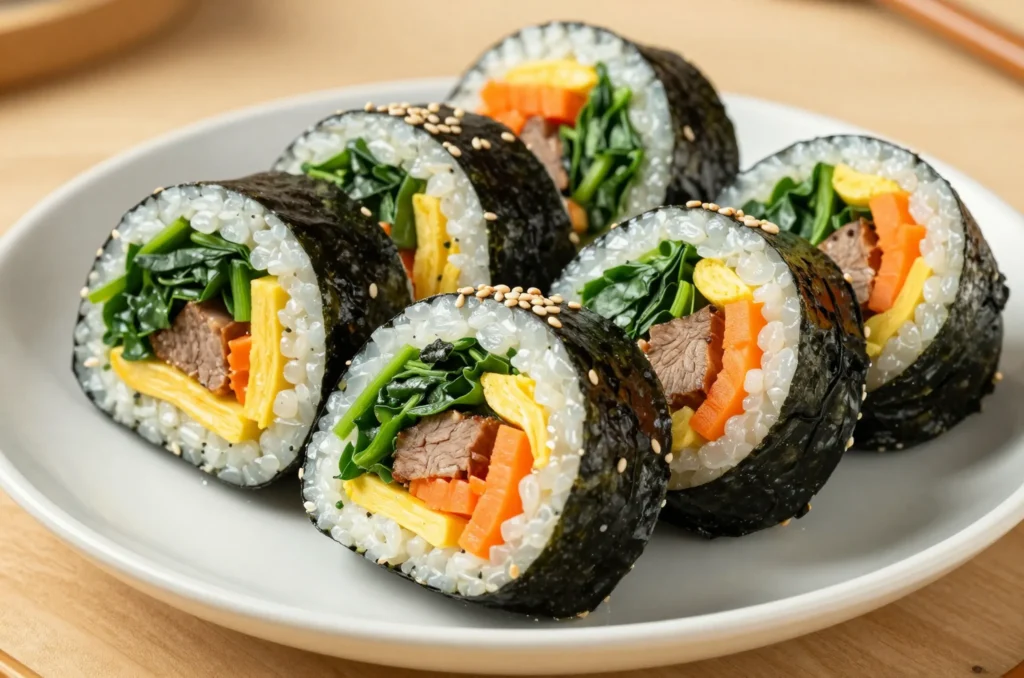
Gimbap is one of the most loved Korean dishes, known for its balance, color, and comfort. At first glance, it may look similar to sushi, but gimbap has its own identity. The flavors are mild, savory, and familiar, making it perfect for people who are new to Korean food or new to cooking in general.
What makes gimbap special is how practical it is. It is often prepared for picnics, lunchboxes, road trips, and family meals because it travels well and tastes good even at room temperature. Each roll is filled with seasoned rice and a mix of vegetables and proteins, creating a meal that feels complete and satisfying.
For beginner cooking learners, gimbap is a great confidence-building recipe. The steps are clear, the ingredients are flexible, and you do not need a stove for long periods of time. Once the fillings are prepared, rolling becomes almost relaxing.
In this article, you will learn how to make classic gimbap from start to finish. You will also learn how to customize fillings, store leftovers safely, avoid common mistakes, and serve gimbap in a way that looks clean and appealing.
Why You’ll Love This Recipe
This gimbap recipe is simple but rewarding. You prepare a few basic ingredients, assemble them, and end up with a dish that looks impressive without being complicated.
It is also very customizable. You can use beef, eggs, vegetables, or even keep it fully vegetarian. This makes it suitable for different tastes and dietary needs.
Another reason to love gimbap is balance. Each bite has rice, vegetables, and protein, so it feels filling without being heavy.
Most importantly, this recipe teaches useful skills such as seasoning rice, preparing vegetables properly, and rolling food neatly. These skills are helpful for many other dishes too.
Ingredients Breakdown
Short-Grain Rice
Short-grain rice is best for gimbap because it sticks together without becoming mushy. Cook it according to package instructions and let it cool slightly before seasoning. Warm rice absorbs seasoning better than cold rice.
Seaweed Sheets (Gim)
Gim is dried seaweed used to wrap gimbap. It has a mild, roasted flavor. Keep it dry until you are ready to use it, as moisture makes it difficult to roll.
Sesame Oil
Sesame oil adds a nutty aroma to the rice. Use it lightly so it enhances rather than overwhelms the other flavors.
Salt
Salt seasons the rice. Add a small amount and mix gently so the rice stays fluffy.
Spinach
Spinach adds softness and color. Blanch briefly, squeeze out excess water, and season lightly with salt and sesame oil.
Carrots
Carrots add sweetness and crunch. Slice them into thin strips and sauté lightly until just tender.
Eggs
Eggs provide protein and a mild, comforting flavor. Beat, cook into a thin omelet, and slice into strips.
Pickled Radish (Danmuji)
This adds brightness and crunch. It balances the savory flavors of rice and fillings.
Beef (Optional)
Thinly sliced beef adds richness. Season lightly with soy sauce and cook quickly. For vegetarian versions, you can skip this or replace it with tofu or mushrooms.
Cucumber (Optional)
Cucumber adds freshness and works well if you want a lighter roll.
Step-by-Step Instructions
- Prepare the Rice
Cook the rice and let it cool until warm. Season gently with salt and sesame oil. Mix carefully to avoid smashing the grains. - Prepare the Vegetables
Blanch spinach, squeeze dry, and season lightly. Sauté carrots until tender. Slice cucumber into thin strips if using. - Cook the Eggs and Beef
Cook eggs into a thin omelet and slice into strips. Cook beef quickly over medium heat until just done. Set aside to cool. - Set Up Rolling Station
Place a bamboo mat on the counter. Lay a seaweed sheet shiny side down. Spread a thin layer of rice evenly, leaving space at the top edge. - Add Fillings
Arrange spinach, carrots, egg, radish, and beef in a line across the center of the rice. Do not overfill. - Roll Tightly
Lift the mat and roll forward, pressing gently but firmly to shape the roll. Seal the edge by pressing lightly. - Slice and Finish
Brush the roll lightly with sesame oil. Slice into even pieces using a sharp knife.
Tips and Variations
Do not overfill the roll, as it makes rolling difficult.
For kids, focus on mild fillings like egg, carrot, and cucumber.
For adults, add seasoned beef, spicy pickled vegetables, or kimchi.
A vegetarian version works well with tofu, mushrooms, or avocado.
If rice sticks to your hands, lightly wet them with water.
Serving Suggestions
Gimbap is often served on its own but pairs well with light sides.
Serve with simple soup, fresh fruit, or a small salad.
For presentation, arrange slices neatly and sprinkle sesame seeds on top.
It works well for lunchboxes, picnics, and casual family meals.
Storage and Reheating Instructions
Gimbap is best eaten the same day it is made.
If storing, wrap tightly and refrigerate for up to 24 hours.
Avoid freezing, as rice texture changes.
Reheating is not recommended, but cold gimbap is still enjoyable.
Recipe Notes
Prepare all fillings before rolling for smooth assembly.
Use a sharp knife and wipe it between cuts.
Do not refrigerate rice for long before rolling.
A bamboo mat helps with tight, even rolls.
Nutrition Information (Per Serving)
| Nutrient | Amount |
|---|---|
| Calories | 320 kcal |
| Fat | 9 g |
| Saturated Fat | 2 g |
| Carbohydrates | 45 g |
| Sugar | 4 g |
| Fiber | 4 g |
| Protein | 12 g |
| Sodium | 520 mg |
| Cholesterol | 95 mg |
| Calcium | 70 mg |
| Iron | 2.8 mg |
Nutrition information is an estimate and may vary based on specific ingredients used.
Recipe Card Summary
Course: Main or Snack
Cuisine: Korean
Servings: 3 to 4 rolls
Prep Time: 30 minutes
Cook Time: 20 minutes
Total Time: 50 minutes
Ingredients
Cooked rice
Seaweed sheets
Sesame oil
Salt
Spinach
Carrots
Eggs
Pickled radish
Beef (optional)
Cucumber (optional)
Instructions
Season rice
Prepare fillings
Assemble rolls
Roll tightly
Slice and serve
Notes
Best eaten fresh
Do not overfill
Diet Tags: Dairy-Free, Kid-Friendly Option, Beginner-Friendly
Health Benefits
Vegetables provide fiber, vitamins, and minerals.
Rice offers steady energy.
Eggs and beef add protein to keep you full longer.
Recommended Sauce
Gimbap is usually enjoyed without sauce, but a light soy sauce with a few drops of sesame oil can be served on the side if desired.
Avoid These Mistakes During the Process
Do not use hot rice.
Do not overfill the rolls.
Do not press too hard while rolling.
Do not slice with a dull knife.
Frequently Asked Questions
- Is gimbap the same as sushi
No, gimbap uses seasoned rice and cooked fillings with a different flavor profile. - Can I make gimbap vegetarian
Yes, vegetables and eggs work perfectly. - Why is my gimbap falling apart
Too much filling or loose rolling can cause this. - Can I make gimbap ahead of time
It is best made the same day but can be prepared a few hours ahead. - What rice works best for gimbap
Short-grain rice gives the best texture and hold. - Is gimbap good for beginners
Yes, it is simple, flexible, and great for learning basic kitchen skills.
Whether you’re feeding a crowd or just craving comfort food, this Gimbap (Rice Rolls) recipe is sure to hit the spot. Let me know how it turns out for you in the comments below