
Greek Salad | Classic Mediterranean Flavor
1. Introduction
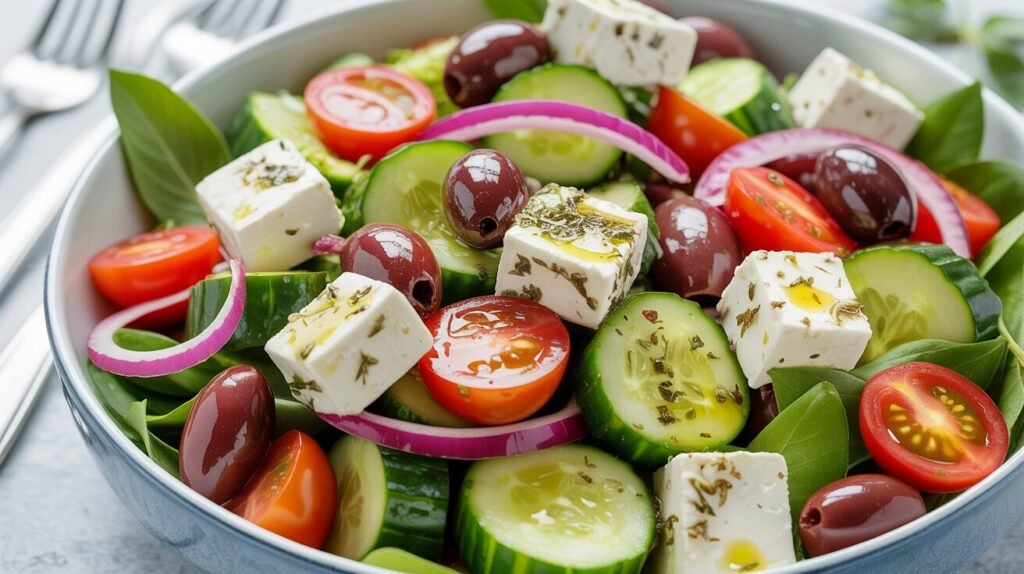
Few dishes capture the essence of Mediterranean cuisine as perfectly as a traditional Greek Salad. It’s crisp, colorful, and bursting with fresh flavors — a balance of juicy tomatoes, crunchy cucumbers, tangy red onions, briny olives, and creamy feta cheese, all brought together by a drizzle of good olive oil and a sprinkle of oregano.
This salad is simplicity at its finest. No heavy dressings, no complicated steps — just honest ingredients that speak for themselves. It’s a refreshing dish that pairs well with grilled meats, seafood, or simply a loaf of crusty bread and a glass of chilled white wine.
Whether you’re making it for a light lunch, a summer picnic, or as a side for a family dinner, this Greek Salad always delivers that perfect bite of freshness.
2. Ingredients Breakdown
For the Salad
- Cucumbers (2 medium, sliced or chopped) – Cool and refreshing; English or Persian cucumbers work best.
- Tomatoes (3 medium or 2 cups cherry tomatoes, halved) – Choose ripe and juicy for the best flavor.
- Red Onion (½ small, thinly sliced) – Adds a sharp, tangy bite; soak in water for a milder taste.
- Kalamata Olives (½ cup, pitted) – Their salty brininess gives authentic Mediterranean character.
- Feta Cheese (½ cup, cubed or crumbled) – The star ingredient; use Greek block feta for creaminess.
- Green Bell Pepper (1 small, sliced) – Adds a subtle crunch and color contrast.
For the Dressing
- Extra-Virgin Olive Oil (¼ cup) – The base of all good Greek salads; use high-quality oil for flavor.
- Red Wine Vinegar (1 tbsp) – Brings acidity and brightness.
- Dried Oregano (1 tsp) – The classic Greek herb that ties the flavors together.
- Salt and Freshly Ground Black Pepper (to taste) – Enhances the freshness of the vegetables.
3. Step-by-Step Instructions
Step 1: Prepare the Vegetables
Chop the cucumbers, tomatoes, and bell pepper into bite-sized pieces. Slice the red onion thinly. If preferred, soak the onion in cold water for 10 minutes to reduce sharpness.
Step 2: Combine in a Bowl
In a large salad bowl, combine all the chopped vegetables with the Kalamata olives.
Step 3: Add the Feta Cheese
Gently toss in cubed or crumbled feta. For a more authentic presentation, serve with feta blocks placed on top instead of mixing in.
Step 4: Make the Dressing
In a small bowl or jar, whisk together olive oil, red wine vinegar, oregano, salt, and pepper until emulsified.
Step 5: Dress and Toss
Pour the dressing over the salad and toss gently until the ingredients are evenly coated. Taste and adjust seasoning as needed.
Step 6: Serve Fresh
Serve immediately or chill for 10–15 minutes before serving to allow the flavors to meld together.
4. Tips and Variations
- Add protein: Top with grilled chicken, shrimp, or chickpeas for a complete meal.
- Add greens: Traditional Greek salad doesn’t include lettuce, but you can add romaine for a lighter version.
- Use different olives: Mix in green olives for variety.
- Vegan version: Skip the feta or use a dairy-free alternative.
- Herb boost: Add fresh parsley, dill, or mint for extra fragrance.
- Make it a meal: Serve with warm pita bread and tzatziki sauce.
5. Serving Suggestions
- Serve as a side salad with grilled lamb, chicken souvlaki, or fish.
- Perfect alongside pita bread, hummus, or falafel for a Mediterranean spread.
- For a light lunch, pair with lemon rice soup or lentil soup.
- Add a sprinkle of oregano and a drizzle of olive oil just before serving for a restaurant-style finish.
6. Storage and Reheating
- Refrigeration: Store leftovers in an airtight container for up to 2 days.
- Keep feta and dressing separate if storing to prevent sogginess.
- No reheating needed: Greek salad is best enjoyed cold or at room temperature.
- Avoid freezing: Fresh vegetables lose texture and water content when thawed.
7. Recipe Notes
- Use high-quality olive oil and vinegar — they make all the difference.
- Don’t overdress the salad; the goal is to lightly coat, not soak, the vegetables.
- Ripe tomatoes and crisp cucumbers are the key to great flavor.
- For a true Greek touch, serve with a wedge of lemon and sprinkle with oregano.
8. Nutrition Information (Per Serving)
| Nutrient | Amount |
|---|---|
| Calories | 210 kcal |
| Protein | 5 g |
| Fat | 17 g |
| Saturated Fat | 4 g |
| Carbohydrates | 10 g |
| Fiber | 3 g |
| Sugar | 5 g |
| Sodium | 320 mg |
| Cholesterol | 15 mg |
| Calcium | 130 mg |
| Iron | 1 mg |
Nutrition information is an estimate and may vary based on specific ingredients used.
9. Recipe Card Summary
Course: Salad / Side Dish
Cuisine: Greek / Mediterranean
Servings: 4
Prep Time: 15 minutes
Total Time: 15 minutes
Ingredients
- 2 cucumbers, chopped
- 3 tomatoes or 2 cups cherry tomatoes, halved
- ½ small red onion, sliced
- ½ cup Kalamata olives
- ½ cup feta cheese, cubed
- 1 small green bell pepper, sliced
Dressing:
- ¼ cup extra-virgin olive oil
- 1 tbsp red wine vinegar
- 1 tsp dried oregano
- Salt & pepper, to taste
Instructions
- Chop cucumbers, tomatoes, and bell pepper. Slice onion.
- Combine vegetables and olives in a bowl.
- Add feta cheese on top.
- Whisk together olive oil, vinegar, oregano, salt, and pepper.
- Pour dressing over salad and toss gently.
- Serve immediately or chill briefly before serving.
🏷️ Diet Tags:
- Vegetarian
- Gluten-Free
- Low-Carb
- Mediterranean Diet
🌿 Health Benefits:
- Rich in antioxidants from olive oil and vegetables.
- High in vitamins A and C for immune support.
- Heart-healthy fats from olive oil and olives.
- Calcium boost from feta cheese.
10. FAQs
1. Is Greek Salad traditionally made with lettuce?
No — authentic Greek salad (Horiatiki) uses only tomatoes, cucumbers, onions, olives, and feta without lettuce.
2. What’s the best feta to use?
Greek block feta made from sheep’s milk or a mix of sheep and goat milk gives the best flavor and texture.
3. Can I make the dressing in advance?
Yes — mix and store the dressing in the fridge for up to a week. Shake well before using.
4. Can I add more veggies?
Absolutely — bell peppers, avocado, or capers are great additions.
5. What can I pair with Greek Salad?
It pairs wonderfully with grilled meats, seafood, pita bread, and hummus.
11. Final Thoughts
The Greek Salad is a timeless dish that celebrates the beauty of fresh ingredients and simple preparation. Each bite bursts with the sun-drenched flavors of the Mediterranean — crisp vegetables, tangy feta, and smooth olive oil.
It’s quick, healthy, and endlessly versatile — whether served as a side, a light meal, or part of a festive spread. Try it once, and you’ll understand why it’s a staple across kitchens worldwide.