
Hearty Beef Stew Recipe – Tender, Flavorful, and Perfect for Comfort Food Lovers
1. Introduction
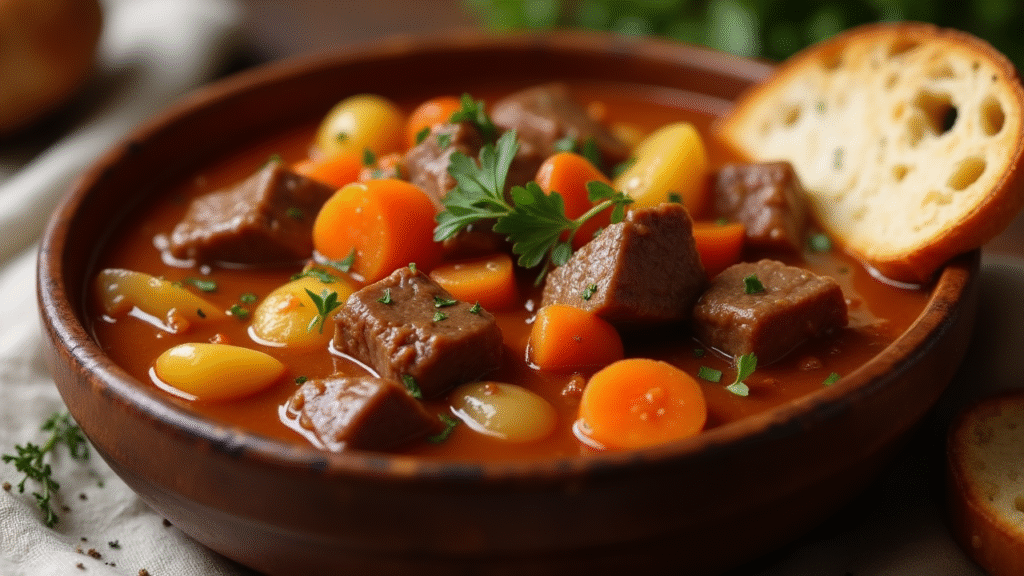
There’s nothing more comforting than a hearty bowl of Beef Stew. The rich, savory broth, tender chunks of beef, and hearty vegetables come together to create a meal that’s not only delicious but also perfect for warming up on a chilly day. Whether you’re looking for a cozy family dinner, a dish to impress guests, or simply a comforting meal to enjoy, Beef Stew is the answer.
What makes this recipe so amazing is that it’s incredibly easy to make, and you can customize it to your taste. You can cook it on the stovetop, slow cook it for tender results, or even make it in the oven. The best part? Beef Stew is a one-pot meal, so cleanup is a breeze. In this post, I’ll take you through everything you need to know about making Beef Stew from scratch, including a breakdown of ingredients, step-by-step instructions, and tips to make sure your stew turns out perfectly every time.
Let’s dive into this cozy, flavorful dish!
2. Ingredients Breakdown
To make the best Beef Stew, you’ll need just a few key ingredients that come together to create a comforting, flavorful dish. Let’s go through them one by one.
For the Beef Stew:
- Beef Stew Meat: The star of the dish! You’ll want to use beef that’s cut into bite-sized cubes. Chuck roast is the most common choice for beef stew, as it becomes tender and juicy when slow-cooked. If you prefer a leaner cut, you can use sirloin or round, but keep in mind that these cuts may not be as tender. Choose beef with some marbling for extra flavor.
- Carrots: Carrots add a slight sweetness and hearty texture to the stew. You can peel them and cut them into rounds or cubes, depending on your preference. Carrots also release natural sweetness into the broth, enhancing the flavor of the stew.
- Potatoes: Potatoes are the perfect complement to beef stew, adding bulk and substance to the dish. Use waxy potatoes, such as Yukon Gold or red potatoes, for the best texture. These potatoes hold up well during the long cooking time and won’t break down into mush.
- Onions: Onions are a must for any stew, providing a savory, aromatic base. You can use yellow or white onions for the best flavor. If you like a slightly sweeter taste, you can use shallots or red onions.
- Garlic: Fresh garlic adds a rich, savory depth of flavor to the stew. Mince the garlic finely or crush it before adding it to the pot for a more intense flavor.
- Beef Broth: Beef broth is the foundation of the stew’s flavorful broth. If you prefer a lighter version, you can use low-sodium beef broth or chicken broth. You can also use homemade beef stock for a richer flavor, but store-bought broth works well for convenience.
- Tomato Paste: Tomato paste adds a depth of richness and slight acidity to the stew. It helps balance the flavors and creates a more complex broth.
- Herbs: Fresh thyme and bay leaves are classic herbs to include in Beef Stew. Thyme adds earthy flavor, while bay leaves contribute a subtle aromatic note. You can use dried herbs if fresh isn’t available, but fresh will provide the most vibrant flavor.
- Olive Oil: Olive oil is used for browning the beef at the start of cooking. It adds a bit of richness and helps the beef sear evenly. You can substitute with vegetable oil if needed.
- Salt and Pepper: Simple seasoning is key to bringing out the flavors of the stew. Season the beef and vegetables with salt and pepper as you go, and taste the stew at the end to adjust the seasoning.
Optional Additions:
- Parsnips: For extra flavor and texture, you can add parsnips alongside the carrots and potatoes. Parsnips have a slightly sweet, nutty flavor that complements the beef well.
- Peas: Frozen peas can be added in the last 5 minutes of cooking for a pop of color and a fresh, sweet flavor.
- Mushrooms: If you enjoy mushrooms, sauté them with the onions and garlic for an earthy addition to the stew.
Substitutions:
- You can swap the beef for lamb for a different flavor profile.
- For a gluten-free option, ensure that any flour used for thickening the stew is gluten-free.
3. Step-by-Step Instructions
Follow these easy steps to make a delicious Beef Stew:
- Brown the Beef
Heat 2 tablespoons of olive oil in a large pot or Dutch oven over medium-high heat. Add the beef stew meat in batches, ensuring not to overcrowd the pot. Brown the beef on all sides for about 5-7 minutes, then remove it from the pot and set it aside. This step develops the deep, rich flavors in the stew. - Sauté the Vegetables
In the same pot, add another tablespoon of olive oil. Add the onions and garlic, and sauté for 3-4 minutes until the onions are softened and fragrant. Stir in the tomato paste and cook for 1-2 minutes to caramelize it slightly. - Add the Broth and Beef
Return the browned beef to the pot, and pour in the beef broth. Stir in the carrots, potatoes, and any other vegetables you’re using. Add the thyme, bay leaves, and a pinch of salt and pepper. Bring the mixture to a boil, then reduce the heat to low and cover the pot. - Simmer the Stew
Let the stew simmer gently for 2 to 2.5 hours, or until the beef is tender and the vegetables are cooked through. Stir occasionally and check the seasoning. If the stew is too thick, you can add a little more broth or water to reach your desired consistency. - Finish and Serve
Once the beef is tender and the flavors have melded together, remove the bay leaves and discard them. Taste the stew and adjust the seasoning with more salt and pepper if needed. Serve the Beef Stew hot, garnished with fresh parsley if desired.
4. Tips and Variations
Here are some expert tips and variations to help you make the best Beef Stew:
- Use Bone-In Beef: For even richer flavor, you can use bone-in beef shank or short ribs. The bones will add additional flavor and help thicken the broth.
- Make It Creamy: To make the stew creamy, stir in a bit of heavy cream or sour cream at the end of cooking.
- Slow Cooker Version: To make Beef Stew in a slow cooker, brown the beef as directed, then transfer everything to the slow cooker. Add the beef broth, vegetables, and herbs, and cook on low for 6-8 hours until the beef is tender.
- For a Thicker Stew: If you prefer a thicker broth, mix a tablespoon of cornstarch or flour with a bit of water and stir it into the stew in the last 10 minutes of cooking. Let it simmer until the broth thickens.
- Add Wine: For added depth of flavor, you can deglaze the pot with a splash of red wine after browning the beef. Let the wine reduce slightly before adding the broth.
5. Serving Suggestions
Beef Stew is hearty on its own, but here are some delicious sides to complement the dish:
- Crusty Bread: Serve the stew with a loaf of crusty bread or dinner rolls to soak up all the delicious broth.
- Salads: A simple green salad with a lemon vinaigrette provides a refreshing contrast to the richness of the stew.
- Mashed Potatoes: If you love potatoes, mashed potatoes are the perfect side dish to serve with Beef Stew.
For drinks, a glass of red wine such as Cabernet Sauvignon or Merlot pairs perfectly with the rich flavors of the stew. For non-alcoholic options, a sparkling water with lemon adds a refreshing touch.
6. Storage and Reheating Instructions
- Fridge: Leftovers can be stored in an airtight container in the fridge for up to 4 days. Be sure to let the stew cool completely before storing.
- Freezer: Beef Stew can be frozen for up to 3 months. Allow it to cool completely, then transfer it to a freezer-safe container. Thaw overnight in the fridge before reheating.
- Reheating: To reheat, place the stew in a pot over low heat and warm gently until heated through. If reheating in the microwave, use a microwave-safe container and heat in 1-minute intervals, stirring between.
7. Recipe Notes
- Can Be Prepped Ahead: You can prepare the stew up to 2 days in advance. The flavors will only improve as it sits in the fridge.
- Best with Fresh Herbs: Fresh thyme and parsley bring brightness to the stew. Dried herbs can be used in a pinch, but fresh herbs provide a more vibrant flavor.
- Use a Dutch Oven: A heavy-duty pot like a Dutch oven is ideal for making Beef Stew, as it retains heat and helps the beef cook evenly.
8. Nutrition Information (Per Serving)
| Nutrient | Amount per Serving |
| Calories | 350 |
| Fat | 15g |
| Saturated Fat | 5g |
| Carbs | 25g |
| Sugar | 7g |
| Fiber | 4g |
| Protein | 30g |
| Sodium | 600mg |
| Cholesterol | 80mg |
| Calcium | 70mg |
| Iron | 3mg |
Nutrition information is an estimate and may vary based on specific ingredients used.
9. Recipe Card Summary
Course: Main Course
Cuisine: American
Servings: 6
Prep Time: 20 minutes
Cook Time: 2.5 hours
Total Time: 2 hours 50 minutes
Ingredients:
- 2 lbs beef stew meat
- 4 carrots, peeled and sliced
- 4 potatoes, cubed
- 1 onion, chopped
- 3 cloves garlic, minced
- 6 cups beef broth
- 2 tbsp tomato paste
- 2 sprigs fresh thyme
- 2 bay leaves
- 2 tbsp olive oil
- Salt and pepper to taste
Instructions:
- Brown beef in olive oil.
- Sauté onions, garlic, and tomato paste.
- Add broth, vegetables, and herbs.
- Simmer for 2-2.5 hours.
- Season to taste and serve.
Notes:
- Can be prepped ahead.
- Best with freshly made bread or mashed potatoes.
Nutrition:
Calories: 350 | Fat: 15g | Protein: 30g | Carbs: 25g
🏷️ Diet Tags
- Gluten-Free
- High-Protein
- Comfort Food
🌿 Health Benefits
- High in protein and iron
- Full of fiber from the vegetables
FAQs
Can I use a slow cooker for this recipe?
Yes! Simply brown the beef, then transfer everything to a slow cooker. Cook on low for 6-8 hours or on high for 3-4 hours.
Can I use frozen vegetables?
Frozen vegetables can be used, but fresh vegetables will give the best texture and flavor.
10. Final Thoughts
Beef Stew is the ultimate comfort food, and this recipe will quickly become a staple in your kitchen. It’s rich, hearty, and packed with flavor, perfect for warming you up on a cold day. I hope you give it a try and enjoy every bite! Let me know how it turns out for you in the comments below!
