
Hummus Trio Recipe – Classic, Roasted Red Pepper, and Garlic Herb
1. Introduction
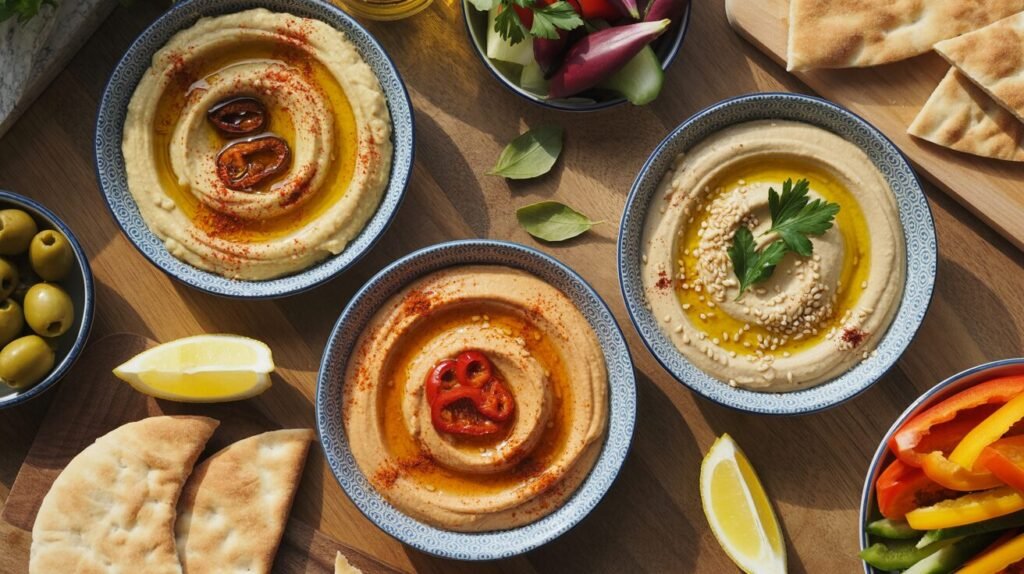
A good hummus can elevate any snack table, but a full hummus trio brings excitement, color, and variety to every bite. This recipe offers three versions of hummus—classic, roasted red pepper, and garlic herb—giving you a balanced spread that’s creamy, fresh, and deeply flavorful. Whether you’re hosting friends, planning a family gathering, or preparing a healthy snack for yourself, this hummus trio delivers rich taste with minimal effort.
The best part is how customizable each version is. You can adjust textures, flavors, spice levels, and even dietary preferences with ease, making the whole recipe feel both personal and flexible. In this guide, you’ll learn how to prepare three smooth and delicious hummus flavors, understand the ingredients that make them work, and gather expert tips for serving, storing, and customizing them to your liking.
2. Ingredients Breakdown
Chickpeas
Use canned chickpeas for convenience or freshly cooked chickpeas for a smoother hummus. Peel the skins for an ultra-creamy texture.
Tahini
A sesame paste that brings richness and nutty depth. Look for smooth, light-colored tahini for the best results. Sunflower seed butter can be used for a nut-free option.
Olive Oil
Adds body, smoothness, and flavor. Extra-virgin olive oil gives the best fresh taste.
Lemon Juice
Brightens the hummus and balances richness. Freshly squeezed lemon works best.
Garlic
Gives punch and savoriness. For a milder taste, roast the garlic first.
Salt
Enhances flavor and rounds out the richness of tahini and olive oil.
Water or Aquafaba
Used to thin the hummus to a creamy, silky consistency. Aquafaba (the liquid from canned chickpeas) creates a fluffier texture.
For Roasted Red Pepper Hummus
Roasted red peppers add vibrant color and a hint of sweetness. You can use jarred roasted peppers or roast them yourself.
For Garlic Herb Hummus
Fresh herbs like parsley, cilantro, or basil bring freshness. Use a blend or a single herb depending on your preference.
Common Substitutions
- Tahini: sunflower seed butter, almond butter
- Chickpeas: white beans for a milder flavor
- Lemon: lime for a sharper citrus profile
- Garlic: roasted garlic for a softer, sweeter taste
- Olive oil-free: use cold water, aquafaba, or a spoon of unsweetened yogurt
3. Step-by-Step Instructions
Step 1: Prepare the Chickpeas
Drain and rinse the chickpeas. For an extra-smooth hummus, slip off the skins by gently pinching each bean.
Step 2: Make the Classic Hummus Base
In a food processor, combine chickpeas, tahini, lemon juice, garlic, olive oil, salt, and a splash of water or aquafaba. Blend until smooth, stopping to scrape down the sides. Add water gradually until the texture is velvety and creamy.
Step 3: Adjust Seasoning
Taste and adjust as needed with more salt, lemon juice, or garlic. This will be your master base for all three versions.
Step 4: Divide the Hummus
Transfer one-third of the base to a bowl for the classic version. Leave the remaining two-thirds in the processor.
Step 5: Make the Roasted Red Pepper Hummus
Add roasted red peppers to one-third of the remaining hummus in the food processor. Blend until smooth and vibrant. Adjust with more peppers if you want deeper color or sweetness.
Step 6: Create the Garlic Herb Hummus
Place the final third of the base in the processor and add fresh herbs and an extra clove of garlic if you like a stronger flavor. Blend until the herbs are fully incorporated.
Step 7: Garnish and Serve
Top each hummus bowl with olive oil and optional toppings such as paprika, roasted peppers, chopped herbs, sesame seeds, or crushed red pepper flakes.
4. Tips and Variations
Tips for Best Results
- Peel chickpeas for a smoother hummus.
- Add ice-cold water to lighten the texture.
- Blend longer than you think—2 to 3 full minutes creates a silky finish.
- Use fresh lemon juice instead of bottled for brighter flavor.
Variations
- Spicy version: add jalapeño, cayenne, or harissa paste.
- Creamier version: add Greek yogurt or extra tahini.
- Oil-free version: thin with cold water or aquafaba instead of oil.
- Extra veggie boost: blend in roasted carrots or beets.
- Gluten-free: serve with gluten-free crackers or veggies.
5. Serving Suggestions
Best Side Pairings
- Warm pita bread or pita chips
- Toasted baguette slices
- Crisp vegetables like carrots, cucumbers, bell peppers
- Seed crackers or rice crackers
Garnish and Presentation Ideas
- Drizzle with olive oil
- Sprinkle paprika, sumac, or za’atar
- Add chopped herbs
- Place roasted peppers or garlic on top for color
Drink Pairings
- Herbal teas
- Sparkling water with lemon
- Light white wine
- Mediterranean-themed dinner nights pair perfectly with this trio
6. Storage and Reheating Instructions
Storage
- Refrigerate hummus in airtight containers for 4–5 days.
- Freeze hummus for up to 3 months. Thaw in the fridge overnight before serving.
Reheating
Hummus is typically enjoyed cold or room temperature, but if you prefer it warmed:
- Microwave: 10–15 seconds to soften.
- Oven: Warm in a small dish at low heat for 5–7 minutes.
Freshness Tip
Add a thin layer of olive oil on top before storing to prevent drying.
7. Recipe Notes
- Can be prepped ahead of time.
- Best made with smooth tahini and fresh lemon juice.
- Use a high-powered food processor for the best texture.
- Adjust thickness by adding water slowly.
- Aquafaba creates a lighter, airier hummus.
8. Nutrition Information (Per Serving)
| Nutrient | Amount |
|---|---|
| Calories | 175 |
| Fat | 11 g |
| Saturated Fat | 1.5 g |
| Carbs | 15 g |
| Sugar | 1 g |
| Fiber | 4 g |
| Protein | 5 g |
| Sodium | 240 mg |
| Cholesterol | 0 mg |
| Calcium | 20 mg |
| Iron | 1.5 mg |
Nutrition information is an estimate and may vary based on specific ingredients used.
9. Recipe Card Summary
Course:
Appetizer, Snack
Cuisine:
Mediterranean, Middle Eastern
Servings:
6
Prep Time:
15 minutes
Cook Time:
0 minutes
Total Time:
15 minutes
Ingredients:
- Chickpeas
- Tahini
- Olive oil
- Lemon juice
- Garlic
- Salt
- Water or aquafaba
- Roasted red peppers
- Fresh herbs
Instructions:
- Drain and prep chickpeas.
- Blend ingredients to make a classic hummus base.
- Adjust seasoning.
- Divide into three portions.
- Blend one portion with roasted peppers.
- Blend another with fresh herbs and garlic.
- Garnish and serve.
Notes:
- Peel chickpeas for extra smoothness.
- Thin with cold water for a fluffy texture.
- Customize flavors with spices or roasted vegetables.
Diet Tags:
- Gluten-free (with GF dippers)
- Vegetarian
- Vegan
- Dairy-free
- High-fiber
Health Benefits:
- Rich in plant-based protein
- Good source of healthy fats
- High in fiber for digestive health
- Contains antioxidants from herbs and peppers
10. FAQs
1. Can I make the hummus trio ahead of time?
Yes, hummus stores well and even tastes better after chilling for a few hours.
2. Can I use dried chickpeas instead of canned?
Yes. Cook them until soft, then proceed with the recipe.
3. How can I make my hummus smoother?
Peel the chickpeas and blend longer with cold water.
4. Can I make these flavors without a food processor?
A blender works, but you may need to add more liquid.
5. What can I use instead of tahini?
Sunflower seed butter or almond butter works well.
11. Final Thoughts
This hummus trio is simple, fresh, and full of flavor. Whether you’re hosting a gathering or just craving a satisfying snack, these three variations offer something for everyone. Give them a try, experiment with your favorite flavors, and let me know how they turned out for you in the comments below.