
Japchae – Sweet Potato Noodles
Introduction
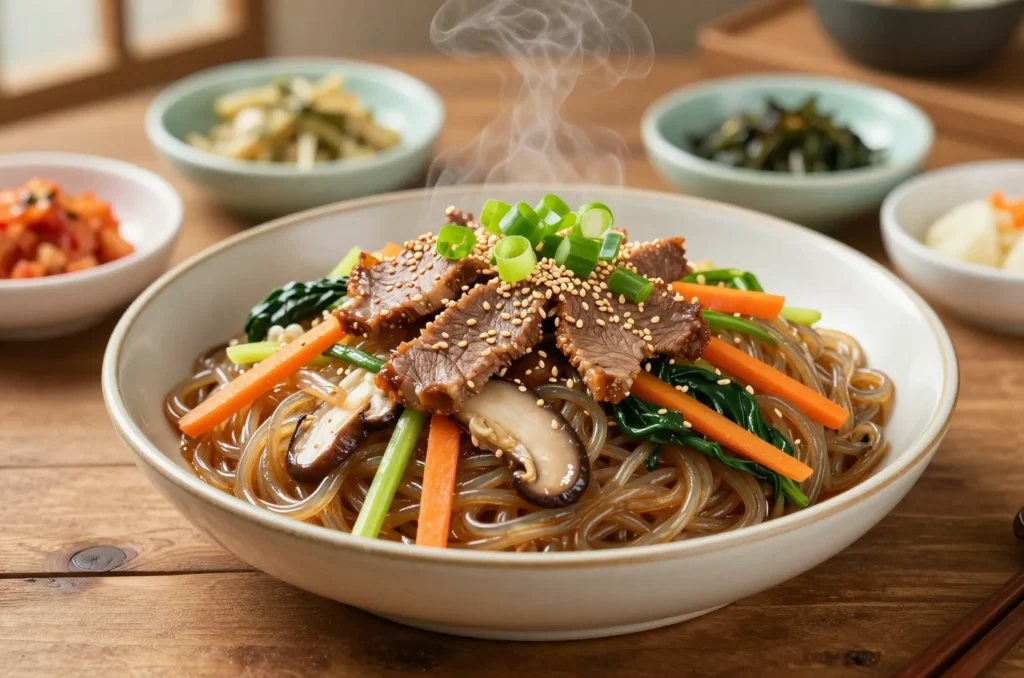
If you are looking for a dish that is colorful, slightly sweet, savory, and satisfying without feeling heavy, Japchae is exactly what you need. Japchae is a beloved Korean noodle dish made with sweet potato glass noodles stir-fried with vegetables, beef, and a flavorful soy-based sauce. It is known for its glossy texture, vibrant appearance, and balanced taste.
Unlike regular wheat noodles, the noodles used in Japchae are made from sweet potato starch. They are chewy, slightly elastic, and beautifully absorb the sauce. Japchae is often served during celebrations and family gatherings in Korea, but it is simple enough to make at home for a weeknight dinner.
Why You’ll Love This Japchae Recipe
- Naturally gluten-free noodles (if using gluten-free soy sauce)
- Packed with colorful vegetables
- Light yet filling
- Easy to customize with different proteins
- Perfect for beginners learning stir-fry techniques
In this article, you will learn how to cook sweet potato noodles properly, prepare vegetables the right way, balance flavors, and create a restaurant-quality Japchae at home.
Ingredients Breakdown
Sweet Potato Glass Noodles (Dangmyeon)
These translucent noodles are the heart of Japchae. They have a chewy texture and absorb flavors well. Tip: Do not overcook them; they can become too soft.
Beef (Thinly Sliced)
Traditionally, thin slices of beef are used for depth and protein. Sirloin or ribeye works well. Slice thinly for quick cooking.
Spinach
Adds freshness and color. Blanch quickly and squeeze out excess water before adding.
Carrots
Julienned carrots provide sweetness and crunch.
Bell Peppers
Add bright color and mild sweetness. Use red or yellow for a vibrant look.
Onion
Adds subtle sweetness when sautéed.
Shiitake Mushrooms
Bring earthy flavor and umami. Fresh or rehydrated dried mushrooms work well.
Garlic
Essential for aroma and flavor.
Soy Sauce
Forms the base of the seasoning. Use low-sodium if preferred.
Sugar
Balances the saltiness and enhances the signature slightly sweet flavor.
Sesame Oil
Adds nutty aroma and authentic taste.
Sesame Seeds
Used for garnish and extra texture.
Substitutions and Dietary Options
- For vegetarian Japchae, skip beef and add tofu or extra mushrooms.
- For vegan, ensure sugar is plant-based and use tamari instead of regular soy sauce if needed.
- For a low-carb version, increase vegetables and reduce noodle quantity.
Step-by-Step Instructions
Step 1: Cook the Noodles
Bring a large pot of water to a boil. Add sweet potato noodles and cook for 6 to 8 minutes until tender but still chewy. Drain and rinse lightly. Cut noodles into shorter lengths using kitchen scissors.
Step 2: Prepare the Spinach
Blanch spinach in boiling water for 30 seconds. Remove, rinse in cold water, squeeze out excess water, and set aside.
Step 3: Cook the Beef
Heat a pan over medium heat. Add a small amount of oil and cook thinly sliced beef with a splash of soy sauce and a little garlic for 2 to 3 minutes. Remove and set aside.
Step 4: Sauté Vegetables Separately
Sauté onions, carrots, bell peppers, and mushrooms individually for 1 to 2 minutes each. Cooking them separately keeps their colors bright and textures balanced.
Step 5: Make the Sauce
In a bowl, mix soy sauce, sugar, minced garlic, and sesame oil.
Step 6: Combine Everything
In a large bowl, combine noodles, beef, vegetables, and sauce. Toss gently but thoroughly. Adjust seasoning if needed. Garnish with sesame seeds and chopped green onions.
Tips and Variations
Expert Tips
- Do not overcook noodles; they should remain chewy.
- Cook vegetables quickly to keep them crisp.
- Taste before adding extra salt.
Variations
- Chicken Version: Replace beef with thinly sliced chicken breast.
- Seafood Version: Add shrimp for a lighter flavor.
- Extra Veggie: Add zucchini or snow peas.
- Kid-Friendly: Reduce garlic and sugar slightly for a milder flavor.
- Adult Version: Add a dash of chili flakes for gentle heat.
Serving Suggestions
Japchae can be served warm, at room temperature, or even cold. It pairs well with steamed rice and simple side dishes like kimchi or cucumber salad.
For presentation, serve in a wide bowl and sprinkle extra sesame seeds on top. It is perfect for Korean-themed dinner nights alongside grilled meats or soups.
Pair with green tea, barley tea, or light sparkling drinks.
Storage and Reheating Instructions
Refrigerator
Store in an airtight container for up to 4 days.
Freezer
Not recommended, as noodles may lose texture.
Reheating
Microwave: Heat for 1 to 2 minutes, stirring halfway.
Stovetop: Reheat gently in a pan with a splash of water or soy sauce to prevent dryness.
Recipe Notes
- Can be prepped ahead; flavor improves after resting.
- Best with freshly toasted sesame seeds.
- Use a large mixing bowl to combine evenly.
- Slice vegetables uniformly for even cooking.
Nutrition Information (Per Serving)
Estimated per serving (based on 4 servings):
| Nutrient | Amount |
|---|---|
| Calories | 410 kcal |
| Fat | 14 g |
| Saturated Fat | 3 g |
| Carbs | 55 g |
| Sugar | 9 g |
| Fiber | 4 g |
| Protein | 18 g |
| Sodium | 720 mg |
| Cholesterol | 40 mg |
| Calcium | 90 mg |
| Iron | 3 mg |
Nutrition information is an estimate and may vary based on specific ingredients used.
Recipe Card Summary
Course: Main Course
Cuisine: Korean
Servings: 4
Prep Time: 25 minutes
Cook Time: 20 minutes
Total Time: 45 minutes
Ingredients
- 8 ounces sweet potato glass noodles
- 6 ounces thinly sliced beef
- 1 cup spinach
- 1 carrot, julienned
- 1 bell pepper, sliced
- 1 small onion, sliced
- 4 shiitake mushrooms, sliced
- 2 cloves garlic, minced
- 4 tablespoons soy sauce
- 1 tablespoon sugar
- 1 tablespoon sesame oil
- 1 tablespoon sesame seeds
- Cooking oil as needed
Instructions
- Boil noodles and drain.
- Blanch spinach and squeeze dry.
- Cook beef and set aside.
- Sauté vegetables separately.
- Mix sauce ingredients.
- Combine everything and garnish.
Notes
Do not overcook noodles to maintain chewy texture.
Diet Tags: Gluten-Free Option, Dairy-Free, High-Protein Option, Vegetarian Option Available
Health Benefits Section
Sweet Potato Noodles
Gluten-free and lower in fat compared to traditional wheat noodles.
Spinach
Rich in iron and vitamin A.
Carrots
High in beta-carotene and fiber.
Beef
Provides protein and essential minerals like iron and zinc.
Sesame Oil
Contains healthy fats and antioxidants.
Suggested Sauce
Traditional soy-sesame sauce is standard. You can also prepare a light chili soy drizzle or add a small spoon of spicy chili paste for extra flavor.
Avoid These Mistakes
- Overcooking noodles until mushy.
- Adding too much soy sauce at once.
- Skipping the step of cooking vegetables separately.
- Not squeezing water from spinach.
FAQs
- Can I make Japchae ahead of time?
Yes, it tastes even better after resting for a few hours. - Are sweet potato noodles gluten-free?
Yes, but always check the packaging to confirm. - Can I make it vegetarian?
Absolutely, replace beef with tofu or mushrooms. - Why are my noodles sticky?
They may be overcooked or not tossed with enough oil. - Can I serve Japchae cold?
Yes, it is delicious at room temperature or chilled. - What protein works best besides beef?
Chicken, shrimp, or tofu are excellent alternatives.
Whether you’re feeding a crowd or just craving comfort food, this Japchae – Sweet Potato Noodles is sure to hit the spot. Let me know how it turns out for you in the comments below