
Kimchi Jjigae – Korean Kimchi Stew (Beginner-Friendly Guide)
1. Introduction
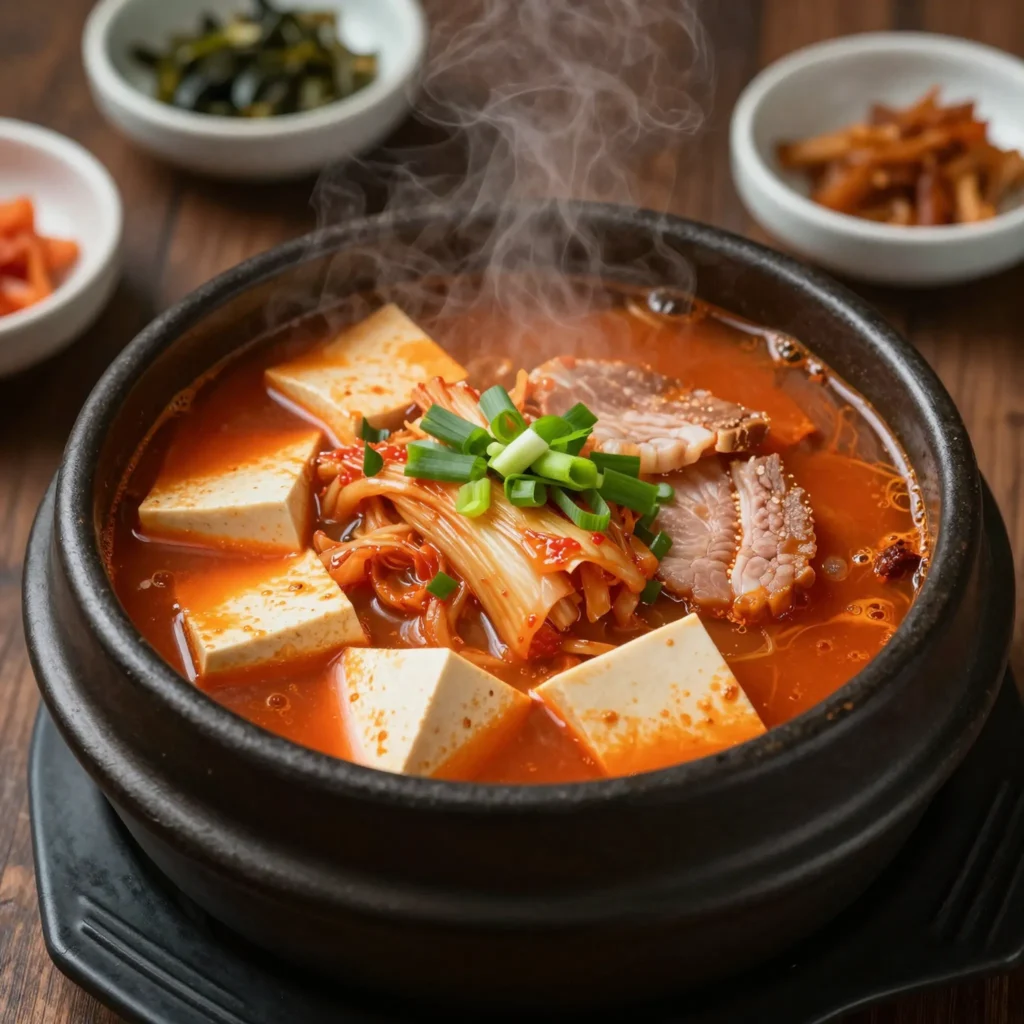
Kimchi Jjigae is one of those dishes that feels deeply comforting from the very first spoonful. It’s warm, bold, rich, and full of character. This classic Korean stew is built around fermented kimchi, which gives the broth its signature tangy depth and vibrant red color. When simmered with pork, tofu, and aromatics, the result is a hearty meal that feels both nourishing and satisfying.
What makes Kimchi Jjigae especially great for beginner cooks is how forgiving it is. The flavors improve as it simmers, there’s no strict timing to worry about, and it doesn’t require complicated techniques. You can taste as you go and adjust easily, making it a confidence-building recipe for anyone learning how to cook savory dishes.
Why You’ll Love This Recipe
- One-pot meal with simple steps
- Rich, comforting flavors
- Great way to use well-fermented kimchi
- Easy to customize with different proteins
- Perfect for cool days or cozy dinners
In this article, you’ll learn how to choose the right kimchi, build flavor step by step, avoid common mistakes, and serve Kimchi Jjigae in a way that feels complete and satisfying.
2. Ingredients Breakdown
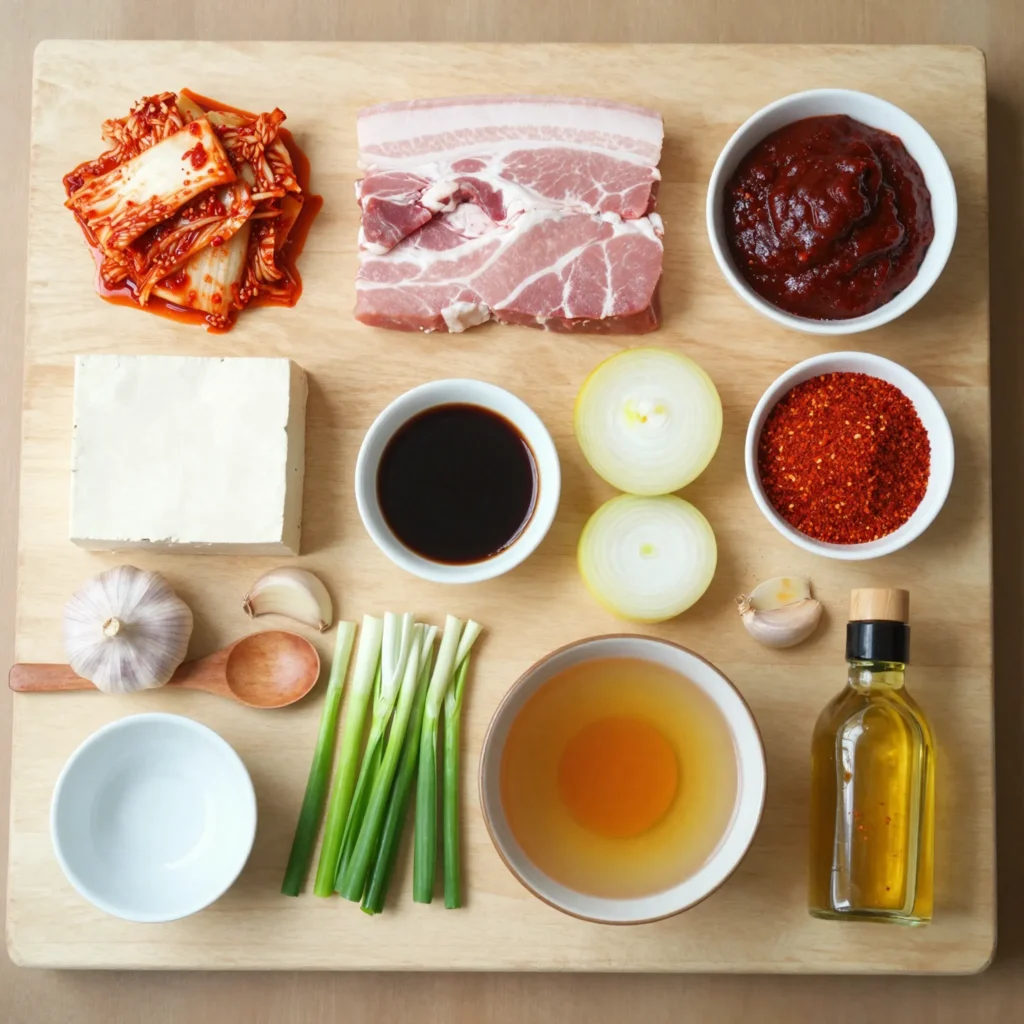
Each ingredient in Kimchi Jjigae has a purpose. Understanding them will help you cook with confidence.
Napa Kimchi
Well-fermented kimchi is the foundation of this stew. Older kimchi works best because it has a deeper, more complex flavor.
Tip: Use kimchi with plenty of juice for a richer broth.
Pork Belly (or Pork Shoulder)
Pork adds richness and balances the acidity of kimchi.
Substitution: Tuna, beef, or mushrooms for different variations.
Tofu
Soft or medium-firm tofu absorbs the broth beautifully and adds texture.
Tip: Cut into large cubes so it holds its shape.
Onion
Adds natural sweetness and depth as it simmers.
Garlic
Enhances the savory base of the stew.
Tip: Use fresh garlic for the best flavor.
Gochujang (Korean Chili Paste)
Adds heat, umami, and body to the broth.
Tip: Start small and add more to taste.
Gochugaru (Korean Chili Flakes)
Adds color and controlled heat.
Optional: Reduce or skip for a milder stew.
Soy Sauce
Balances saltiness and depth.
Anchovy-Kelp Broth (or Water)
Traditional broth adds umami.
Substitution: Use water if broth is unavailable.
Green Onions
Added at the end for freshness and aroma.
3. Step-by-Step Instructions
Step 1: Sauté the Kimchi
Heat a pot over medium heat. Add a small amount of oil, then add chopped kimchi. Cook for 3–5 minutes until softened and fragrant.
Tip: This step deepens the flavor of the stew.
Step 2: Add the Pork
Add pork slices to the pot. Stir and cook until lightly browned.
Tip: Let the pork render slightly for better flavor.
Step 3: Build the Base
Add garlic, onion, gochujang, gochugaru, and soy sauce. Stir well to coat everything evenly.
Step 4: Add Broth
Pour in anchovy-kelp broth or water. Bring to a gentle boil.
Tip: Scrape the bottom of the pot to release flavor.
Step 5: Simmer
Lower heat and simmer uncovered for 20–25 minutes.
Tip: The longer it simmers, the deeper the flavor.
Step 6: Add Tofu and Finish
Add tofu and simmer for 5 more minutes. Top with green onions before serving.
4. Tips and Variations
Expert Tips
- Use older kimchi for best flavor
- Simmer gently, not aggressively
- Taste and adjust seasoning near the end
Variations
- Tuna Kimchi Jjigae: Use canned tuna instead of pork
- Vegetarian Version: Use mushrooms and vegetable broth
- Mild Version (Kids): Reduce gochujang and chili flakes
- Richer Version (Adults): Add a little sesame oil at the end
5. Serving Suggestions
Kimchi Jjigae is best served hot and shared.
Side Pairings
- Steamed white rice
- Simple cucumber salad
- Pan-fried eggs
Garnishes
- Extra green onions
- Sesame oil drizzle
Meal Ideas
- Cozy dinner night
- Simple Korean-style meal spread
6. Storage and Reheating Instructions
Storage
- Refrigerate leftovers in an airtight container for up to 4 days
- Freeze for up to 1 month
Reheating
- Stovetop: Reheat gently over medium heat
- Microwave: Heat in short intervals, stirring between
7. Recipe Notes
- Can be made ahead; flavor improves overnight
- Best served bubbling hot
- Stone pot keeps stew warm longer
- Adjust spice level at the end
8. Nutrition Information (Per Serving)
| Nutrient | Amount |
|---|---|
| Calories | 380 kcal |
| Fat | 24 g |
| Saturated Fat | 9 g |
| Carbs | 14 g |
| Sugar | 5 g |
| Fiber | 3 g |
| Protein | 22 g |
| Sodium | 890 mg |
| Cholesterol | 65 mg |
| Calcium | 180 mg |
| Iron | 3 mg |
Nutrition information is an estimate and may vary based on specific ingredients used.
9. Recipe Card Summary
Course: Main Dish
Cuisine: Korean
Servings: 4
Prep Time: 15 minutes
Cook Time: 30 minutes
Total Time: 45 minutes
Ingredients
- 2 cups napa kimchi, chopped
- 200 g pork belly, sliced
- 1/2 onion, sliced
- 3 cloves garlic, minced
- 1 tbsp gochujang
- 1 tsp gochugaru
- 1 tbsp soy sauce
- 3 cups anchovy-kelp broth
- 200 g tofu, cubed
- 2 green onions, sliced
Instructions
- Sauté kimchi in pot
- Add pork and cook lightly
- Stir in seasonings
- Add broth and boil
- Simmer 25 minutes
- Add tofu and garnish
Notes
- Adjust spice to taste
- Best with fermented kimchi
Diet Tags: High Protein, Dairy-Free, Nut-Free, Gluten-Free Option
10. Health Benefits Section
- Kimchi: Supports digestion and gut health
- Tofu: Plant-based protein and calcium
- Garlic: Supports immune health
- Onions: Rich in antioxidants
11. Suggested Sauces
- Extra gochujang mixed with broth
- Light sesame oil drizzle
- Soy-based dipping sauce for sides
12. Avoid These Mistakes
- Using fresh, unfermented kimchi
- Boiling too aggressively
- Skipping the sauté step
- Adding tofu too early
- Overseasoning before simmering
13. FAQs
1. Can I make Kimchi Jjigae without pork?
Yes, tuna, tofu, or mushrooms work well.
2. Is Kimchi Jjigae very spicy?
It can be adjusted easily by reducing chili paste.
3. Can beginners make this stew?
Yes, it’s simple and forgiving.
4. Does Kimchi Jjigae taste better the next day?
Yes, flavors deepen overnight.
5. Can I freeze Kimchi Jjigae?
Yes, freeze up to one month.
6. What rice works best with this stew?
Plain steamed white rice balances the flavors best.