
Perfect Classic Roast Chicken Recipe
1. Introduction
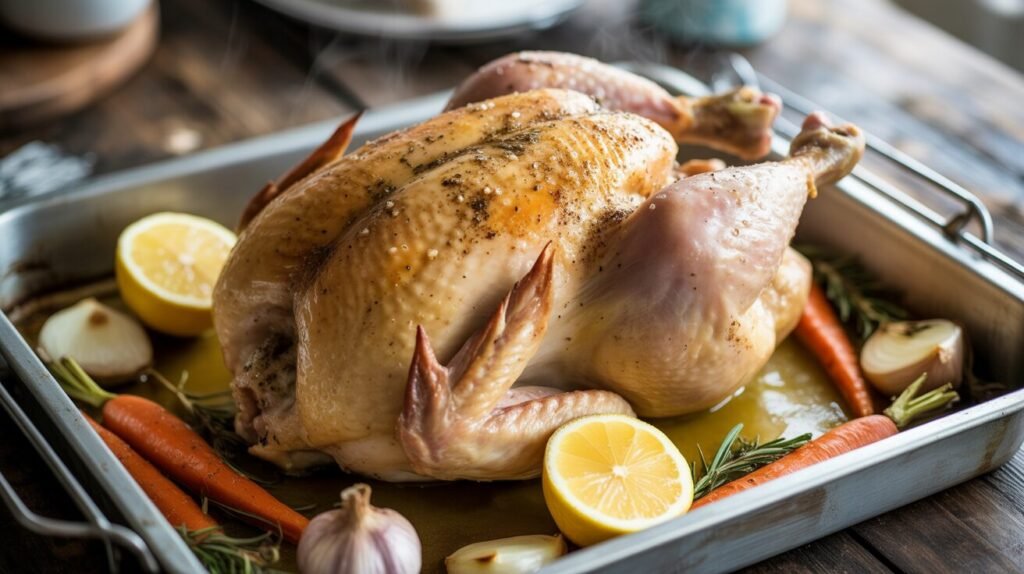
There’s something timeless about a well-made roast chicken. It’s the kind of meal that doesn’t shout; it speaks softly, with aromas of garlic, lemon, and golden skin that promise comfort in every bite. A properly roasted chicken is simple, deeply satisfying, and fits into nearly any dinner situation — from a casual weeknight to a small gathering.
What makes this roast chicken special is the balance of ease and technique. You’re not dealing with complicated steps or specialty equipment. Just a few thoughtful touches: drying the skin well, seasoning generously, roasting at the right temperature, and letting it rest. These small details transform an ordinary chicken into something exceptional.
In this article, you’ll learn how to create a roast chicken with crisp, flavorful skin and tender, juicy meat. We’ll break down the ingredients, walk through the steps, and cover variations, serving ideas, storage methods, and everything you need to master this classic dish.
2. Ingredients Breakdown
Here’s a closer look at what goes into a beautifully roasted chicken and how each ingredient supports flavor, moisture, and texture.
Whole Chicken
Choose a 3–4 lb bird for the most even cooking. Smaller chickens stay juicy without needing long roasting times. Air-chilled chickens tend to develop crispier skin.
Olive Oil or Butter
Oil leads to extra-crispy skin, while butter adds rich flavor and deeper browning. You can use a mix of both if you prefer.
Lemon
Stuffing lemon halves inside the cavity infuses the chicken with gentle citrus notes. The steam from the lemon helps keep the meat moist.
Garlic Bulb
Cut in half and placed inside the chicken, garlic releases subtle savory aroma that spreads throughout the meat.
Fresh Herbs (Thyme, Rosemary, Parsley)
Optional but excellent. They bring depth and aroma without overpowering the chicken.
Salt and Black Pepper
Generous seasoning is the foundation of great roast chicken. Salt draws out moisture for crispier skin and enhances flavor.
Carrots, Celery, and Onion (Optional)
These vegetables serve as a roasting base. They elevate the chicken so hot air circulates evenly, and they absorb the flavorful drippings.
Substitutions
- Use melted ghee instead of butter for a deeper roasted flavor.
- Replace lemon with orange for a sweeter, citrusy aroma.
- Use dried herbs if fresh aren’t available.
- For dairy-free, choose oil only.
- For low-sodium diets, season lightly and add fresh herbs for flavor.
3. Step-by-Step Instructions
1. Prepare the Chicken
Pat the chicken completely dry with paper towels. This is the secret to crisp skin. Any leftover moisture turns into steam and prevents browning. Season the inside of the cavity with salt and pepper.
2. Add Aromatics Inside
Stuff the cavity with lemon halves, garlic halves, and herbs. This helps gently perfume the meat without adding moisture to the surface.
3. Season the Exterior
Brush the outside of the chicken with olive oil or melted butter. Coat every surface. Then sprinkle salt and pepper generously over the entire chicken. If you want a tidier shape, tie the legs together with kitchen twine.
4. Prepare the Roasting Vegetables (Optional)
Spread chopped onions, carrots, and celery in the roasting pan. These help keep the chicken lifted off the bottom and catch the juices. The drippings can later be turned into a quick gravy.
5. Roast the Chicken
Preheat the oven to 425°F (220°C). Roast the chicken uncovered for 1 hour to 1 hour 20 minutes, depending on size. The skin should be deep golden and crisp. Use a meat thermometer inserted into the thickest part of the thigh; it should read 165°F (74°C).
6. Rest the Chicken
Let the chicken rest for 10–15 minutes before carving. Resting allows the juices to redistribute, ensuring moist slices.
7. Carve and Serve
Carve the chicken into breasts, thighs, drumsticks, and wings. Spoon some of the pan juices over the meat for extra flavor.
4. Tips and Variations
Tips for the Best Results
- Dry the chicken thoroughly before seasoning.
- Don’t cover the chicken while roasting; it prevents crisping.
- For deeper browning, switch to broil for the last 3–5 minutes.
- Let the chicken rest before carving — it’s non-negotiable.
Variations
- Garlic Herb Chicken: Mix minced garlic, butter, and herbs under the skin.
- Paprika Roast Chicken: Add paprika and onion powder for a deeper flavor.
- Lemon Pepper Chicken: Use lemon zest and pepper for a bright, sharp finish.
- Gluten-Free Variation: Naturally gluten-free; no adjustments needed.
- Vegetable-Rich Version: Add potatoes, parsnips, or Brussels sprouts to the roasting pan.
5. Serving Suggestions
Side Dishes
- Mashed potatoes
- Herb rice or pilaf
- Roasted root vegetables
- Caesar salad
- Cranberry spinach salad
Garnishes
- Fresh parsley
- Lemon wedges
- Drizzled pan juices
Pairings
- White wine such as Chardonnay or Sauvignon Blanc
- Sparkling water with lemon
- Rustic bread for soaking up the juices
For themed nights, pair this roast chicken with a simple vegetable soup or a warm bread basket for a cozy, rustic dinner experience.
6. Storage and Reheating Instructions
Storage
Keep leftovers in an airtight container in the refrigerator for up to 3–4 days.
Freezing
You can freeze cooked chicken pieces for up to 3 months. Freeze the meat alone (not vegetables) for best quality.
Reheating
- Microwave: Heat on medium for 1–2 minutes until warm.
- Oven: Warm at 325°F (165°C) for 10–15 minutes to preserve texture.
7. Recipe Notes
- Can be prepped ahead by seasoning and refrigerating uncovered overnight.
- Best with poultry that has been air-chilled.
- For the crispiest skin, avoid adding butter under the skin unless you prefer a softer finish.
- A 6-quart roasting pan works well for this size of chicken.
- Use a meat thermometer for accuracy; it prevents overcooking.
8. Nutrition Information (Per Serving)
Nutrition information is an estimate and may vary based on specific ingredients used.
| Nutrient | Amount |
|---|---|
| Calories | 390 |
| Fat | 24 g |
| Saturated Fat | 7 g |
| Carbohydrates | 3 g |
| Sugar | 1 g |
| Fiber | 0 g |
| Protein | 36 g |
| Sodium | 520 mg |
| Cholesterol | 120 mg |
| Calcium | 25 mg |
| Iron | 1.3 mg |
9. Recipe Card Summary
Roast Chicken
Course: Main Dish
Cuisine: American / European
Servings: 4
Prep Time: 10 minutes
Cook Time: 1 hour 10 minutes
Total Time: 1 hour 20 minutes
Ingredients
- 1 whole chicken (3–4 lbs)
- 2–3 tbsp olive oil or melted butter
- 1 lemon, halved
- 1 garlic bulb, halved
- Fresh herbs (optional)
- Salt and pepper
- 1 onion, quartered
- 2 carrots, chopped
- 2 celery sticks, chopped
Instructions
- Pat chicken dry and season the cavity.
- Stuff with lemon, garlic, and herbs.
- Coat the outside with oil or butter and season.
- Set vegetables in a roasting pan and place chicken on top.
- Roast at 425°F (220°C) for 1–1.2 hours.
- Rest for 10–15 minutes.
- Carve and serve.
Notes
- Air-drying the chicken in the fridge overnight improves crispiness.
- Use fresh herbs when possible for the best flavor.
- Pan drippings can be used to make gravy.
Nutrition
See nutrition table above.
Diet Tags
- High-Protein
- Low-Carb
- Gluten-Free
- Dairy-Optional
- Whole-Food Friendly
Health Benefits
- High-quality protein supports muscle and bone health.
- Minimal processing and whole ingredients.
- Naturally low in carbohydrates.
- Roasting helps reduce excess fat compared to frying.
FAQs
1. Can I use a larger chicken?
Yes, but increase roasting time by about 15–20 minutes per extra pound.
2. How do I know when the chicken is done?
The thigh should reach 165°F (74°C), and juices should run clear.
3. Can I roast the chicken without vegetables?
Absolutely. Use a roasting rack or place it directly in a pan.
4. Should I cover the chicken while roasting?
No. Covering traps steam and prevents the skin from getting crisp.
5. Can I make gravy from the drippings?
Yes. Whisk drippings with a spoonful of flour and broth.
11. Final Thoughts
A classic roast chicken is the kind of meal that deserves a place in every home cook’s rotation. It’s simple enough for a weeknight yet satisfying enough for guests. Once you understand the basics — good seasoning, high heat, and proper resting — it becomes a reliable, comforting staple.
Whether you’re making this for family dinner or planning leftovers for the week, this roast chicken delivers. When you try it, let me know how it turns out and what variations you explored.