
Pla Pao (Salt-Crusted Grilled Fish) – Authentic Thai Street Food Recipe
1. Introduction
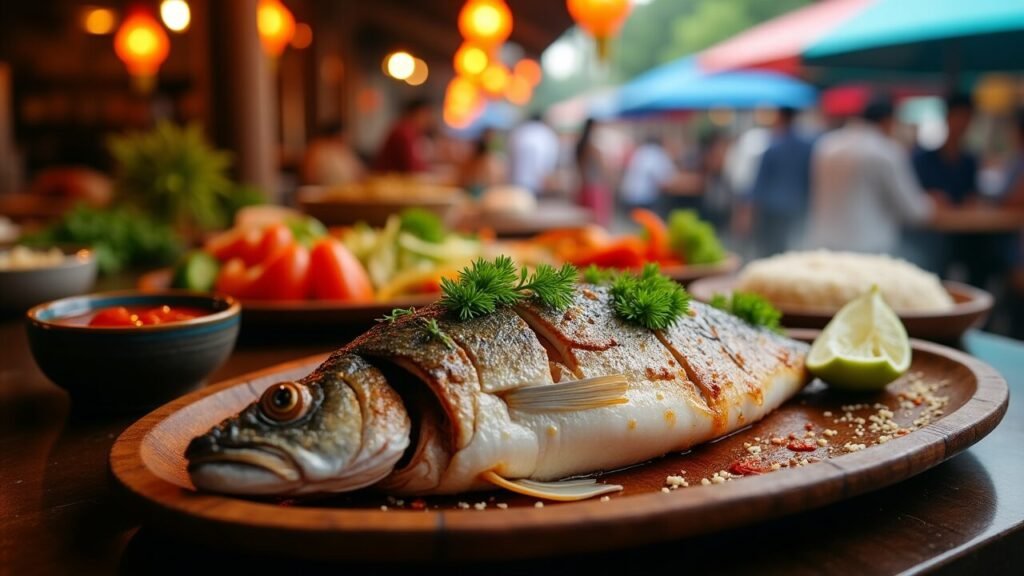
When it comes to Thai street food, few dishes are as inviting as Pla Pao (Salt-Crusted Grilled Fish). Walk through any bustling night market in Bangkok or Chiang Mai, and you’ll spot entire fish grilling over open flames, their bodies coated in a thick crust of coarse salt.
The salt crust isn’t just for show—it locks in moisture, ensuring the fish stays tender, juicy, and full of natural flavor. Inside, aromatic herbs like lemongrass and kaffir lime leaves infuse the flesh with a subtle fragrance, making every bite irresistible.
In this article, you’ll discover how to prepare Pla Pao at home, learn the secret behind its salt crust, and explore tips for serving it the authentic Thai way—with sticky rice, fresh vegetables, and a spicy dipping sauce.
2. Ingredients Breakdown
- Whole Fish (Tilapia, Sea Bass, or Snapper): Fresh fish is key. Tilapia is the most common street food choice, but sea bass adds extra richness.
- Coarse Sea Salt: Forms the crust that seals in juices. Fine salt won’t give the same effect.
- Rice Flour (optional): Mixed with salt to create a firmer crust.
- Lemongrass Stalks: Stuffed inside the fish to release citrusy aroma while grilling.
- Kaffir Lime Leaves: Adds depth and signature Thai fragrance.
- Fresh Dill (optional): Used in some regional variations for extra herbal notes.
- Thai Chili Dipping Sauce (Nam Jim Seafood): A zesty mix of garlic, chilies, lime, and fish sauce that perfectly complements the smoky fish.
Substitutions & Options:
- If you can’t find lemongrass, substitute with fresh parsley and lemon slices.
- Use rock salt if coarse sea salt isn’t available.
- For a lighter version, grill fillets instead of whole fish (though whole fish gives the best result).
3. Step-by-Step Instructions
- Prepare the Fish
- Clean and gut the fish, leaving the scales on (they help protect the flesh during grilling). Pat dry with paper towels.
- Season the Inside
- Stuff the cavity with lemongrass, kaffir lime leaves, and dill for aromatic steam during cooking.
- Make the Salt Crust
- Mix coarse sea salt with a little water (and rice flour if using) until it resembles damp sand. Press this mixture all over the fish until fully coated.
- Prepare the Grill
- Heat a charcoal grill (preferred) or gas grill to medium heat. Oil the grate lightly to prevent sticking.
- Grill the Fish
- Place the fish directly on the grill and cook for 30–40 minutes, turning once. The salt will harden into a crust while locking in moisture.
- Check for Doneness
- The fish is ready when the flesh flakes easily with a fork and is opaque throughout.
- Serve
- Crack open the salt crust, peel away the skin, and enjoy the juicy white fish with Nam Jim Seafood dipping sauce and sticky rice.
4. Tips and Variations
- Charcoal vs. Gas Grill: Charcoal gives the most authentic smoky flavor, but gas works fine indoors.
- Salt Thickness: Don’t skimp—the salt should be at least ¼ inch thick for best results.
- Fish Options: Tilapia, trout, or sea bream work beautifully.
- Dipping Sauces: Try with Thai green chili sauce, tamarind dipping sauce, or sweet chili sauce.
- Vegetarian Twist: Use thick slabs of eggplant or zucchini, salt-crusted and grilled for a plant-based version.
5. Serving Suggestions
Traditionally, Pla Pao is served as a communal dish:
- Sticky Rice (Khao Niew): The perfect complement to smoky fish.
- Fresh Vegetables: Lettuce leaves, cucumber, cabbage, and herbs for wrapping the fish.
- Soups & Salads: Pair with Som Tum (papaya salad) for a classic Thai combo.
- Drinks: Thai iced tea, beer, or sparkling water with lime.
- Presentation Tip: Serve the fish whole at the table and let guests flake off pieces for themselves.
6. Storage and Reheating Instructions
- Fridge: Store leftovers in an airtight container for up to 2 days.
- Freezer: Remove salt crust, debone, and freeze fish for up to 1 month.
- Reheating: Warm in a 350°F (175°C) oven for 10 minutes. Avoid microwaving as it dries out the fish.
7. Recipe Notes
- Best grilled outdoors to get authentic smoky flavor.
- Can be prepped in advance up to 6 hours by coating fish and keeping it chilled.
- Traditionally served with Nam Jim Seafood dipping sauce—don’t skip it!
8. Nutrition Information (Per Serving)
| Nutrient | Amount (approx.) |
|---|---|
| Calories | 280 kcal |
| Fat | 12 g |
| Saturated Fat | 3 g |
| Carbs | 2 g |
| Sugar | 1 g |
| Fiber | 0 g |
| Protein | 38 g |
| Sodium | 950 mg |
| Cholesterol | 95 mg |
| Calcium | 5% DV |
| Iron | 8% DV |
Nutrition information is an estimate and may vary based on specific ingredients used.
9. Recipe Card Summary
Course: Main Dish
Cuisine: Thai
Servings: 2–3
Prep Time: 15 minutes
Cook Time: 35 minutes
Total Time: 50 minutes
Ingredients:
- 1 whole tilapia or sea bass (about 1–1.5 lbs)
- 1 cup coarse sea salt
- 2 tbsp rice flour (optional)
- 2 stalks lemongrass
- 4 kaffir lime leaves
- Fresh dill (optional)
- Thai chili dipping sauce (Nam Jim Seafood)
Instructions:
- Clean and gut fish, leaving scales on.
- Stuff cavity with lemongrass, kaffir lime leaves, and dill.
- Mix salt with water (and flour) and coat fish evenly.
- Heat grill to medium and oil grates.
- Grill fish for 30–40 minutes, turning once.
- Crack open crust, peel skin, and serve with dipping sauce and sticky rice.
Notes:
- Use coarse salt only, fine salt won’t create a proper crust.
- Best grilled on charcoal for smoky flavor.
- Serve immediately for best taste.
🏷️ Diet Tags:
- Gluten-Free
- Dairy-Free
- High-Protein
- Low-Carb
🌿 Health Benefits:
- High in lean protein.
- Low in saturated fat.
- Rich in omega-3s (depending on fish choice).
- Fresh herbs add antioxidants and digestive benefits.
10. FAQs
1. Why do you leave the scales on the fish?
The scales protect the flesh and help hold the salt crust in place while grilling.
2. Can I make this in the oven?
Yes—bake at 400°F (200°C) for about 30–35 minutes.
3. Do you eat the salt crust?
No, the crust is discarded. It’s only for sealing in moisture.
4. What fish is best for Pla Pao?
Tilapia, sea bass, or snapper work best.
5. Is it very salty?
No, the salt doesn’t penetrate too deeply. It mainly flavors the skin and outer flesh.
11. Conclusion
Pla Pao (Salt-Crusted Grilled Fish) is a dish that captures the essence of Thai street food: smoky, fragrant, and deeply satisfying. With just a handful of ingredients and simple preparation, you can recreate this authentic market favorite at home.
Whether enjoyed with sticky rice and papaya salad or served on its own with dipping sauce, this dish is sure to impress your family and guests.
If you give this recipe a try, share your experience in the comments—I’d love to hear how your homemade Pla Pao turns out!