
Spaghetti and Sausage Recipe – Hearty Italian Comfort
Introduction
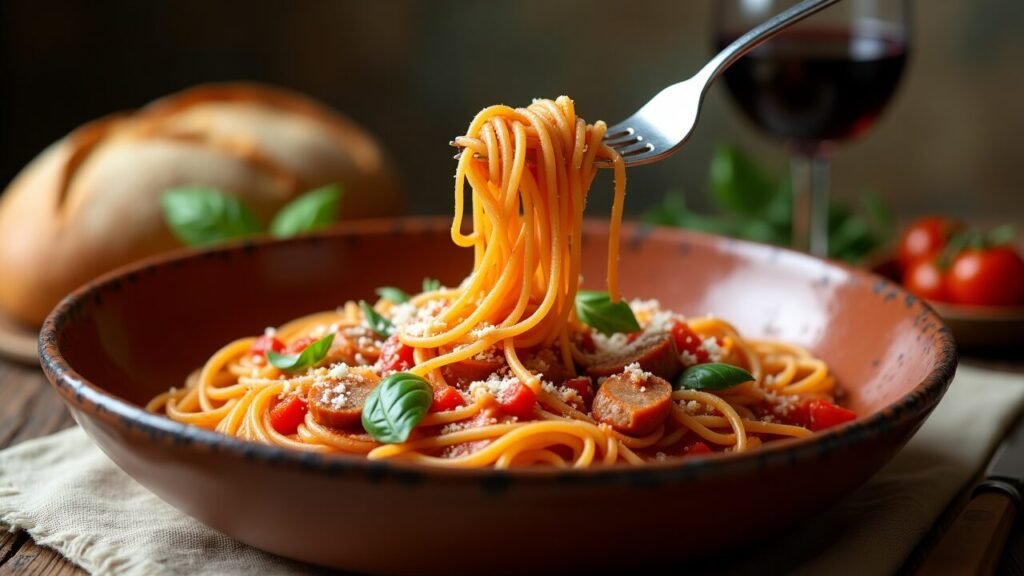
There’s something deeply satisfying about twirling perfectly cooked spaghetti around your fork, capturing tender pieces of golden-brown Italian sausage in a rich, aromatic tomato sauce that’s been simmering to perfection. This spaghetti and sausage recipe represents the heart of Italian-American comfort cooking – simple ingredients transformed through proper technique into a meal that feels like a warm hug from the inside out.
What makes this dish absolutely irresistible is how each component builds on the others to create layers of flavor that develop and deepen as they cook together. The Italian sausage releases its savory fat and spices into the sauce, while the onions caramelize to add natural sweetness that balances the acidity of the tomatoes. Every strand of pasta becomes coated in this rich, meaty sauce that clings beautifully and delivers satisfaction in every single bite.
This recipe succeeds because it honors traditional Italian techniques while remaining completely approachable for home cooks. The key is browning the sausage properly to develop deep flavor, building an aromatic base with onions and garlic, and allowing the sauce to simmer long enough for all the flavors to marry into something that’s much greater than the sum of its parts.
Whether you’re feeding a hungry family on a busy weeknight, looking for comfort food that never fails to satisfy, or wanting to master a classic that you’ll make again and again, this spaghetti and sausage delivers the kind of hearty, soul-warming meal that creates lasting memories around the dinner table.
Ingredients Breakdown
For the Sausage and Sauce:
- 1.5 pounds Italian sausage (mix of sweet and hot) – Use a combination for complex flavor, or adjust the ratio to your heat preference. Remove from casings if using links, or buy bulk sausage to save time.
- 3 tablespoons olive oil – For browning the sausage and sautéing vegetables. Use good quality extra virgin olive oil for best flavor.
- 1 large yellow onion, diced – Provides aromatic sweetness and helps build the flavor foundation. Yellow onions offer the best balance for this dish.
- 1 large red bell pepper, diced – Adds color, sweetness, and slight crunch that complements the sausage beautifully.
- 6 cloves garlic, minced – Essential for authentic Italian flavor. Fresh garlic provides aromatic depth that jarred garlic can’t match.
- 1/2 cup dry red wine – Deglazes the pan and adds complexity to the sauce. Choose something you’d drink – the flavor concentrates during cooking.
- 2 tablespoons tomato paste – Provides concentrated tomato flavor and helps thicken the sauce while adding rich color.
For the Tomato Base:
- 1 can (28 oz) crushed tomatoes – San Marzano tomatoes are ideal for their sweetness and low acidity, but any high-quality crushed tomatoes work well.
- 1 can (14 oz) diced tomatoes – Adds texture and fresh tomato flavor to complement the crushed tomatoes.
- 2 tablespoons fresh basil, chopped – Adds brightness and authentic Italian flavor. Fresh basil is essential for the best taste.
- 2 teaspoons dried oregano – Classic Italian herb that pairs perfectly with tomatoes and sausage.
- 1 teaspoon dried thyme – Adds earthy, aromatic notes that enhance the overall flavor profile.
- 1 bay leaf – Provides subtle complexity. Remove before serving.
- 1 teaspoon sugar – Balances the acidity of the tomatoes without making the sauce sweet.
- 2 teaspoons salt – Start with this amount and adjust as the sauce reduces and flavors concentrate.
- 1/2 teaspoon black pepper – Freshly ground provides the best flavor and gentle heat.
- 1/4 teaspoon red pepper flakes – Optional, but adds warmth that complements the sausage spices.
For the Pasta and Finishing:
- 1 pound spaghetti – Use good quality pasta that will hold up to the hearty sauce. Bronze-die pasta has better texture for sauce adhesion.
- Salt for pasta water – Use plenty of salt – the water should taste like seawater for properly seasoned pasta.
- 1/2 cup fresh basil leaves – For garnish and fresh flavor contrast against the rich sauce.
- 1 cup Parmigiano-Reggiano, freshly grated – Use authentic Parmigiano-Reggiano and grate it fresh for the best flavor and melting properties.
- 3 tablespoons fresh parsley, chopped – Adds color and fresh herbal notes that brighten the rich sauce.
- 2 tablespoons butter – Optional, but adds richness and helps bind the sauce to the pasta.
Quality Ingredient Notes: Choose Italian sausage with good spice balance and quality meat. Look for sausages made by reputable Italian delis or specialty shops when possible, as the spice blends are usually superior to generic grocery store versions.
For the tomatoes, San Marzano varieties provide the best flavor due to their natural sweetness and lower acidity. If unavailable, choose the highest quality canned tomatoes you can find – avoid anything with added calcium chloride, which can make tomatoes tough.
Wine Selection: Use a red wine you’d actually drink – something medium-bodied like Chianti, Sangiovese, or even a good Cabernet Sauvignon. The alcohol cooks off, but the flavor concentrates, so quality matters for the final taste.
Step-by-Step Instructions
Step 1: Prepare the Sausage (8-10 minutes) If using sausage links, remove the casings by slicing lengthwise and peeling away the casing, then break the sausage into bite-sized chunks. Heat 2 tablespoons of olive oil in a large, heavy-bottomed pot or Dutch oven over medium-high heat. Add the sausage pieces and brown them thoroughly on all sides, about 6-8 minutes total. Don’t stir too frequently – let them develop a beautiful golden-brown crust that adds tremendous flavor. Remove the browned sausage with a slotted spoon and set aside, leaving the rendered fat in the pot.
Step 2: Build the Aromatic Base (8-10 minutes) Reduce heat to medium and add the remaining tablespoon of olive oil if needed. Add the diced onion and red bell pepper to the same pot, cooking in the flavorful sausage fat until softened and lightly caramelized, about 6-8 minutes. Scrape up any browned bits from the bottom of the pot – these add incredible depth to the sauce. Add the minced garlic and cook for another minute until fragrant, being careful not to burn it.
Step 3: Deglaze and Add Tomato Paste (3-4 minutes) Pour in the red wine, scraping up any remaining browned bits from the bottom of the pot. Let the wine simmer for 2-3 minutes to cook off the alcohol and reduce slightly. Add the tomato paste and stir constantly for about 1 minute until it darkens slightly and becomes fragrant. This step develops the tomato paste’s flavor and prevents any raw taste in the finished sauce.
Step 4: Add Tomatoes and Seasonings (5 minutes) Add the crushed tomatoes, diced tomatoes with their juices, chopped fresh basil, oregano, thyme, bay leaf, sugar, salt, pepper, and red pepper flakes if using. Return the browned sausage to the pot along with any accumulated juices. Stir everything together and bring to a gentle simmer. The sauce should bubble lightly but not boil vigorously, which can make it bitter.
Step 5: Simmer and Develop Flavors (25-30 minutes) Reduce heat to low and let the sauce simmer gently, stirring occasionally, for 25-30 minutes. The sauce should reduce slightly and the flavors should meld beautifully. Taste and adjust seasoning as needed – you might want more salt, a pinch more sugar, or additional herbs. The sausage should be cooked through and tender, and the sauce should have a rich, complex flavor.
Step 6: Cook the Pasta (8-12 minutes) About 15 minutes before the sauce finishes, bring a large pot of heavily salted water to a rolling boil. Add the spaghetti and cook according to package directions until al dente – it should have a slight bite since it will continue cooking when combined with the hot sauce. Stir occasionally to prevent sticking. Reserve 1 cup of the pasta cooking water before draining.
Step 7: Combine Pasta and Sauce (3-5 minutes) Remove the bay leaf from the sauce. Add the drained pasta to the pot with the sausage sauce, tossing gently to combine. If the sauce seems too thick, add some reserved pasta water a little at a time until you achieve the perfect consistency. The sauce should coat the pasta without being soupy. If using butter, add it now and toss until melted and incorporated.
Step 8: Final Touches and Serve (2-3 minutes) Remove from heat and taste one final time for seasoning adjustments. Serve immediately in warmed bowls, topped with freshly grated Parmigiano-Reggiano, fresh basil leaves, and chopped parsley. The contrast of the hot, hearty pasta with the cool, fresh herbs and sharp cheese creates the perfect balance of flavors and temperatures.
Tips and Variations
Sausage Cooking Mastery:
The key to exceptional flavor is properly browning the sausage to develop a deep, caramelized crust. Don’t rush this step or overcrowd the pan, which will cause steaming instead of browning. The rendered fat from the sausage becomes the foundation of the sauce’s flavor, so don’t discard it.
Different Italian sausage varieties offer unique flavor profiles – sweet sausage with fennel, hot sausage with red pepper, or even specialty varieties with wine or herbs. Experiment to find your favorite combination.
For even browning, break the sausage into uniform pieces. If the pieces are too small, they’ll cook too quickly and may become dry. Aim for bite-sized chunks that will hold together in the sauce.
Sauce Development Techniques:
The secret to deeply flavorful sauce is layering flavors at each step. The wine adds acidity and complexity, the tomato paste provides concentrated flavor, and the long simmering time allows all components to marry beautifully.
Don’t skip the wine deglazing step, even if you don’t drink alcohol – the alcohol cooks off, leaving behind concentrated flavor compounds that enhance the overall taste.
If your sauce seems too acidic, add a bit more sugar. If it’s too sweet, add a splash of red wine vinegar or lemon juice to brighten it up.
Delicious Variations:
Spicy Arrabbiata Style: Increase the red pepper flakes and add diced jalapeños or crushed red pepper for serious heat lovers.
Vegetable-Heavy Version: Add diced zucchini, mushrooms, or eggplant during the vegetable cooking stage for extra nutrition and Mediterranean flavors.
Cream-Enhanced: Stir in 1/2 cup heavy cream during the last 5 minutes of cooking for a richer, more indulgent sauce.
Different Proteins: Try this recipe with Italian chicken sausage for a lighter version, or add meatballs along with the sausage for extra heartiness.
Regional Variations: Add olives and capers for a Puttanesca-style twist, or include roasted red peppers and artichoke hearts for Mediterranean flair.
Herb Enhancements: Fresh rosemary, sage, or marjoram can replace or supplement the standard herbs for different flavor profiles.
Serving Suggestions
This hearty spaghetti and sausage is substantial enough to be a complete meal, but the right accompaniments can enhance the dining experience and create a memorable Italian feast.
Traditional Italian Pairings: Crusty Italian bread or garlic bread is essential for sopping up every drop of that delicious sauce. A classic Caesar salad or simple arugula salad with lemon vinaigrette provides fresh contrast to the rich pasta while adding color and nutrition to the meal.
Antipasto selections like olives, cured meats, and marinated vegetables make excellent starters that set the Italian mood without overwhelming the palate before the main course.
Wine Pairings: Italian red wines are the natural choice – try Chianti Classico, Sangiovese, or Barbera d’Alba. The acidity in these wines complements the tomato sauce while their body can stand up to the rich sausage. For white wine lovers, a crisp Pinot Grigio or Vermentino provides refreshing contrast.
Vegetable Sides: Roasted vegetables like zucchini, bell peppers, or eggplant complement the Italian flavors without adding excessive richness. Sautéed spinach with garlic or braised broccoli rabe add nutrients and authentic Italian vegetable preparations.
Family-Style Presentation: Serve the pasta family-style in a large, warmed serving bowl with tongs for easy serving. Provide small bowls of grated cheese, red pepper flakes, and extra fresh herbs so everyone can customize their portions.
Special Occasion Touches: For entertaining, consider starting with a light soup like Italian wedding soup or minestrone, followed by the pasta as a primi piatti course, with a simple grilled protein and vegetables as the second course.
Storage and Reheating Instructions
Proper Storage Methods: This spaghetti and sausage actually improves in flavor after sitting overnight, as all the ingredients have time to meld together. Cool the dish completely before storing in airtight containers in the refrigerator for up to 4 days.
If possible, store the pasta and sauce separately to prevent the pasta from becoming mushy. However, if already combined, the dish reheats well with proper technique.
Freezing Guidelines: The sauce freezes beautifully for up to 3 months. Cool completely, then freeze in portion-sized containers for easy meal planning. However, previously cooked pasta doesn’t freeze as well, so consider freezing just the sauce and cooking fresh pasta when ready to serve.
If freezing the complete dish, slightly undercook the pasta initially as it will continue to soften during freezing and reheating.
Reheating for Best Results: For stovetop reheating, place in a heavy-bottomed pot over medium-low heat, stirring gently and frequently. Add splashes of water, broth, or wine to restore the proper consistency as the dish heats through.
Microwave reheating works for individual portions – use 50% power and heat in 1-minute intervals, stirring between each interval to ensure even heating.
Quality Maintenance Tips: The sauce may thicken considerably during storage, which is normal. Thin it gradually with warm water, broth, or wine until you reach the desired consistency.
Fresh herbs lose their vibrancy during storage, so consider stirring in fresh basil and parsley when reheating to brighten the flavors and restore that fresh taste.
Recipe Notes
Equipment Recommendations: A heavy-bottomed Dutch oven or large pot is ideal for even heat distribution and preventing scorching during the long simmering time. The pot should be large enough to accommodate both the sauce and pasta for the final combining step.
A large pot for cooking pasta is essential – the pasta needs plenty of room to move freely and cook evenly.
Ingredient Quality Impact: High-quality Italian sausage makes a noticeable difference in the final flavor. Look for sausages with good spice balance and minimal fillers. Local Italian delis often carry superior products compared to generic grocery store options.
Good quality canned tomatoes are worth the extra cost. San Marzano tomatoes provide superior sweetness and lower acidity, but any premium canned tomatoes will improve the final result.
Timing and Make-Ahead Tips: This dish can be made completely ahead of time and actually improves in flavor when made a day in advance. The sauce can be made up to 3 days ahead and refrigerated, then simply reheated while you cook fresh pasta.
For entertaining, make the sauce in the morning or even the day before, then cook the pasta and combine just before serving.
Consistency Preferences: Some prefer a chunkier sauce with visible pieces of vegetables and sausage, while others like a smoother consistency. Adjust by varying the size of your vegetable dice and how much you break up the sausage during cooking.
Nutrition Information (Per Serving)
| Nutrient | Amount |
|---|---|
| Calories | 520 |
| Total Fat | 22g |
| Saturated Fat | 8g |
| Carbohydrates | 58g |
| Sugar | 12g |
| Fiber | 5g |
| Protein | 25g |
| Sodium | 980mg |
| Cholesterol | 65mg |
| Iron | 4.5mg |
| Vitamin C | 45mg |
Nutrition information is an estimate and may vary based on specific ingredients used.
Recipe Card Summary
Course: Main Dish, Pasta
Cuisine: Italian-American
Servings: 6
Prep Time: 15 minutes
Cook Time: 45 minutes
Total Time: 1 hour
Ingredients:
For the Sauce:
- 1.5 pounds Italian sausage (sweet and hot mix)
- 3 tablespoons olive oil
- 1 large yellow onion, diced
- 1 large red bell pepper, diced
- 6 cloves garlic, minced
- 1/2 cup dry red wine
- 2 tablespoons tomato paste
- 1 can (28 oz) crushed tomatoes
- 1 can (14 oz) diced tomatoes
- 2 tablespoons fresh basil, chopped
- 2 teaspoons dried oregano
- 1 teaspoon dried thyme
- 1 bay leaf
- 1 teaspoon sugar
- 2 teaspoons salt
- 1/2 teaspoon black pepper
- 1/4 teaspoon red pepper flakes (optional)
For Serving:
- 1 pound spaghetti
- 1/2 cup fresh basil leaves
- 1 cup Parmigiano-Reggiano, grated
- 3 tablespoons fresh parsley, chopped
- 2 tablespoons butter (optional)
Instructions:
- Brown sausage pieces in large pot until golden. Remove and set aside.
- Cook onion and bell pepper in same pot until softened, 6-8 minutes.
- Add garlic, cook 1 minute. Add wine, cook 2-3 minutes.
- Add tomato paste, cook 1 minute until fragrant.
- Add tomatoes, herbs, seasonings, and sausage. Simmer 25-30 minutes.
- Cook pasta until al dente. Reserve pasta water before draining.
- Combine pasta with sauce, adding pasta water as needed.
- Remove bay leaf, finish with butter if using.
- Serve with fresh herbs, cheese, and parsley.
Notes:
- Brown sausage well for maximum flavor
- Use good quality Italian sausage and tomatoes
- Sauce improves in flavor when made ahead
- Reserve pasta water to adjust consistency
Nutrition: 520 calories, 25g protein, 58g carbs, 5g fiber per serving
Diet Tags
- High Protein
- Comfort Food
- Italian Cuisine
- Family-Friendly
- Make-Ahead Friendly
- Freezer Friendly
- One-Pot Meal
- Crowd Pleaser
- Hearty and Filling
- Traditional Recipe
Health Benefits
This spaghetti and sausage dish provides substantial nutritional benefits alongside its incredible comfort food appeal. The Italian sausage delivers high-quality protein with all essential amino acids, while also providing important B vitamins, particularly B12, which supports nervous system function and red blood cell formation.
The tomatoes contribute significant amounts of lycopene, a powerful antioxidant that supports heart health and may help protect against certain cancers. Cooking tomatoes actually increases lycopene bioavailability, making this sauce more nutritious than raw tomatoes. The tomatoes also provide vitamin C, potassium, and folate.
The bell peppers add additional vitamin C – even more than citrus fruits – along with beta-carotene for eye health and antioxidants that support immune function. The onions and garlic provide sulfur compounds that have anti-inflammatory properties and may support cardiovascular health.
The herbs used throughout the dish – basil, oregano, and thyme – contain beneficial plant compounds with antioxidant and anti-inflammatory properties. Fresh herbs also provide vitamins A and K.
The pasta provides complex carbohydrates for sustained energy, and when made from enriched flour, contributes B vitamins and iron. The combination of protein, carbohydrates, and healthy fats makes this dish particularly satisfying and helps maintain stable blood sugar levels.
Frequently Asked Questions
1. Can I use turkey or chicken sausage instead of pork sausage? Absolutely! Turkey or chicken Italian sausage work wonderfully and will reduce the overall fat content. However, you may need to add a tablespoon of olive oil during browning since these leaner sausages don’t render as much fat. The flavor will be lighter but still delicious.
2. What if I can’t find Italian sausage? You can make your own seasoning blend using ground pork, fennel seeds, garlic powder, paprika, and red pepper flakes. Alternatively, use regular ground pork or beef and add Italian seasoning, garlic, and fennel seeds to the sauce for similar flavors.
3. How do I prevent the pasta from becoming mushy? Cook the pasta until just al dente (slightly firm to the bite) since it will continue cooking when combined with the hot sauce. Also, don’t let the combined dish sit too long before serving, as the pasta continues to absorb sauce and can become soft.
4. Can I make this dish vegetarian? Yes! Replace the sausage with plant-based Italian sausage, or use a combination of mushrooms and eggplant for meaty texture. You might want to add extra herbs and seasonings to compensate for the missing sausage spices.
5. Why does my sauce taste too acidic? Canned tomatoes can vary in acidity levels. Balance this by adding a teaspoon of sugar at a time until the acidity mellows. You can also add a pinch of baking soda, which neutralizes acid, but use sparingly as too much can make the sauce taste soapy.
Final Thoughts
This spaghetti and sausage recipe embodies everything wonderful about Italian-American comfort cooking – it’s hearty, satisfying, and brings families together around the dinner table for a meal that feels both familiar and special. The beauty of this dish lies in its simplicity and the way basic ingredients transform into something much greater than their individual parts through proper technique and patient cooking.
What makes this recipe truly valuable is how it teaches fundamental cooking skills while producing consistently delicious results. You’ll learn proper browning techniques, how to build flavor layers, and the importance of letting sauces develop over time – skills that will serve you well in countless other dishes.
The flexibility of this recipe means it will never become boring in your dinner rotation. You can adapt it to seasonal vegetables, adjust spice levels for your family’s preferences, or experiment with different sausage varieties to create your own signature version.
This is the kind of recipe that gets passed down through generations, with each cook adding their own personal touches while maintaining the soul of the original dish. It’s perfect for feeding a crowd, makes excellent leftovers, and always delivers the kind of satisfaction that only true comfort food can provide.
I encourage you to make this recipe your own by experimenting with different vegetables, herbs, or sausage combinations. The foundation remains the same, but personalizing the flavors makes it uniquely yours and creates new family traditions.
Please share your spaghetti and sausage experiences in the comments below. I’d love to hear about your favorite variations, any family secrets you incorporated, and how this dish has become part of your regular meal rotation. Whether it becomes your go-to weeknight dinner or your signature dish for entertaining, I hope it brings as much joy and satisfaction to your table as it has to kitchens everywhere!