
Tom Kha Gai – Authentic Chicken in Coconut Galangal Soup
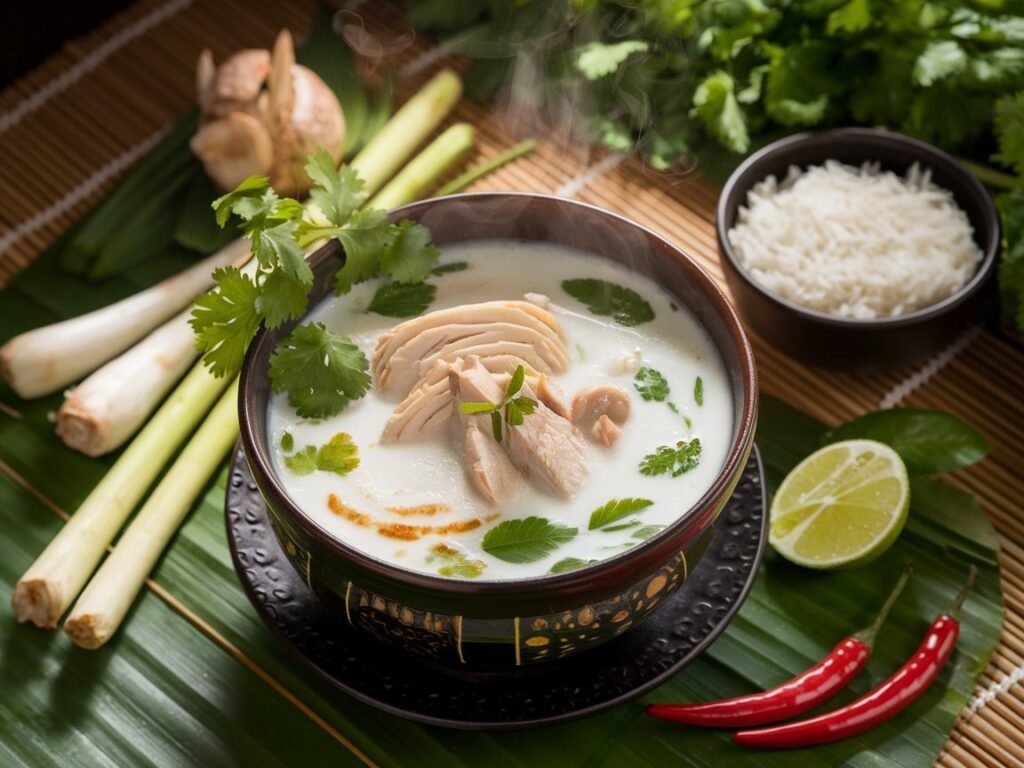
Nothing quite compares to the first spoonful of Tom Kha Gai on a chilly evening. This Thai masterpiece wraps you in a warm embrace of creamy coconut milk, fragrant herbs, and tender chicken that seems to melt away all your worries. Unlike its fiery cousin Tom Yum, Tom Kha Gai takes a gentler approach – it’s comfort food with an exotic twist that somehow manages to be both soothing and exciting at the same time.
What makes this soup absolutely magical is how it balances rich coconut cream with bright, aromatic herbs like galangal, lemongrass, and lime leaves. The result is a bowl of liquid silk that’s simultaneously creamy and light, sweet and tangy, mild and aromatic. It’s the kind of soup that converts people who think they don’t like coconut, and it’s become my go-to recipe when I want to impress guests without spending hours in the kitchen.
The beauty of Tom Kha Gai lies in its deceptive simplicity. While the ingredient list might seem exotic, the cooking technique is straightforward, and the results are consistently restaurant-quality. In just 30 minutes, you can transform everyday chicken into something that tastes like it came from the best Thai restaurant in town. This recipe will teach you not just how to make Tom Kha Gai, but how to understand the delicate balance of flavors that makes Thai cuisine so captivating.
Ingredients Breakdown
For the Aromatic Foundation:
- 2 cans (14 oz each) coconut milk – Use full-fat coconut milk for the richest texture. Thai brands like Chaokoh or Mae Ploy give the most authentic results. Shake the can before opening to mix the cream and liquid.
- 2 cups chicken broth – High-quality broth makes a noticeable difference. Homemade is ideal, but store-bought works perfectly fine.
- 4 stalks fresh lemongrass – Look for firm, pale yellow stalks. Bruise them with a knife handle to release their citrusy oils before adding to the soup.
- 2-inch piece fresh galangal – This is the star ingredient that gives Tom Kha its distinctive flavor. It’s more floral and citrusy than ginger. Slice thinly for maximum flavor release.
- 8-10 fresh kaffir lime leaves – These provide an unmistakable citrusy fragrance. Fresh is vastly superior to dried, though frozen works in a pinch.
For the Protein and Vegetables:
- 1.5 pounds boneless chicken thighs – Thighs stay more tender than breasts and add richness to the broth. Cut into bite-sized pieces for even cooking.
- 8 oz mixed mushrooms – Oyster mushrooms are traditional, but shiitake, baby bella, or button mushrooms all work beautifully. Slice them thickly so they hold their shape.
- 1 medium onion – Cut into thin wedges. It adds subtle sweetness and texture without overwhelming the delicate flavors.
- 2 medium tomatoes – Roma tomatoes work best. Cut into wedges and add them for a touch of acidity and color.
For Seasoning and Balance:
- 3-4 Thai bird’s eye chilies – These provide gentle heat. Slice them to release more spice, or keep them whole for milder flavor.
- 3 tablespoons fresh lime juice – Always use fresh lime juice. This brightens the entire soup and balances the richness of the coconut milk.
- 3 tablespoons fish sauce – This is crucial for authentic umami flavor. Start with less and add more to taste.
- 2 tablespoons palm sugar or brown sugar – Just enough to balance the salty and sour elements without making the soup sweet.
- Salt to taste – Usually just a pinch, as fish sauce provides most of the saltiness.
For Garnish:
- Fresh cilantro leaves – Essential for freshness and color
- Thai basil leaves – Different from regular basil, with a lovely anise-like flavor
- Lime wedges – For individual seasoning at the table
- Sliced red chilies – For extra heat and beautiful presentation
Common Substitutions: If galangal is unavailable, substitute with fresh ginger using about 2/3 the amount. For kaffir lime leaves, lime zest works but changes the flavor profile significantly. Vegetarians can replace chicken with firm tofu or mixed vegetables and use vegetable broth. Light coconut milk can be used for a lower-fat version, though the soup won’t be as rich.
Step-by-Step Instructions
Step 1: Prepare Your Aromatics Begin by preparing all your aromatic ingredients, as they need time to infuse the coconut milk. Using the flat side of a large knife, gently bruise the lemongrass stalks – you want to crack them open without cutting through completely. Slice your galangal into thin rounds, about 1/8 inch thick. Tear the kaffir lime leaves slightly to help release their oils. These aromatics will stay in the soup for flavor but aren’t typically eaten, so warn your guests.
Step 2: Create the Coconut Base In a large pot or wok, pour in one can of coconut milk and bring it to a gentle simmer over medium heat. Don’t let it boil vigorously as this can cause the coconut milk to separate. Once it’s simmering, add your bruised lemongrass, sliced galangal, and torn kaffir lime leaves. Let this mixture infuse for about 5 minutes, stirring occasionally. The kitchen should start filling with an incredible aroma.
Step 3: Add the Broth and Protein Pour in the chicken broth and the second can of coconut milk, stirring gently to combine. Bring the mixture back to a gentle simmer. Add your chicken pieces, making sure they’re evenly distributed in the pot. Let the chicken cook for about 8-10 minutes, stirring occasionally, until the pieces are nearly cooked through. The gentle simmering ensures tender, juicy chicken.
Step 4: Add Vegetables and Build Flavor Add your sliced mushrooms and onion wedges to the pot. These vegetables need about 5 minutes to cook through and absorb the flavors. While they’re cooking, add your seasonings: fish sauce, palm sugar, and chilies. Start conservatively with the fish sauce – you can always add more, but you can’t take it back.
Step 5: Final Additions and Seasoning Add the tomato wedges and let them cook for about 2-3 minutes until they just start to soften. Now comes the crucial tasting and adjusting phase. Add the lime juice and taste your soup. It should be creamy and rich with a bright, tangy finish. Adjust with more fish sauce for saltiness, lime juice for sourness, or palm sugar for balance.
Step 6: Final Check and Rest Remove the pot from heat and let it rest for a minute or two. This allows all the flavors to meld together beautifully. Do one final taste and adjust if needed. The soup should be aromatic, creamy, and perfectly balanced between sweet, salty, and sour elements.
Step 7: Serve with Style Ladle the soup into bowls, making sure each serving gets plenty of chicken, mushrooms, and aromatic herbs. Garnish generously with fresh cilantro and Thai basil leaves. Serve immediately with lime wedges on the side so everyone can adjust the brightness to their liking.
Tips and Variations
Expert Tips for Perfect Tom Kha Gai:
- Never let the coconut milk boil vigorously – gentle simmering prevents separation and maintains the silky texture
- Always taste and adjust at the end – the balance of flavors should be harmonious, not dominated by any single element
- Use chicken thighs instead of breasts for more flavor and tenderness
- Fresh aromatics are non-negotiable – dried herbs simply can’t provide the same depth of flavor
- Add lime juice off the heat to preserve its bright, fresh flavor
Delicious Variations: Tom Kha Gai with Seafood: Replace half the chicken with shrimp, scallops, or fish fillets. Add seafood in the last 3-4 minutes of cooking to prevent overcooking.
Vegetarian Tom Kha: Use firm tofu, mixed vegetables like baby corn, snow peas, and bell peppers. Vegetable broth replaces chicken broth, and you can omit fish sauce or use vegetarian fish sauce substitute.
Tom Kha with Mixed Proteins: Combine chicken with shrimp or add sliced pork for variety. Adjust cooking times accordingly.
Spicier Version: Double the chilies and add some fresh Thai chili paste (nam prik pao) for extra heat and depth.
Lighter Version: Use light coconut milk and increase the chicken broth slightly. The soup will be less rich but still flavorful.
Restaurant-Style Richness: Use coconut cream instead of coconut milk for ultra-rich, restaurant-quality texture.
Serving Suggestions
Tom Kha Gai works beautifully as both an appetizer and a main course. When serving as a starter, offer smaller portions in elegant bowls alongside other Thai dishes. As a main course, it pairs perfectly with jasmine rice to create a satisfying, complete meal.
Perfect Accompaniments:
- Steamed jasmine rice or coconut rice to soak up the delicious broth
- Fresh Thai spring rolls for textural contrast
- Som tam (green papaya salad) to balance the richness
- Grilled or fried fish with Thai herbs
- Pad thai or other stir-fried noodle dishes
Presentation Ideas: Serve in deep ceramic bowls to showcase the beautiful creamy color. Arrange fresh herbs and lime wedges on a small side plate. Provide Asian soup spoons and chopsticks or forks for the chicken and vegetables. A small bowl of jasmine rice on the side completes the authentic presentation.
Drink Pairings: Thai iced tea provides a sweet contrast to the soup’s complex flavors. Light, crisp white wines like Sauvignon Blanc or Pinot Grigio complement the creamy richness without competing. For beer lovers, light lagers or wheat beers work wonderfully. Non-alcoholic options include coconut water, lychee juice, or jasmine tea.
Theme Night Ideas: Create a Thai feast by serving Tom Kha Gai with pad thai, green curry, and mango sticky rice for dessert. It’s also perfect for a cozy winter dinner party, offering something exotic yet comforting.
Storage and Reheating Instructions
Refrigerator Storage: Store leftover Tom Kha Gai in airtight containers in the refrigerator for up to 3 days. The flavors actually develop and deepen overnight, making leftovers exceptionally tasty. The coconut milk may separate slightly, but this is normal and will recombine when reheated.
Freezer Storage: Tom Kha Gai freezes reasonably well for up to 2 months. The texture of the chicken may change slightly, becoming a bit more firm, but the flavors remain excellent. Freeze in portion-sized containers for convenient single servings.
Reheating Instructions: Stovetop (Best Method): Transfer to a saucepan and reheat gently over medium-low heat, stirring occasionally. Don’t let it boil as this can cause the coconut milk to separate. Heat until just warmed through, about 5-6 minutes.
Microwave: Heat in 45-second intervals, stirring between each interval to ensure even heating. This usually takes 2-3 minutes total, depending on portion size.
Texture Recovery: If the coconut milk has separated during storage, simply stir gently while reheating and it will recombine. You may want to add a splash of fresh lime juice to brighten the flavors after reheating.
Recipe Notes
- Make-Ahead Tip: You can prepare all ingredients and even make the soup base up to a day in advance. Add the lime juice just before serving for the freshest flavor.
- Equipment: A large, heavy-bottomed pot or wok works best for even heat distribution and preventing scorching.
- Ingredient Quality: Since this soup relies on relatively few ingredients, using high-quality coconut milk and fresh aromatics makes a significant difference in the final result.
- Serving Size: This recipe generously serves 4-6 as a main course with rice, or 6-8 as an appetizer.
- Leftover Magic: The soup tastes even better the next day as flavors meld, making it perfect for meal prep.
- Customization: Once you master the basic recipe, feel free to adjust the vegetable additions based on what you have available – baby corn, bell peppers, and snap peas all work beautifully.
Nutrition Information (Per Serving)
| Nutrient | Amount |
|---|---|
| Calories | 295 |
| Total Fat | 22g |
| Saturated Fat | 16g |
| Cholesterol | 95mg |
| Sodium | 980mg |
| Total Carbohydrates | 8g |
| Dietary Fiber | 2g |
| Sugars | 5g |
| Protein | 28g |
| Calcium | 65mg |
| Iron | 4mg |
| Vitamin C | 15mg |
| Potassium | 450mg |
Nutrition information is an estimate and may vary based on specific ingredients used.
Recipe Card Summary
Course: Soup, Main Dish Cuisine: Thai Servings: 6 Prep Time: 15 minutes Cook Time: 25 minutes Total Time: 40 minutes
Ingredients:
- 2 cans (14 oz each) coconut milk
- 2 cups chicken broth
- 4 stalks fresh lemongrass, bruised
- 2-inch piece fresh galangal, sliced
- 8-10 fresh kaffir lime leaves, torn
- 1.5 pounds boneless chicken thighs, cubed
- 8 oz mixed mushrooms, sliced
- 1 medium onion, cut into wedges
- 2 medium tomatoes, cut into wedges
- 3-4 Thai bird’s eye chilies
- 3 tablespoons fresh lime juice
- 3 tablespoons fish sauce
- 2 tablespoons palm sugar
- Salt to taste
- Fresh cilantro and Thai basil for garnish
- Lime wedges for serving
Instructions:
- Bruise lemongrass, slice galangal, tear lime leaves
- Simmer 1 can coconut milk with aromatics for 5 minutes
- Add broth, remaining coconut milk, and chicken; cook 8-10 minutes
- Add mushrooms and onions, cook 5 minutes
- Season with fish sauce, palm sugar, and chilies
- Add tomatoes and cook 2-3 minutes
- Add lime juice, adjust seasonings, and serve with garnishes
Notes:
- Don’t boil coconut milk vigorously to prevent separation
- Chicken thighs are more tender than breasts
- Fresh aromatics are essential for authentic flavor
- Adjust lime juice and fish sauce to taste at the end
Diet Tags
Dietary Classifications:
- Gluten-Free
- Dairy-Free
- Keto-Friendly
- Paleo-Friendly (omit palm sugar)
- Low-Carb
- Whole30 Compliant (with modifications)
Health Benefits
Nutritional Advantages: Tom Kha Gai offers numerous health benefits wrapped in comfort food appeal. The coconut milk provides healthy medium-chain fatty acids that are easily metabolized by the body for quick energy. These fats also help with nutrient absorption and can support healthy cholesterol levels.
The aromatic herbs like galangal, lemongrass, and lime leaves are powerhouses of antioxidants and anti-inflammatory compounds. Galangal has been used in traditional medicine for digestive health and reducing inflammation. Lemongrass contains compounds that may help lower cholesterol and support immune function.
The high protein content from chicken supports muscle health and keeps you satisfied longer. The soup is naturally low in carbohydrates, making it excellent for those following ketogenic or low-carb diets. The warming spices can help boost circulation and provide comfort during cold seasons.
Frequently Asked Questions
1. Can I make Tom Kha Gai ahead of time? Absolutely! Tom Kha Gai actually improves in flavor when made a day ahead. The aromatics have more time to infuse the broth, creating deeper, more complex flavors. Store it covered in the refrigerator and gently reheat before serving. Just add fresh lime juice before serving to brighten the flavors.
2. What’s the difference between Tom Kha Gai and Tom Yum? Tom Kha Gai is creamy and mild, made with coconut milk as the base, while Tom Yum is clear, spicy, and sour without coconut milk. Tom Kha focuses on aromatic herbs and gentle flavors, whereas Tom Yum is bold, hot, and tangy. Both use similar aromatics but create completely different flavor profiles.
3. Can I use coconut cream instead of coconut milk? Yes, but you’ll need to thin it out with additional chicken broth. Coconut cream will make the soup richer and thicker, which many people prefer. Use about 1 can of coconut cream plus 3-4 cups of broth instead of the coconut milk and broth combination in the recipe.
4. Why does my coconut milk separate and how do I fix it? Coconut milk separates when it gets too hot too quickly. To prevent this, heat it gently and don’t let it boil vigorously. If it does separate, simply stir gently and continue cooking – it usually comes back together. Some separation is normal and doesn’t affect the taste.
5. Can I substitute the galangal with ginger? While ginger can substitute for galangal, the flavor will be noticeably different. Use about 2/3 the amount of fresh ginger as called for galangal. Galangal has a more citrusy, floral taste compared to ginger’s warm spiciness, but the soup will still be delicious with ginger.
Final Thoughts
Tom Kha Gai represents the gentle, nurturing side of Thai cuisine that often gets overshadowed by its spicier counterparts. This soup has the remarkable ability to comfort and excite simultaneously – the rich coconut base soothes while the aromatic herbs awaken your senses in the most delightful way.
What I love most about this recipe is how it transforms simple, accessible ingredients into something that feels both exotic and familiar. The technique is forgiving, making it perfect for home cooks who want to explore Thai flavors without intimidation. Once you master the basic balance of coconut, aromatics, and seasonings, you’ll find yourself craving this soup regularly.
The versatility of Tom Kha Gai makes it a valuable addition to any home cook’s repertoire. It’s elegant enough for dinner parties yet comforting enough for weeknight dinners. The leftovers are even better than the original, and the recipe scales up easily for larger gatherings.
Whether you’re looking to expand your culinary horizons, seeking comfort food with an exotic twist, or simply wanting to create something special for family and friends, Tom Kha Gai delivers on every level. The combination of creamy coconut, tender chicken, and fragrant herbs creates an experience that’s both memorable and deeply satisfying.
Give this recipe a try and let me know how it turns out for you in the comments below. I love hearing about your variations and personal touches – Thai cooking is wonderfully adaptable, and I encourage you to make this soup your own. Whether it becomes your new comfort food or your signature dish for impressing guests, Tom Kha Gai is sure to earn a permanent place in your recipe collection.