
Tom Yum Goong – Authentic Spicy & Sour Thai Shrimp Soup
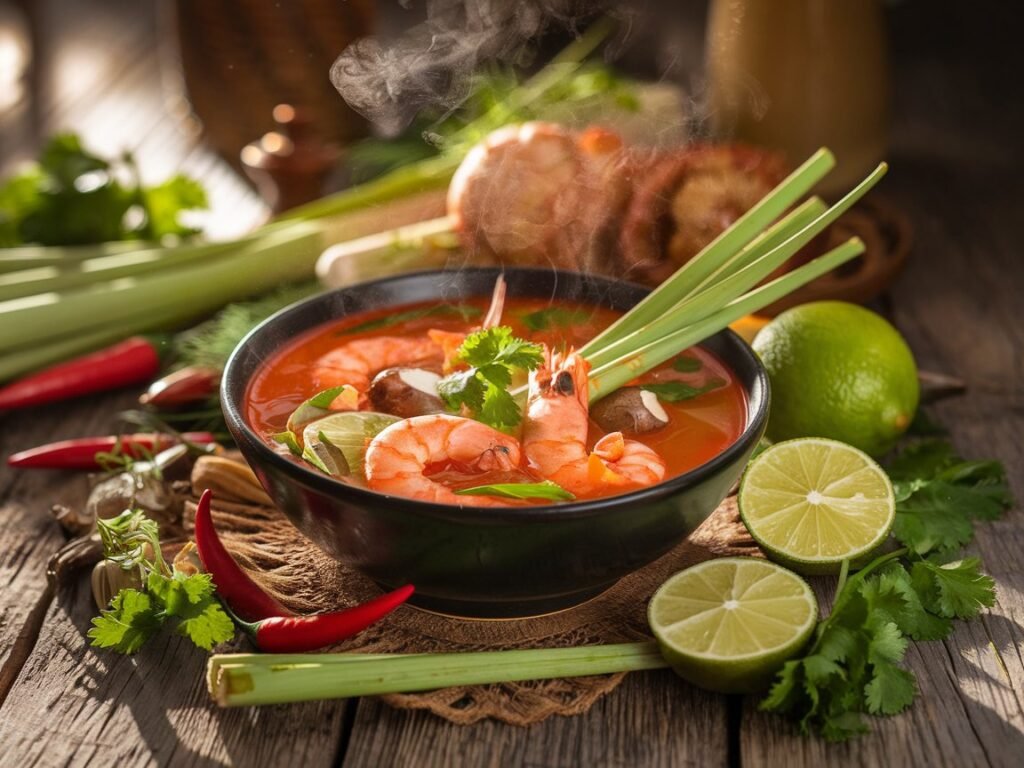
There’s something magical about the first spoonful of Tom Yum Goong. The bold, aromatic broth hits your palate with layers of heat, tanginess, and umami that dance together in perfect harmony. This isn’t just soup – it’s a celebration of Thai cuisine’s ability to balance opposing flavors into something extraordinary.
Tom Yum Goong represents everything I love about Thai cooking: it’s vibrant, complex, yet surprisingly simple to make at home. The name literally translates to “mixed sour soup with shrimp,” but that humble description barely captures the soul-warming experience of this iconic dish. Whether you’re battling a cold, craving something that will wake up your taste buds, or simply want to transport your kitchen to the streets of Bangkok, this recipe delivers every time.
What makes this soup truly special is how it combines fresh aromatics like lemongrass, galangal, and kaffir lime leaves with the perfect balance of sour lime juice, salty fish sauce, and fiery chilies. The result is a broth so flavorful and satisfying that it’s become Thailand’s most famous soup export. The best part? You can have this restaurant-quality dish ready in just 20 minutes with ingredients that are increasingly easy to find.
Ingredients Breakdown
For the Aromatic Base:
- 4 cups chicken or seafood stock – Use homemade if possible, but high-quality store-bought works well. The stock forms the foundation of your soup’s flavor.
- 3 stalks fresh lemongrass – Look for pale yellow stalks that feel firm. Bruise them with the back of a knife to release their citrusy oils.
- 4-5 slices fresh galangal – This ginger cousin has a more floral, pine-like flavor. If unavailable, substitute with fresh ginger, though the taste will be different.
- 6-8 fresh kaffir lime leaves – These provide a unique citrusy fragrance. Fresh is best, but frozen works too. Avoid dried leaves as they lack punch.
For the Protein and Vegetables:
- 1 pound large shrimp – Choose 21-25 count shrimp, peeled but tails on for presentation and extra flavor.
- 8 oz mixed mushrooms – Oyster mushrooms are traditional, but shiitake, baby bella, or white button mushrooms work perfectly.
- 2-3 medium tomatoes – Cut into wedges. They add subtle sweetness and help balance the soup’s intensity.
- 1 medium onion – Slice into thin wedges for texture and mild sweetness.
For the Flavor Base:
- 3-4 Thai bird’s eye chilies – Start with 2 if you’re heat-sensitive. These pack serious fire, so adjust to your preference.
- 3 tablespoons fresh lime juice – Use freshly squeezed lime only. This provides the essential sour component.
- 2-3 tablespoons fish sauce – This gives the soup its signature umami depth. Start with less and add to taste.
- 1 tablespoon Tom Yum paste – Optional but recommended for authentic flavor and color.
- 1 teaspoon palm sugar or brown sugar – Just a touch to balance the acidic and salty elements.
For Garnish:
- Fresh cilantro leaves – Adds freshness and color
- Thai basil leaves – Different from regular basil, with a more anise-like flavor
- Extra lime wedges – For additional sour punch
- Sliced chilies – For those who want extra heat
Common Substitutions: If you can’t find galangal, use fresh ginger (about 2/3 the amount). Kaffir lime leaves can be replaced with lime zest, though the flavor differs significantly. For a vegetarian version, use vegetable stock and replace shrimp with firm tofu or additional mushrooms.
Step-by-Step Instructions
Step 1: Prepare Your Aromatics Start by preparing your aromatics since they need time to infuse the broth. Using the back of a knife, gently bruise the lemongrass stalks – don’t cut them, just smash them to release their oils. Tear the kaffir lime leaves slightly to help release their fragrance. Slice your galangal into thin rounds. These aromatics are typically left in the soup for presentation, but warn your guests they’re not meant to be eaten.
Step 2: Build Your Flavor Base In a large pot or wok, bring your stock to a rolling boil over medium-high heat. Add the bruised lemongrass, galangal slices, and torn kaffir lime leaves. Let this simmer for 5 minutes to allow the aromatics to infuse the broth with their essential oils. The kitchen should start smelling incredible at this point.
Step 3: Add Vegetables and Seasonings Add your sliced mushrooms and onion wedges to the pot. These need a few minutes to cook through. While they’re cooking, add your Tom Yum paste if using – this will give your soup that characteristic orange-red color and extra depth of flavor. Stir well to dissolve the paste completely.
Step 4: Season the Broth Now comes the crucial balancing act. Add fish sauce, lime juice, and palm sugar. Start conservatively – you can always add more, but you can’t take it back. Taste as you go, adjusting until you achieve that perfect balance of salty, sour, and slightly sweet. The broth should be bold and vibrant, not subtle.
Step 5: Cook the Shrimp Add your tomato wedges first, letting them soften for about 2 minutes. Then add the shrimp and chilies. Shrimp cook incredibly fast – usually 2-3 minutes until they turn pink and curl. Overcooking will make them rubbery, so watch carefully.
Step 6: Final Taste and Adjust Remove the pot from heat and do your final taste test. This is your chance to perfect the balance. Need more sour? Add lime juice. Want more umami? Add fish sauce. Too intense? Add a splash more stock. The soup should be hot, sour, salty, and slightly sweet in perfect harmony.
Step 7: Serve Immediately Ladle into bowls and garnish generously with fresh cilantro and Thai basil. Serve with lime wedges on the side so everyone can adjust the sourness to their preference. Tom Yum Goong is best enjoyed immediately while the shrimp are perfectly tender and the aromatics are at their peak fragrance.
Tips and Variations
Expert Tips for Perfect Tom Yum Goong:
- Never boil the soup once you’ve added the shrimp – gentle simmering prevents tough, rubbery seafood
- Fresh aromatics make all the difference – dried versions simply can’t match the intensity
- Adjust the heat level gradually – Thai chilies are potent, and their heat builds as the soup sits
- Use the shrimp shells to make your own quick stock for extra seafood flavor
- Taste and adjust seasonings at the end – the balance of sour, salty, and spicy should be perfect for your palate
Delicious Variations: Tom Yum Gai: Replace shrimp with chicken breast or thighs cut into bite-sized pieces. Cook the chicken through before adding other ingredients.
Tom Yum Mixed Seafood: Use a combination of shrimp, scallops, squid rings, and fish chunks for a luxurious seafood medley.
Tom Yum Nam Khon: Add 2-3 tablespoons of evaporated milk or coconut milk for a creamy, milder version that’s popular in some regions.
Vegetarian Tom Yum: Use vegetable stock, add extra mushrooms varieties, firm tofu, and vegetables like baby corn and snap peas.
Tom Yum Noodle Soup: Add cooked rice noodles or ramen noodles to make it a complete meal.
Spice Level Adjustments: For mild heat, use 1-2 chilies and remove the seeds. For medium heat, stick to the recipe as written. For Thai-level heat, add 5-6 chilies and include the seeds.
Serving Suggestions
Tom Yum Goong shines as both a starter and a main dish. As a starter, serve small portions in elegant bowls alongside other Thai dishes. As a main course, pair it with jasmine rice – the neutral rice helps balance the soup’s intensity and makes it more filling.
Perfect Side Dishes:
- Steamed jasmine rice or coconut rice
- Fresh spring rolls with peanut dipping sauce
- Thai green papaya salad (Som Tam) for textural contrast
- Grilled or fried whole fish with garlic and herbs
- Pad Thai or other stir-fried noodles
Presentation Ideas: Serve in traditional Thai ceramic bowls if you have them, but any deep soup bowl works beautifully. Arrange lime wedges on a small plate alongside the soup. Provide small spoons for the broth and chopsticks or forks for the shrimp and vegetables. A side of steamed rice in individual bowls completes the authentic presentation.
Drink Pairings: Thai iced tea provides a cooling contrast to the soup’s heat. Light beers like Singha or Chang complement the flavors without competing. For wine lovers, try a crisp Riesling or Gewürztraminer – their slight sweetness balances the soup’s intensity. Non-alcoholic options include coconut water, limeade, or jasmine tea.
Storage and Reheating Instructions
Refrigerator Storage: Store leftover Tom Yum Goong in airtight containers in the refrigerator for up to 2 days. The flavors actually intensify overnight, making leftovers incredibly flavorful. However, the shrimp may become slightly firmer upon reheating.
Freezer Storage: While not ideal due to the shrimp, you can freeze the soup for up to 1 month. The texture of the seafood will change, becoming slightly more chewy, but the flavors remain excellent. Freeze in portion-sized containers for easy reheating.
Reheating Instructions: Stovetop (Recommended): Gently reheat in a saucepan over medium-low heat. Don’t let it boil vigorously as this can make the shrimp tough. Heat just until warmed through, about 3-4 minutes.
Microwave: Heat in 30-second intervals, stirring between each interval, until warmed through. This usually takes 1-2 minutes total.
Flavor Refresh: When reheating, you may need to refresh the flavors with a splash of fresh lime juice and fish sauce, as these bright flavors can diminish during storage.
Recipe Notes
- Prep Ahead: You can prepare all aromatics and chop vegetables up to 4 hours in advance. Store covered in the refrigerator.
- Equipment: A large pot or wok works best for this recipe. The wide surface area helps with even cooking.
- Ingredient Shopping: Most ingredients are available at Asian grocery stores. Many regular supermarkets now carry lemongrass, galangal, and kaffir lime leaves in their produce sections.
- Authentic Touch: If you can find fresh Thai chilies, they provide the most authentic heat and flavor profile.
- Serving Size: This recipe serves 4 as a starter or 2-3 as a main dish with rice.
- Spice Control: Remember that the soup continues to get spicier as it sits, so start conservatively with chilies.
Nutrition Information (Per Serving)
| Nutrient | Amount |
|---|---|
| Calories | 180 |
| Total Fat | 3g |
| Saturated Fat | 1g |
| Cholesterol | 185mg |
| Sodium | 1,250mg |
| Total Carbohydrates | 12g |
| Dietary Fiber | 3g |
| Sugars | 8g |
| Protein | 25g |
| Calcium | 120mg |
| Iron | 3mg |
| Vitamin C | 35mg |
| Potassium | 480mg |
Nutrition information is an estimate and may vary based on specific ingredients used.
Recipe Card Summary
Course: Soup, Main Dish Cuisine: Thai Servings: 4 Prep Time: 15 minutes Cook Time: 15 minutes Total Time: 30 minutes
Ingredients:
- 4 cups chicken or seafood stock
- 3 stalks fresh lemongrass, bruised
- 4-5 slices fresh galangal
- 6-8 fresh kaffir lime leaves, torn
- 1 pound large shrimp, peeled
- 8 oz mixed mushrooms, sliced
- 2-3 medium tomatoes, cut into wedges
- 1 medium onion, sliced into wedges
- 3-4 Thai bird’s eye chilies
- 3 tablespoons fresh lime juice
- 2-3 tablespoons fish sauce
- 1 tablespoon Tom Yum paste (optional)
- 1 teaspoon palm sugar
- Fresh cilantro and Thai basil for garnish
- Lime wedges for serving
Instructions:
- Bruise lemongrass and tear lime leaves
- Bring stock to boil, add aromatics, simmer 5 minutes
- Add mushrooms and onions, cook 3 minutes
- Stir in Tom Yum paste if using
- Season with fish sauce, lime juice, and sugar
- Add tomatoes, cook 2 minutes
- Add shrimp and chilies, cook 2-3 minutes until shrimp are pink
- Adjust seasonings and serve immediately with garnishes
Notes:
- Don’t overcook shrimp to prevent toughness
- Adjust spice level by adding or reducing chilies
- Fresh aromatics are essential for authentic flavor
- Soup tastes better the next day but shrimp texture changes
Diet Tags
Dietary Classifications:
- Gluten-Free
- Dairy-Free
- Low-Carb
- Keto-Friendly
- Paleo-Friendly
- Pescatarian
Health Benefits
Nutritional Advantages: Tom Yum Goong offers impressive health benefits beyond its incredible taste. The soup is naturally low in calories while being high in protein from the shrimp. The aromatics like lemongrass, galangal, and lime leaves contain powerful antioxidants and anti-inflammatory compounds.
The chilies provide capsaicin, which can boost metabolism and provide natural pain relief. Lime juice delivers vitamin C, supporting immune function. The low-carb, high-protein profile makes this soup excellent for weight management while the warming spices can help clear sinuses and provide comfort during cold seasons.
The combination of herbs and spices has been used in traditional Thai medicine for centuries, valued for their digestive and anti-inflammatory properties.
Frequently Asked Questions
1. Can I make Tom Yum Goong without galangal? Yes, you can substitute fresh ginger for galangal, though the flavor will be different. Use about 2/3 the amount of ginger as called for galangal. Galangal has a more floral, citrusy taste compared to ginger’s warm spiciness, but ginger still creates a delicious soup.
2. How spicy is Tom Yum Goong supposed to be? Authentic Tom Yum Goong should have a noticeable heat that builds gradually. It shouldn’t be overwhelmingly spicy but should definitely warm your mouth. Start with 2 chilies if you’re sensitive to heat, or use up to 6 for authentic Thai spice levels.
3. Can I use frozen shrimp for this recipe? Absolutely! Thaw frozen shrimp completely and pat dry before adding to the soup. Frozen shrimp often work better than previously frozen “fresh” shrimp from the grocery store. Just be extra careful not to overcook them.
4. Why does my Tom Yum Goong taste different from restaurants? Restaurant versions often use Tom Yum paste for consistency and deeper color, plus they may add MSG for extra umami. Some restaurants also use shrimp stock made from shells. Try adding a small amount of Tom Yum paste and making sure your fish sauce is high quality.
5. How can I make this soup less salty? If your soup is too salty, add more lime juice to balance it out, or dilute with additional stock. You can also add a small amount of sugar to help balance the saltiness. Next time, add fish sauce gradually and taste as you go.
Final Thoughts
Tom Yum Goong represents everything beautiful about Thai cuisine – the masterful balance of flavors, the use of fresh aromatics, and the ability to create something deeply satisfying from simple ingredients. This soup has the power to transport you straight to Thailand with its authentic flavors and soul-warming properties.
The beauty of this recipe lies in its adaptability. Once you master the basic technique and understand how to balance the sour, salty, and spicy elements, you can adjust it to suit your preferences perfectly. Some days you might want it milder, other days you might crave extra heat – Tom Yum Goong accommodates all moods and preferences.
Whether you’re cooking for a special occasion, trying to recreate vacation memories, or simply wanting to expand your culinary horizons, this Tom Yum Goong recipe delivers authentic Thai flavors that will impress family and friends. The combination of aromatic herbs, succulent shrimp, and that perfectly balanced broth creates a dining experience that’s both exotic and comforting.
Give this recipe a try and let me know how it turns out for you in the comments below. I love hearing about your variations and adaptations – Thai cooking is all about personalizing flavors to suit your taste. Whether this becomes your go-to comfort soup or your signature dish for entertaining, Tom Yum Goong is sure to become a treasured addition to your recipe collection.
