
Tteokbokki – Spicy Rice Cakes
Introduction
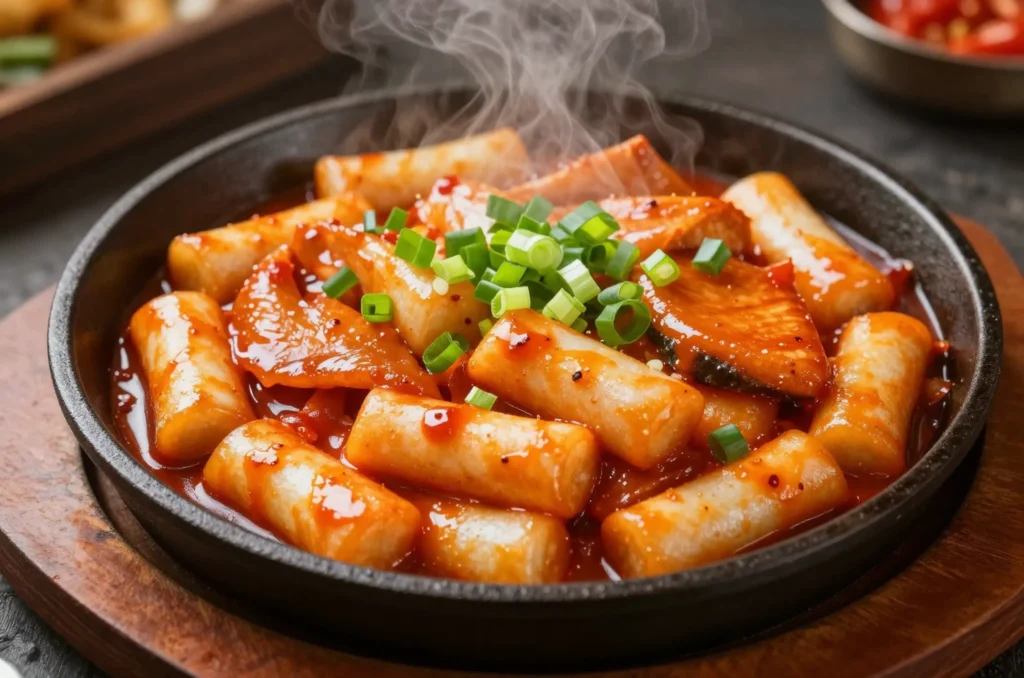
If you have ever seen Korean street food videos, chances are you have noticed bright red, glossy rice cakes simmering in a bubbling sauce. That iconic dish is Tteokbokki, one of Korea’s most popular comfort foods. It is spicy, slightly sweet, chewy, and deeply satisfying.
Tteokbokki is made with soft cylindrical rice cakes cooked in a bold gochujang-based sauce. It is often enjoyed as a snack, light meal, or late-night treat. Despite its impressive flavor, it is surprisingly simple to make at home, even if you are just starting your cooking journey.
This recipe focuses on clear, beginner-friendly steps and authentic flavor. You will learn how to balance sweetness and spice, how to cook rice cakes to the perfect chewy texture, and how to adjust the heat level based on your preference.
Why You’ll Love This Tteokbokki Recipe
- Chewy, satisfying texture
- Bold sweet and spicy flavor
- Quick cooking time
- Customizable spice level
- Perfect for sharing or enjoying solo
Whether you are craving something comforting or want to explore Korean cuisine at home, this Tteokbokki recipe will guide you step by step.
Ingredients Breakdown
Korean Rice Cakes (Tteok)
These white, chewy rice cylinders are the heart of the dish. They are made from rice flour and have a soft but bouncy texture. If using refrigerated or frozen rice cakes, soak them in warm water for 10 to 15 minutes before cooking to soften them.
Fish Cakes
Thin sheets of Korean fish cakes add savory depth and protein. Slice them into bite-sized strips. If unavailable, you can substitute with tofu or skip entirely.
Gochujang
This fermented Korean chili paste provides the base flavor. It is spicy, slightly sweet, and rich. Adjust the quantity depending on your heat tolerance.
Gochugaru
Korean chili flakes add extra spice and color. Optional but recommended for deeper flavor.
Garlic
Fresh minced garlic enhances aroma and adds warmth to the sauce.
Soy Sauce
Adds saltiness and balances sweetness.
Sugar
Essential for achieving that classic sweet-spicy balance.
Anchovy-Kelp Broth
Traditional Tteokbokki uses a light broth made from dried anchovies and kelp. It adds umami without overpowering the dish. If unavailable, use water or light vegetable broth.
Cabbage and Green Onions
Cabbage adds sweetness and texture, while green onions bring freshness.
Boiled Eggs
A popular addition that makes the dish more filling and balances spice.
Step-by-Step Instructions
Start by soaking the rice cakes in warm water if they are firm. This ensures they cook evenly and become perfectly chewy.
In a wide pan, bring anchovy-kelp broth to a gentle simmer over medium heat. Stir in gochujang, gochugaru, soy sauce, sugar, and minced garlic. Mix well until the sauce dissolves into the broth.
Add the drained rice cakes to the pan. Stir gently so they are evenly coated. Allow them to simmer for about 8 to 10 minutes, stirring occasionally. The sauce will begin to thicken as the rice cakes release starch.
Add sliced fish cakes and chopped cabbage. Continue simmering until the sauce becomes glossy and thick enough to coat the rice cakes.
If using boiled eggs, add them during the final few minutes so they absorb some flavor.
Finish by sprinkling chopped green onions over the top. Serve immediately while hot and bubbling.
Tips and Variations
Cook in a wide pan rather than a deep pot so the sauce reduces properly and coats evenly.
If the sauce thickens too quickly, add a splash of water or broth to loosen it.
For a milder version suitable for kids, reduce gochujang and skip chili flakes. Add a little more sugar for balance.
For adults who enjoy heat, increase gochugaru or add a spoon of chili paste at the end.
Cheese Tteokbokki is another popular variation. Add shredded mozzarella on top and let it melt for a creamy finish.
You can also add ramen noodles for a heartier version often called Rabokki.
Serving Suggestions
Tteokbokki is best served hot and fresh from the pan. It pairs well with crispy fried snacks like tempura vegetables or dumplings.
Garnish with extra green onions or sesame seeds for visual appeal.
Serve alongside cold barley tea or sparkling water to balance the spice.
For a Korean-themed dinner night, combine it with fried chicken or a light cucumber salad.
Storage and Reheating Instructions
Store leftovers in an airtight container in the refrigerator for up to 3 days.
Rice cakes may harden slightly when cold. To reheat, add a small splash of water and warm gently in a pan over medium heat until soft again.
You can also microwave for 1 to 2 minutes, stirring halfway through.
Freezing is not recommended as the texture may change.
Recipe Notes
This dish can be prepared ahead of time, but it tastes best fresh.
Use a wide non-stick pan to prevent sticking.
Taste the sauce before serving and adjust sweetness or spice if needed.
If rice cakes become too soft, reduce cooking time slightly next time.
Nutrition Information (Per Serving)
Estimated per serving (based on 4 servings):
| Nutrient | Amount |
|---|---|
| Calories | 430 kcal |
| Fat | 7 g |
| Saturated Fat | 1.5 g |
| Carbs | 78 g |
| Sugar | 14 g |
| Fiber | 3 g |
| Protein | 12 g |
| Sodium | 950 mg |
| Cholesterol | 95 mg |
| Calcium | 60 mg |
| Iron | 2.5 mg |
Nutrition information is an estimate and may vary based on specific ingredients used.
Recipe Card Summary
Course: Snack or Main
Cuisine: Korean
Servings: 4
Prep Time: 15 minutes
Cook Time: 15 minutes
Total Time: 30 minutes
Ingredients
- 1 pound Korean rice cakes
- 4 cups anchovy-kelp broth
- 2 tablespoons gochujang
- 1 teaspoon gochugaru
- 1 tablespoon soy sauce
- 1 tablespoon sugar
- 2 cloves garlic, minced
- 4 ounces fish cakes, sliced
- 1 cup cabbage, chopped
- 2 boiled eggs
- 2 green onions, sliced
Instructions
Simmer broth and sauce ingredients.
Add rice cakes and cook until soft and sauce thickens.
Add fish cakes and cabbage.
Finish with eggs and green onions.
Serve hot.
Notes
Adjust spice level to your preference.
Diet Tags: Dairy-Free Option, Vegetarian Option Available, High-Carb Energy Dish
Health Benefits Section
Rice Cakes
Provide quick energy from carbohydrates, ideal for active days.
Garlic
Supports immune function and adds natural flavor without extra fat.
Cabbage
Rich in fiber and vitamin C.
Eggs
Provide high-quality protein and essential nutrients.
Suggested Sauce
The classic gochujang sauce is traditional. You can also prepare a soy-garlic glaze for a milder option or add melted cheese for a creamy variation.
Avoid These Mistakes
Overcooking rice cakes until too soft.
Using too little liquid, causing sauce to burn.
Adding all seasoning without tasting.
Cooking on high heat, which thickens sauce too quickly.
FAQs
Can I make Tteokbokki less spicy?
Yes, reduce gochujang and skip chili flakes. Add more sugar for balance.
Why are my rice cakes hard?
They may not have been soaked or were undercooked. Soak longer and simmer gently.
Can I make it vegetarian?
Yes, use vegetable broth and skip fish cakes.
Can I prepare it ahead of time?
You can prepare the sauce in advance, but cook rice cakes fresh for best texture.
Is Tteokbokki very spicy?
It can be adjusted to mild, medium, or spicy depending on your taste.
Can I add cheese?
Yes, adding mozzarella on top creates a popular creamy version.
Whether you’re feeding a crowd or just craving comfort food, this Tteokbokki – Spicy Rice Cakes is sure to hit the spot. Let me know how it turns out for you in the comments below
